
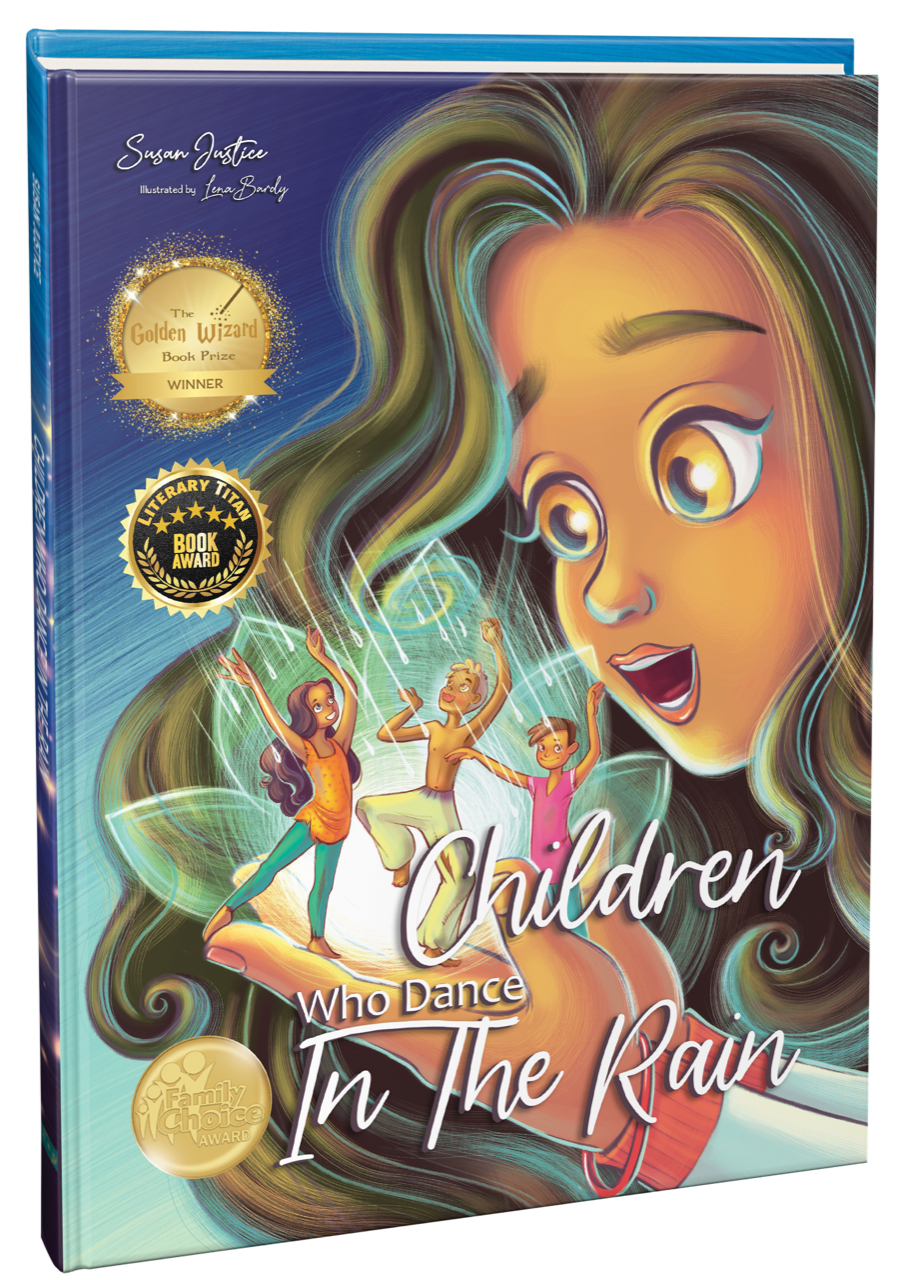
“Children Who Dance in the Rain” is Sophie’s adventure from a cozy cocoon of materialism and privilege of the First World into the spiritualism and abject poverty of the Third World.
Sophie has it mighty good as the daughter of Indian immigrants eating fancy breakfasts and playing on her tablet. She is spoiled and selfish if not egocentric. Her parents decide to return to India for a visit with Sophie’s grandmother and Sophie receives the shock of her life arriving in a small Indian village where the bathroom is dirty, there is no electricity or internet and no pizza. Her reaction is to ask her parents to go somewhere “nice”.
OK as adults we might scoff at Sophie for being a spoiled little brat. However showing some compassion and understanding we must ask is Sophie’s attitude and ignorance really her fault or is she simply the product of a privileged society and parents that may have failed to discuss conditions in rural India? We read that Sophie learnt how to spell privilege in school but she has no concept of what it means.
Sophie encounters orphan Nanaki Kaur in the village carrying discarded plastic objects to sell to recyclers so she can buy food for her sick brother. Nanaki lives in a community of abandoned children without any of the comforts and toys Sophie has. Nanaki is generous offering Sophie a juice box she had been saving for a special occasion. Sophie realizes the food and vitamins she did not eat at home were a result of the privilege she had back home.
The child community plays with stars in the sky at night and see themselves as friends of the moon and when it rained the children danced in the rain. Sophie is introduced to spiritualism and takes that memory back to the First World with her.
A simple and entertaining story effectively delivering the message that there is more to life than materialism but it took a special journey for Sophie to understand that. Gratitude of children in different socio-economic and cultural environments is manifested by children in different ways.
There are many unrealities and gloss overs in the story but please let us remember this is a children’s story for the 5–9-year-old range. Was there ever really a big bad wolf in “Little Red Riding Hood”? Do we stop and question Jack’s trespassing and theft in “Jack and the Beanstalk”? This is a book for children not for more savvy adults!
The author Susan Justice is a lawyer and advocate based in British Columbia who co-founded “South Asians Against Childhood Abuse”.
100% of net proceeds from the sale of each fourth book will go to Save the Children, Give Well and Bright Sparks School in Mohali, India who are dedicated to providing education opportunities for underprivileged children.
The book is available now in Kindle Format on Amazon and on June 15th in Canada at Chapters-Indigo stores in physical format.
A multiple prize-winning book already including the 2023 Human Relations Children’s Book of the Year.
(“Children Who Dance in the Rain”, Susan Justice and illustrated by Lena Baroly, Compassionate Project Press, 2023).
 A Bird's Eye View of Fashion, Food, Travel, Culture, Beverage and Curiosity