
The 1930s was a decade of political and social upheaval in the United States, and the art and visual culture of the time reflected the unsettled environment. Americans searched for their cultural identity during the Great Depression, a period marked by divisive politics, threats to democracy, and intensified social activism, including a powerful labor movement. Featuring more than 100 works from The Met collection and several lenders, this exhibition explores how artists expressed political messages and ideologies through a range of media, from paintings, sculptures, prints, and photographs to film, dance, decorative arts, fashion, and ephemera.
Highlights include paintings by Georgia O’Keeffe, Charles Sheeler, and Stuart Davis; prints by Elizabeth Olds, Dox Thrash, and Riva Helfond; photographs by Walker Evans and Dorothea Lange; footage of Martha Graham’s dance Frontier; and more, providing an unprecedented overview of the era’s sociopolitical landscape.
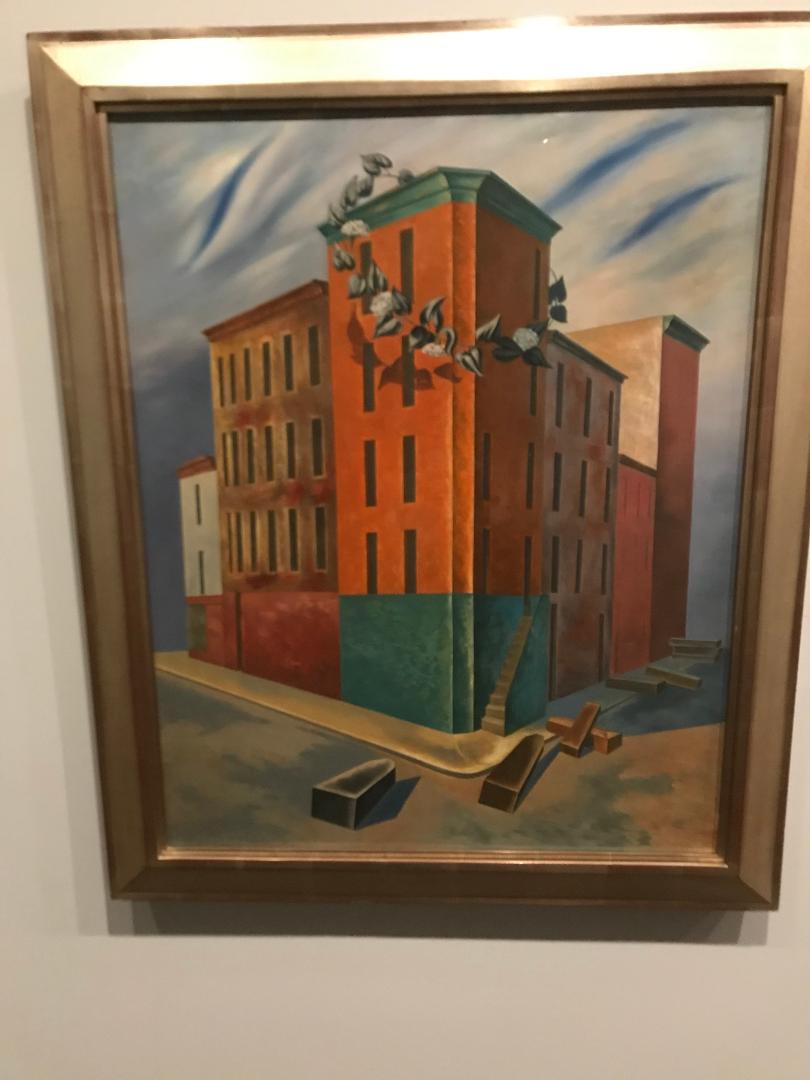
In “One Third of the Nation” (1939) Louis Guglielmi (1906-1956) responded to the horrific living conditions, mass poverty and general social unease brought about by the Great Depression with this work. Its title refers to President Franklin Roosevelt’s second inaugural address in which he declared, “I see one third of the nation ill-housed, ill-clad, ill-nourished…The test of our progress is not whether we add more to the abundance of those who have much; it is whether we provide enough for those who have too little.” In the painting, coffins litter the city block lined with lifeless tenements, and a funeral wreath adorns the building at center.
The Metropolitan Museum of Art, New York, Gift of New York City
 A Bird's Eye View of Fashion, Food, Travel, Culture, Beverage and Curiosity