
No doubt you may have heard about the Plaka District in Athens. The main shopping drag is a drag for me. Overrun by tourists drawn in by its proximity to the Acropolis and yes the cruise ship gangs poking around the touristic shops. T shirts, coffee mugs, postcards and over Greekified nick-nacks. Plenty of uninspiring restaurants and cafes.
But veer off the main drag heading eastward towards the Ancient Agora of Athens and the Plaka becomes, shall we say, more “authentic” and less polished meaning the touristic swarms have disappeared. There are a few renovations or restorations of old buildings hinting at a former grandeur. A better flavour of Athens if you like.
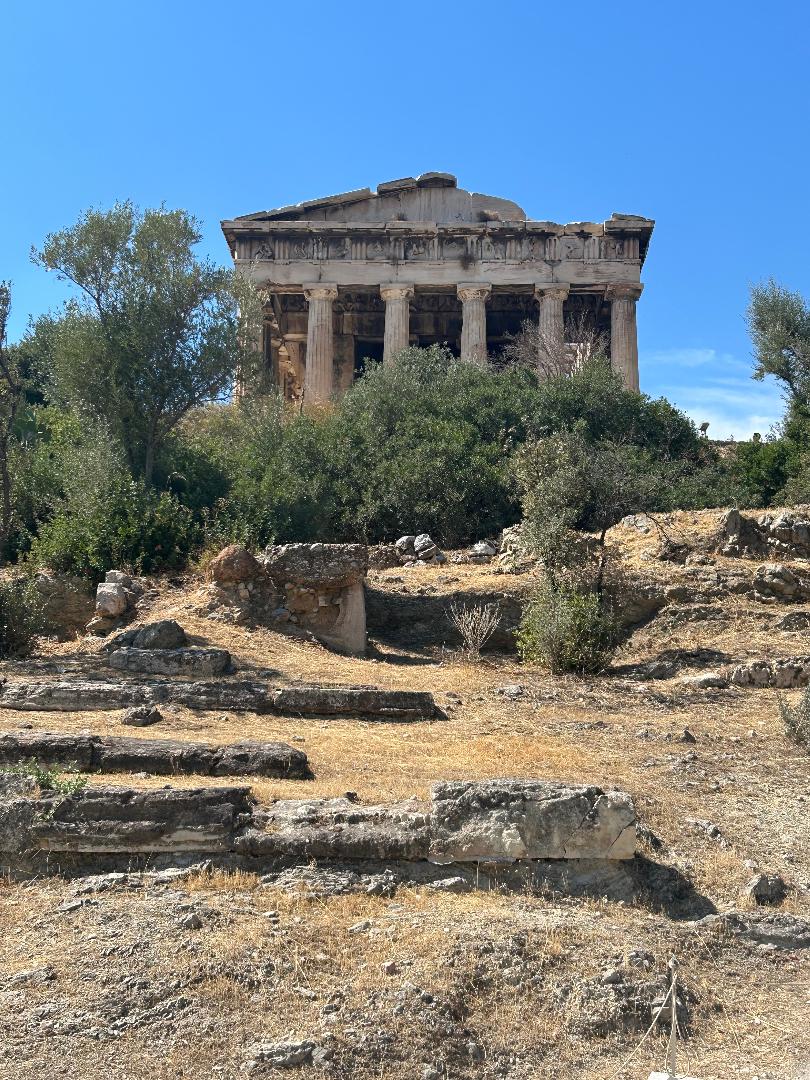
While I have visited the Acropolis three times over a space of five decades how did I miss the Ancient Agora of Athens? It is an archeological site located beneath the northwest slope of the Acropolis. “Agora” applies to an assembly of people or a “gathering place”. In modern parlance it means “marketplace”.
The Ancient Agora of Athens was a market, a meeting place and the social and political and commercial hub of the ancient city. Initially developed in the 6th century BC, the Ancient Agora of Athens was destroyed (and rebuilt several times) by the Persians in 480BC, the Romans and by a Scandinavian tribe known as the Herulians in 267BC.
Its importance revolved around religion, a very sacred place in which holiness is laid out in the architecture of the ground in which it lay upon. But it was also an important meeting ground for Athenians where affairs of the state were conducted, a place to socialize and watch performers and listen to famous philosophers.
Having encountered so many ruins throughout Greece one must acknowledge “ruins fatigue” which I haven’t contracted yet. The attractions of archeological sites are rarely the ruins and partial structures but the imagination which veers towards “what was this site like in its prime”! The historical overcomes the visuals and the imagination can run amok here at the Ancient Agora of Athens. Due to it being not overtly overrun by tourist perhaps I will venture to say more enjoyable than the Acropolis.
No cruise ship passengers here. Loving that!

