Perhaps visiting Rome this year with its Jubilee is not advisable (unless you are on a pilgrimage) as massive crowds clog main touristic sites whether it be the Vatican, the Spanish Steps and an out-of-control mob scene at the Pantheon and Trevi Fountain.
Just a few people at the Spanish Steps Fountain. Photo Robert K. Stephen
Americans appear to be leading the pack but all in all a truly international mix of tourists.
The restaurants in and about the main attractions and the once quiet and cool Trastevere District are clogged with tourists and what Italian wishes to commit culinary suicide at eateries offering “Happy Hour”. Sort of like a tequila cruise in Cancun!
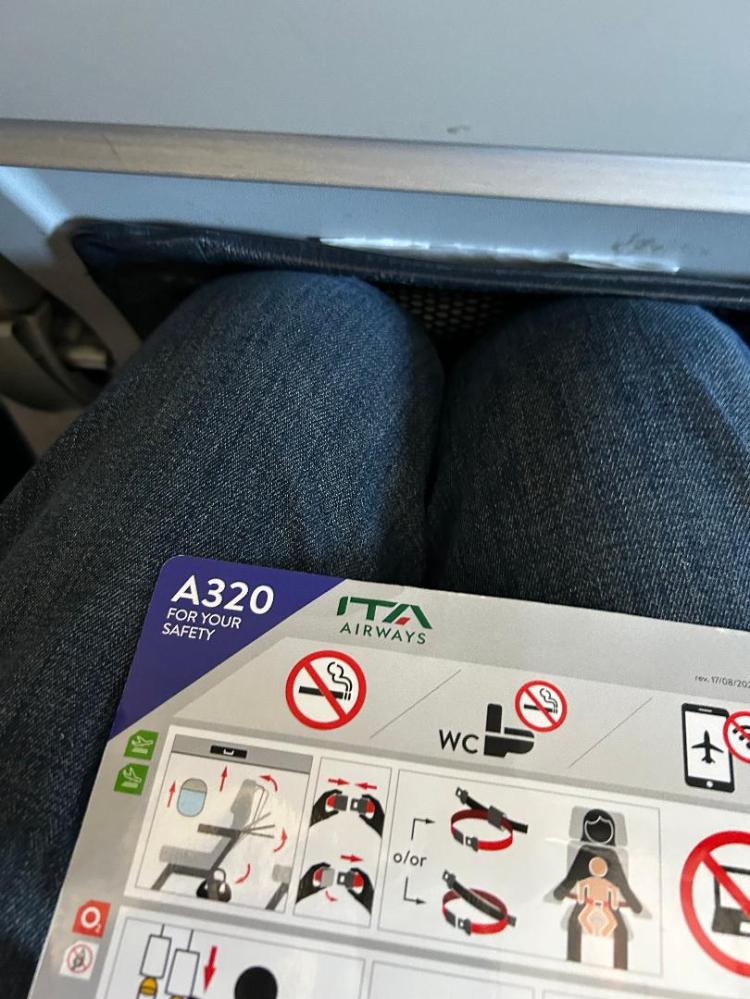
Arriving in Rome from Catania via ITA Airways crammed in the airplane like tourists elbowing for room at the Trevi Fountain often led by tour guides with flags raised to be followed and listened to with audio devices I decided to partake of a stroll near the hotel and made it until a McDonald’s saved the day from a torrential downpour. Screen ordering was available in several languages.
A double cheeseburger, beer and fries were selected by me the gourmet and internationally recognized food critic. Who was eating here? Italians, mostly teeny boppers and young families with me about the only gringo in sight. So when it Rome do as the Romans do and eat in McDonald’s Italia. Did I just say that?
“The two of them seem to be together, except that he’s dressed a lot nicer than his buddy, who’s in a weathered hockey jersey that hangs off his skinny shoulders like a rag. No, this one has a jacket. A nice jacket. Where would I know someone who has a jacket this nice? Must be wool or something, so black that it seems to draw the light in. And his scarf is embarrassingly fashionable. Either he has a wife who picks these things out for him or he swings the other way, Which, since he’s sitting in a titty bar, is unlikely, but you never know.”
Nina Laurin, “Girl Last Seen”, Grand Central Publishing (2017).
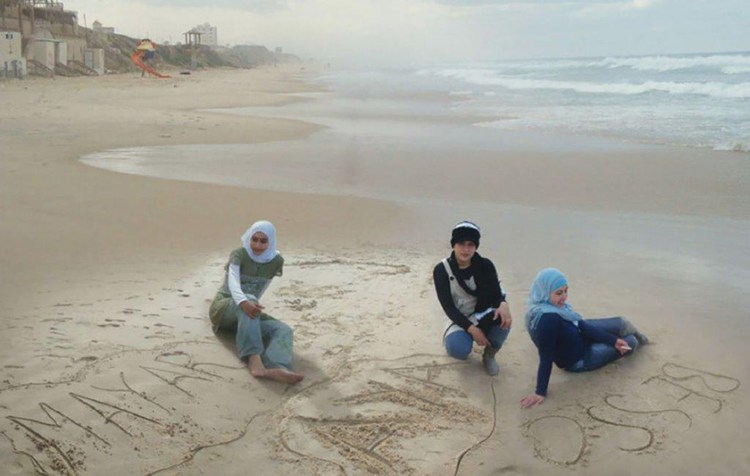
This Canadian documentary is based on a book of the same name by Dr. Izzeldin Abuelaish. Dr. Abuelaish is a Palestinian doctor born of parents bulldozed off their land in Palestine by Israeli forces during the 1948 Arab War. An estimated 500,000-750,000 Palestinians fled to refugee camps in the West Bank and Gaza, Jordan, Lebanon and Syria.
Dr. Abuelaish realized an education was necessary to lift himself and his extended family out of poverty so he studied becoming a doctor first working in Saudi Arabia and returning to Gaza to offer pro bono medical OBGYN services to Gaza refugee camp residents. He was the first Palestinian doctor to work in an Israeli hospital.
The documentary gives us a brief history of Palestine. Hamas won the 2006 Gaza elections with 74/132 seats in the Palestinian legislative assembly. Hamas originally started as a welfare organization with the sole goal of providing social services to the residents of Gaza but gradually muscled out its opponents assuming dictatorial military rule.
In yet another Israeli miliary action in Gaza on July 14,2009 a tank waited outside Abuelaish’s 5 story family house with its gun aiming directly at the house. Abuelaish managed to contact Israeli friends who were successful in recalling the tank but two days later his unit was shelled by an Israeli tank killing three of is daughters. His horrific anguished calls were broadcast over Israeli television said to have such an impact the Israeli Prime Minister ordered a ceasefire. Not surprisingly an Israeli army investigation and the Israeli Supreme Court found no fault.
Instead of venting anger and bitterness while still at the hospital with injured family members he called for peaceful co-existence. Hatred is not by nature but by nurture Abuelaish states. In Gaza it is triggered by colonialism, occupation, poverty, violence, racism, discrimination and exploitation.
Within a year of suffering his personal tragedy he moved to Toronto with his five children and established Daughters for Life funding scholarships, fellowships and awards for young Middle Eastern women. He also raises funds for injured Palestinian children to receive medical treatment in Canada.
One must ask a question posed by humanity many times. What does it take for personalization to become universalism?
How would one describe the film? Fruitless? Naïve? Courageous? Depressing? Uplifting? Inevitable? Perhaps all the above.
Directed by Tal Barda. It is having its third week of screening in French theatres.
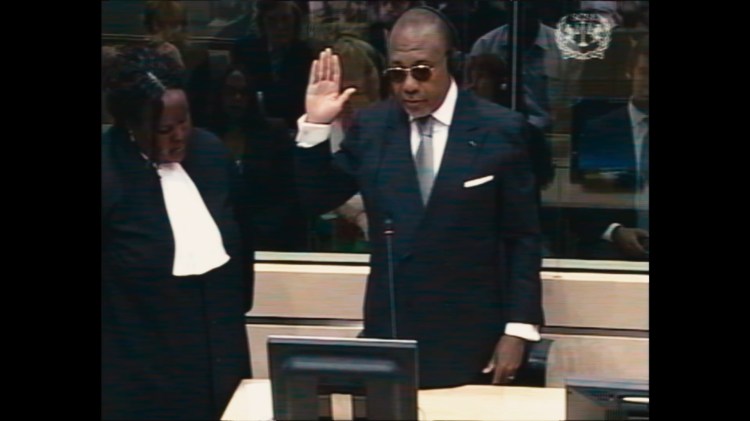
The Canadian documentary “Betrayal”, directed by Lena Macdonald, chronicles the whistleblowing of Cindor Reeves crucial to the war crimes conviction of Liberian President Charles Taylor by the United Nations backed special court for Sierra Leone in 2012. Taylor was convicted of sexual violence, physical violence, abductions, terrorizing civilian populations, forced labour and utilization of child soldiers.
Charles Taylor on trial in Sierra Leone in 2012
It was the brother-in-law of Charles Taylor, Cindor Reeves, that provided much of the information used to convict Taylor garnered through copying and downloading documents, eavesdropping and through knowledge of the players and transactions in the evil game of profiteering from blood diamonds that funded his civil war, that in Sierra Leone and even Al Qaeda.
Cindor’s sister married Taylor and Cindor as a young boy found his way to luxury living in Monrovia with his sister and Taylor a giant step from rural poverty. Taylor acted as a mentor for Cindor providing an education including on the political game and paternal guidance. Taylor an all-around nice guy until Cindor realized his promises of democracy were but a ploy for power while he organized a coup against Liberian President Samuel Doe and pursued a civil war in Liberia and in Sierra Leone to amass blood diamond and mineral wealth. Some estimated 250,000 were killed in the Liberian civil war with 203 mass graves found.
While acting as a liaison officer for the Taylor government in 1999 a contingent of Washington Post journalists visited Sierra Leone and deep throat Reeves helped them expose the blood diamond trade with Sierra Leone diamonds with Taylor the kingpin. Reeves notes that the international community and private enterprises assisted or turned a blind eye to the blood diamond trade that enriched Taylor and enabled him to purchase arms and smuggle them into Liberia.
Reeves eventually ended up in Canada after departing Liberia, Ghana, Netherlands and Germany with promises of extended witness protection quickly forgotten after Taylor’s conviction. An attempt was made on his life by Taylor supporters in Ghana. Wherever he may be now he fears for his life.
Canada granted asylum to Reeve’s wife and two children but strangely deported him. Justice may have been done to Taylor with a 50-year prison sentence but Reeves, the man who made it possible was left out hanging to dry separated from his family. Strange recognition for his services to the international community.
Reeves no doubt is a betrayer to Taylor but justifiably so. Taylor is also a betrayer to Liberia using fine sounding promises of democracy and the rule of law. The international community betrayed Reeves by failing to offer him security and funding. And what redress and justice for the victims of Taylor in Sierra Leone and Liberia. Retribution has a nice ring to it but for Taylor’s victims it isn’t worth much.
A word to the wise. Don’t be overrun by the multitude of facts in the documentary and focus on the generalities of family, loyalty, the teachery of politics and the two faces of Charles Taylor.
“Betrayal” completed its screenings at Toronto 2025 Hot Docs but its international run will continue.
“He followed me into the bathroom, peeling a banana. “Depressing, I was cranking up on a new poem when some dipshit called, trying to sell us a storage freezer. Writing is a lot like dreaming, you know? There’s a subconscious connection, you know. Once someone intrudes, it’s like trying to go back to sleep to finish your dream.” He yawned so wide I saw the chewed-up banana.”
John Marynissen might be categorized as a Niagara wine legend but he’s long gone and at last account the winery is in the hands of a Chinese investors, I think. The winery website states the winery was sold in 2012 but for some reason (wonder why) fails to reveal the identity of the purchaser(s).
Whatever, the legend has passed on long ago and my take of the current stable of wines has been rock bottom. But I am willing to give a last chance try to their “Charmed Rosé” from the Heritage Collection which as the label states, “pays homage to our pioneering founders by maintaining their traditions or continuing in their spirit through innovation.” 92% Cabernet Franc, 4% Gewurtz and 4% Riesling.
Aroma: Strawberry, raspberry, watermelon and cranberry to this brickish pink tank sparkler. Brick can be a sign of ageing or oxidization.
Palate: Not a sharp bite but a bite nonetheless. A tired very slightly oxidized taste and hard to pin down any fruit.
Personality: Give me a break. It is hard to emulate a legend.
Food Match: A peameal bacon sandwich but no fancy mustard please.
Cellarbility: Drink now before the tariffs set in!
Price: $24.95 CDN (Hmmmmm?)
RKS 2025 CANADIAN Wine Rating: 84/100. Wine Align Community Rating 86. Natalie MacLean 90.
“Ashley pulled at her mother’s pant leg and Paula bent down to hear the secret. “Well, Ashley, maybe next time you’ll listen to Mommy about drinking too much pineapple juice. Come on we’ll just have to tinkle behind the car.” “But I don’t have to tinkle. I have to make a stinky.”
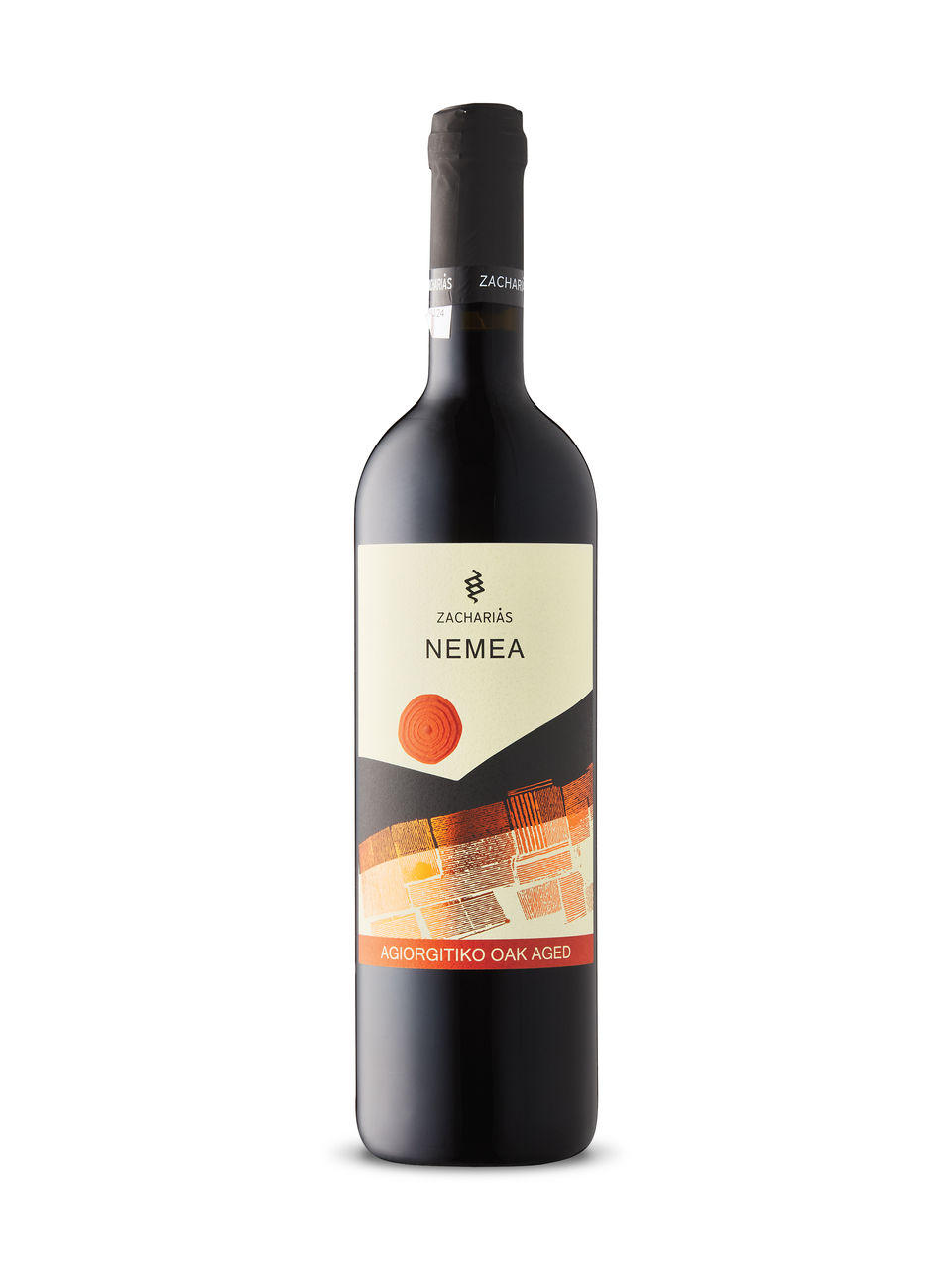
From Nemea in the Peloponnese a “oak aged” Agiorgitiko. Having been in Thessaloniki in November for the Thessaloniki 65th Annual Film Festival I found perhaps the best wine shop right by the main port buildings. The red wine leader on the shelves was Agiorgitiko and the same held true for supermarket and the smaller corner stores.
Zacharias Winery
We try an Agiorgitiko from Zacharias Winery with “oak aged” shouting at you from the label which also states it has aged 12 months in French oak barrels.
Aroma: Indeed, a healthy waft up of oak which is preferable to a stink up. Black cherry, raspberry on steroids and black currant.
Palate: Quite a firm bite. Harsh and count your blessings the tannins are moderate. Black cherry, Vermont black licorice and cactus pear. Best with food.
“Unwelcomed” is yet another migrant crisis examined. During the COVID pandemic some 8 million Venezuelans migrants poured out of their economically and politically failing country. Some 300,000 Venezuelan undocumented migrants are presently in Chile.
The journey is perilous fraught with gang robbery, murder and rape but the promised land lures the migrants. But what awaits them is no land of milk and honey. The documentary reveals a solid streak of anti-migrantism in Chile based on fear and economic and social reality that Chile simply can’t accommodate huge masses of migrants.
We hear some of the Venezuelan migrant stories, watch the anti-migrant demonstrations and attacks, see the innocent smiling children, cringe at the squatting settlements and marvel at the spectacular topography of the Atacama Desert and its highlands, the Andean Highlands and coastal Chile. A juxtaposition of natural beauty somewhat marred by incessant shots of garbage littered everywhere) and quiet migrant desperation.
The camera does all the work here. No commentary or narration other than the migrant stories and the unwelcoming sentiment of many Chileans.
The Venezuelan exodus is the largest in modern history followed by the Ukraine and Syria.
Directed by Sebastian González Mendez and Amilcar Infante.









 A Bird's Eye View of Fashion, Food, Travel, Culture, Beverage and Curiosity