Toronto 2025 Hot Docs: “MAMA”: An Artistic and Creative Approach Chronicling the Nastiness of a Breast Cancer Experience

Ecuadorian Ana Cristina Benitez has crafted a creative if not poetic and hypnotic documentary about her battle with breast cancer.

A late diagnosis of stage three breast cancer sets in motion an exhausting and debilitating round of chemotherapy and radiotherapy followed by a mastectomy. We are a fly on the wall spectators watching her receive chemo treatment with many others in what resembles a chemotherapy factory at her hospital while the background radio details the latest Ecuadorian COVID fatalities. A patient at chemo is distraught as her husband left her for another woman after her hair fell out. The patients quip a woman will stay with her man right through to the end of chemo while a man will leave his woman after her hair falls out which we see plenty of on the floor. Ana’s partner Mateo is illustrative of the deserting man.

After chemo 32 sessions of radiotherapy and then a mastectomy where the reflective and calm Benitez shatters into sobs of utter defeat.

Benitez’s calm and poetic narration is interspersed with visually stunning cinematography of the sea and water rendering an almost pleasant dreamlike quality to her personal nightmare. These visual interludes, somewhat similar to the Chilean 2022 documentary “Corrupto” by Juan Cifuentes Mera, provide the viewer an opportunity to reflect and recover from the emotional waves and harsh medical images fired out by her technical and emotional descriptions. What is puzzling and distracting is older video footage of her childhood which as far as I can interpret serves little purpose.

Perhaps the most important aspect of the documentary are Benitez’s innermost thoughts about the entire process one such thought being she is everything but nothing and it is in the moments of darkness when the light shines most intensely.

You may watch the trailer here https://www.youtube.com/watch?v=_Kx8OW1lrLU

The world premiere of MAMA is on 27/29 April.

RKS 2025 Documentary Rating 82/100.

Toronto 2025 Hot Docs: “The Track”: The Impossible Possibility

Sarajevo, the Bosnian-Herzegovina host city of the 1984 Winter Olympics, was under attack during the 1992-95 war. Street fighting, shelling and snipers made the city a dangerous place. While “peace” was attained Catholic, Bosnian and Serbian killings continue at a far lesser scale and the haunting memories of the war left no true peace.

The documentary is one of those against all odds genre sports film. Three young men and Senad an experienced luge coach train on an Olympic era dilapidated luge track, at least when curious tourists and cyclist aren’t walking or cycling on it. The 875,000 Euros required to rebuild the track are not forthcoming nor is there any serious state or private financial support for the young athletes. Senad maintains the crumbling edifice the best he can at his own expense.

An aura of gloom, bad memories and hopelessness hang heavy in the city air. Youth unemployment is high and governmental corruption is rampant. The young men and Senad struggle on with a purpose of competing in the 2022 Winter Olympics in Beijing. Had it not been for this seemingly impossible goal one wonders what would have become of these young athletes.

With familial monetary sacrifice the three men attend junior championships and Olympic qualifying events with one of young men Mirza Nikolajev competing in Beijing not winning any medal but causing Sarajevan’s to smile for once. Given the lack of proper training facilities, funding and top line equipment Mirza’s Olympic appearance impossible to achieve becomes a possibility.

This Bosnian “Cool Running” story is and pardon that oft used term “heart warming”.

This Canadian documentary is co- written and directed by Ryan Sidhoo and will be having its Canadian premiere on 27/30April, 2025 at Hot Docs.

RKS 2025 Canadian Documentary Rating 88/100.

RKS 2025 Wine: Portuguese Wine at a Give Away Price: Guarda Rios

There aren’t many notable wines at $11.95 CDN these days in Canada although in Portugal at Pingo Doce or Jumbo hypermarchés there are many at that price.

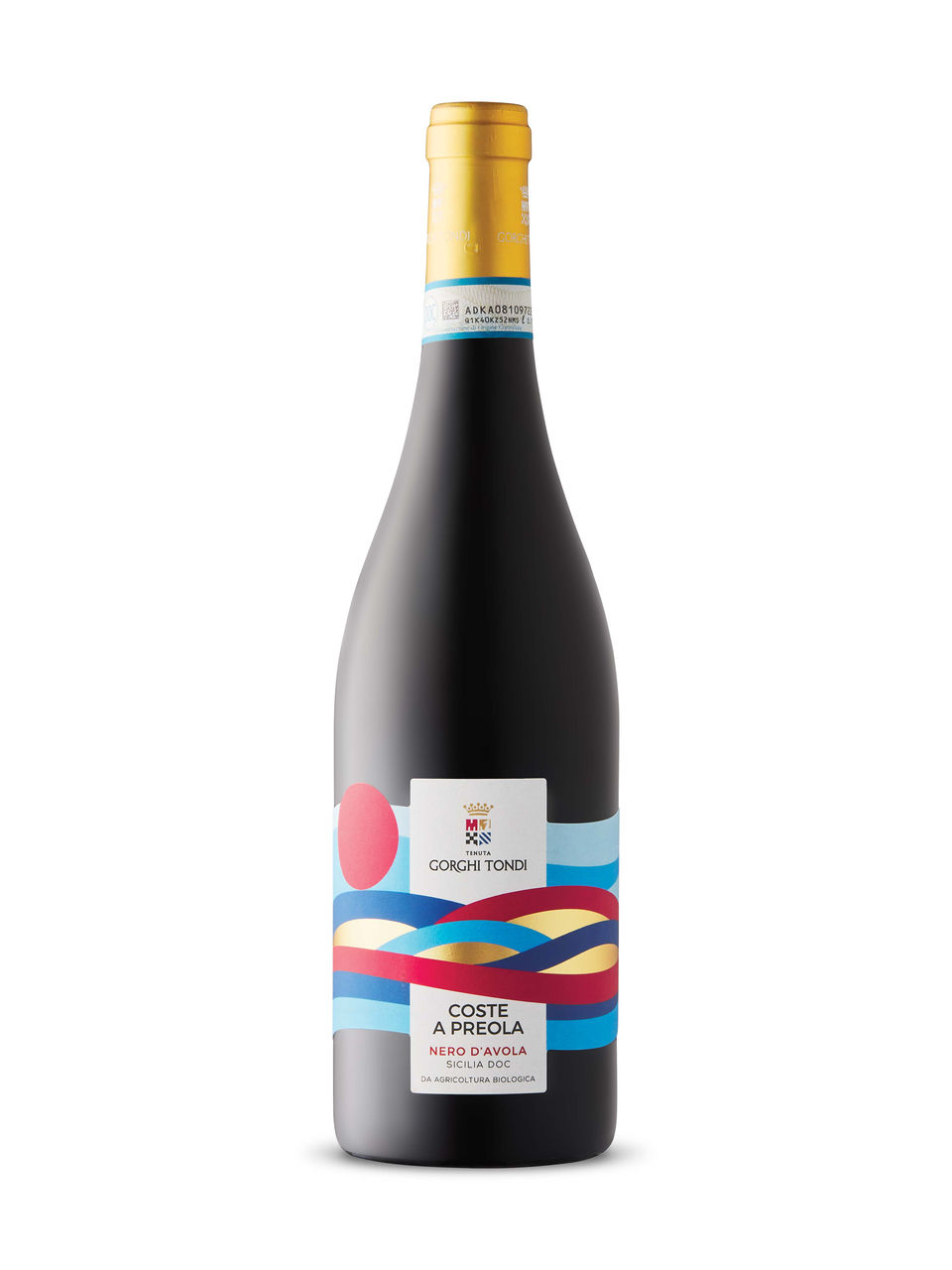
We try a Portuguese red Guarda Rios from the Alentejano region that is slowly crowding off Douro wines from the shelves in Ontario, based on price to value considerations. A blend of Syrah, Touriga Nacional and Aragonez.

Aroma: A healthy infusion of blackberry rules the roost. Secondary notes of blueberry and black cherry. Some hints of creaminess.

Palate: Moderate broad-based tannins. Firm. Tight. Spicy. A tad peppery on the finish. More about structure than fruit expressive.

Personality: If you visit Portugal, you may find us particularly formal in an old-world way. It is politeness not aloofness. Get to know us, don’t wear Bermuda shorts and a MAGA hat and we are terribly friendly and generous. I would describe myself as an old-world wine where fruit is polite and discrete and not gushing with fruit all over the place like several countries/regions, due to my politeness, I will not enumerate.

Music Match: Smokey Robinson (latest album “What the World Needs Now”).

Cellarbility: By the book I would say drink by 2026-year end but at this price experiment. Try one in 2027, and 2008 and see what you get. Wine can be a total bore if you always play by the book.

Price: $11.95 CDN.

RKS 2025 Wine Rating: 89/100. Jamessuckling.com 90.

(Guarda Rios Tinto 2022, VR Alentejano, Monte da Ravasqueria, Arraiolos, Portugal, 750 mL, 13.5%).

Toronto 2025 Hot Docs: “Walls – Akinni Inuk”

Having watched documentaries “Twice Colonized” (2023) and “Angry Inuk” (2016) I was expecting the Greenlandic Danish documentary “Walls – Akinni Inuk” to be infused with anger about the mistreatment of Greenlandic Inuk within the Greenlandic prison system.

I saw no anger but frustration with the judicial system incarcerating Ruth in Greenlandic custodial detention for 12 ½ years courtesy of an indefinite custodial sentence. As a Canadian lawyer far removed from the practice of criminal law, criminal sentences in Canada are usually for a fixed term unless a serious criminal offence results in an NCR court decision i.e. not criminally responsible where the accused is sentenced to an indefinite custodial sentence at “His Majesty’s Pleasure”.

Ruth murdered the man who sexually abused her then killed another man she believed had murdered her mother.

Greenland is not independent being under ultimate control of Denmark although it has a degree of self government. Greenland is responsible for the administration of justice and maintains its own criminal law and prison and probation services.  

Filmmaker Nina Paninnguaq Skysdsbjerg sets out to make a documentary about the Greenlandic detention system and in the early stage of filming encounters Ruth and feels a connection and the documentary becomes a focus on Ruth.

As Ruth and Nina converse over a period of time they discover both have suffered from sexual abuse, had alcoholic mothers and have suffered unhappy childhoods. Nina confesses enraged like Ruth was she wished to kill her abuser but changed her mind at the last moment.

Nina and Ruth are deeply wounded souls and their pain and torments emerge through their conversations but the extraction of the bad leads to healing and a deep friendship. The healing is a slow process taking a toll on a clearly emotional Nina who looks haggard and exhausted reliving and explaining her past to Ruth.

Far on in their relationship Nina becomes pregnant and in a poignant scene in the documentary Ruth, a mother herself, feels Nina’s stomach and the movement of the fetus and a look of joy accompanied by sparkling eyes and smiles completely transforms Ruth and may be the most powerful moment in the documentary.

A testament to compassion, friendship and the absolute necessity for second chances when they are completely warranted. Nina stands by not an angry Inuk but a largely forgotten and ignored Inuk and in the process shackles of trauma and imprisonment are broken.

There are physical walls between Nina and Ruth but through time together those walls crumble.

Directed by Sofie Rórdam and Nina Paninnguaq Skysdsbjerg.

Screening 26/28April.

RKS Documentary Film Rating 78/100.

RKS 2025 Film: “Treadmill”: The Never-Ending Run of Aggression and Repression

Fiftyish Dimitra lives in Athens with widowed mother Rea.

Dimitra has ordered a treadmill which Rea disproves of. It can’t fit in the flat unless several objects are moved so it rests out on the balcony for the time being.

We often hear families are dysfunctional but do we know what that term means? Its meaning varies in each family it resides in.

Rea is critical, domineering, manipulative, insulting, offensive, physically abusive, insensitive, inflexible, nagging, obsessive, sneaky and a liar. The sheer wall of negativity is overwhelming, choking Dimitra forcing her deeper into the corner repressing what she is and what she could be.

Dimitra’s defence is partial reaction but mostly repression of her true emotions. She loses her temper, is distant, can be cruel and when pushed to the limit revengeful.

When Dimitra pulls the knife from the drawer will that be the ultimate revenge or will the treadmill be her therapy?

Pull a psychiatrist into the viewing room and I am certain there will be some mention of Rea and Dimitra needing to express their true emotions to each other and “build a trusting relationship”. Baloney. Too late for that here.

There should be a “Treadmill the Sequel” to delve into why Rea is so destructive, bitter and hateful? In the meantime, you can be an Ultra in the football stadium cheering poor Dimitra on. It is clear she is running on empty and Rea on unlimited bitterness.

RKS 2025 Film Rating 84/100. Directorial debut of this short is by George Kimissis.

RKS 2025 Film: “Párvulos: Children of the Apocalypse”

Watching the Mexican horror film “Párvulos: Children of the Apocalypse” be prepared for a film like you’ve never seen before. Chalked full of suspense, horror, comedy with The Book of Revelations and the seven trumpets thrown in made more compelling by superb black and white cinematography, costuming and an adaptive soundtrack.

Salvador (Farid Correa), 17, Oliver (Leonardo Cervantes), 12 and Benjamin (Mateo Ortega Casillas) 7, live in an isolated stone house in a forest without their parents who it is reasonable to assume have perished in the devastating Omega plague along with seemingly most of the world. The defence of vaccine crumbled with the virus mutating ahead of vaccines. The last vaccine backfires creating zombies and look out as if bitten by an infected zombie then zombiedom will be your fate.

The boys have two zombies chained in a cell in the basement they feed with rats and dog meat. Vicious, slobbering and snarling zombies they are. Put two and two together, get the hint, and you’ll guess why the boys are caring for these vile creatures. Whilst you are shivering in fright in your seat a sudden twist into dark comedy will set you off course and before you formulate a thought this diversion is cheesy you are thrust back onto the terror trail.

The two basement zombies are not looking too well (as far as zombie health can be detected) with a diet of rat and dog meat and after feasting on a possible girlfriend for Salvador the boys notice the basement zombies seem quieter, more relaxed and almost thriving and becoming more dangerous than the zombies, the boys go hunting for fresh human meat gruesomely bagging the main course for their basement guests.

A mystic-religious type smashes into the boys’ house spouting stories about the chosen one and sensing the boys are not baptized veers into threatening religious gibberish. The mystic is a bad Mexican villain spaghetti western like character. Your instincts relating to this character are right. Don’t trust him for a minute as he is consumed with the seven trumpets of the biblical Book of Revelations and well all hell breaks loose with sacrifices, stabbing and a vengeful zombie.

A quirky ending. In the beginning of the film the boys recall their father used to say there are two constants in life: family and change. How that makes sense with the ending!

Gruesome, horrific, zombie satirical/humorous, mystical all in a neat horrific bowl of a protein rich breakfast worm smoothie.

Watch the trailer https://www.youtube.com/watch?v=KMPA7Dek0cI

Will be available on VOD 3June2025.

Directed by Isaac Ezban.

RKS 2025 Film Rating 91/100.

Operation 51st State: Elimination of Canadian Universal Healthcare

The Senior Working Group (SWG) reviewed the basics of Canadian universal healthcare that through the test of time has crumbled giving birth to a partial but more efficient private model. The Canadian medical system besieged by a massive poorly planned influx of immigrants to Canada, governmental cuts to funding and staffing and poor management fails to deliver adequate healthcare to its citizens. Theoretically all are entitled to equal medical care in this socialist model but those with private health insurance and funds to participate in private health care provider groups are those who have adequate medical care. The system is so poorly managed almost half of Canada’s population has no access to a primary care physician.

For example, the average waiting time for a cardiac ablation to manage atrial fibrillation in Canada is two years. With private insurance in the United States it is two weeks.

The universal healthcare system deprives Canadians of free choice to physicians as all Americans enjoy with private insurance or adequate funds. Doctors are poorly incentivised as employees of the state with fixed salary ranges.

The SWG recommends the universal healthcare system in Canada be discontinued and private medical care be reinstated in Canada as it once was in their Canadian Golden Age. For a limited period the indigent should be offered a limited version of universal healthcare.

The SWG recognizes the dismantling of the existing system be graduated.

The SWG encourages incentives be offered to American insurance companies to be the cornerstone of health provision in the 51st state.

The limited Canadian and Pharmacare and Dentacare programmes should be eliminated. Drill baby drill!

RKS 2025 CANADIAN Documentary: “Butterfly: Into the Maze of Human Trafficking”

“Butterfly: Into the Maze of Human Trafficking” is the third Viveka Melki documentary exploring sex trafficking and in this documentary the focus is on Western Canada exploring the experiences of Mallory (photo above) trafficked at 19, Raine trafficked at 12 and Charlie trafficked at 8. Their stories are profoundly disturbing including the trauma suffered during the trafficking and the long road to “recovery” which is rarely complete as some post traumatic stress order usually remains.

Police, therapists, psychologists, educators and community activists and an Indigenous Elder are interviewed.

Staff Sergeant Frank Pagé and Sergeant Brian McGuigan of the Alberta Law Enforcement Response Teams Human Trafficking Force provide insight as to the sex trafficking triangle of Predator-Victim-John and the trauma bond foundations of isolation-physical and psychological harm-inability to escape-manipulative kindness of sex trafficking. Pagé notes sex trafficking is highly profitable for organized crime second only to narcotics and points to the highly disturbing new trend of trafficking school age girls.

Prosecuting traffickers is difficult particularly when the traffickers transport the victims in circuits throughout Canada moving elusively from locale to locale.

Dr. Jacqui Linder, an Edmonton based clinical psychologist specializing in post traumatic stress disorder, likens recovery to ripping off the cocoon in order to help a butterfly emerge faster with less struggle but it is the struggle, akin to the ups and downs of the recovery process, that is more likely to result in a more fulsome recovery as the butterfly struggle to emerge from the cocoon gives it strong wings enabling it to fly.

Perhaps overuse of butterflies fluttering about in the documentary. A further expansion of organized crime’s involvement in sex trafficking would have been appreciated.

This TELUS original feature-length documentary airs 24April2025 on TELUS Optik TV Channel 8 and streaming Canada wide on https://watch.telusoriginals.com

RKS 2025 CANADIAN Documentary Rating 81/100.

RKS 2025 CANADIAN Wine: What’s My Reflection on Looking Glass?

What is my reflection on Niagara’s Rosewood’s 2021 Looking Glass?

A blend of 68% Cabernet Franc, 28% Cabernet Sauvignon and 4% Petit Verdot. The wines rested in neutral French oak for 15 months prior to bottling.

Aroma: Black cherry, raspberry, red currant and milk chocolate.

Palate: Strict, stern and dry. Moderate tannins. Razor thin fruit. Raspberry and red cherry  with a smattering of date and fig. Tart. Subtle and highly discrete like a package of Viagra delivered to your door in an unmarked box.

Personality: Yes I admit I am secretive. There are a few expressive and loudmouthed wines in Beamsville but rest assured I am not one of them. I am not one of those mass crowd pleasers.

Food Match: Beet salad with walnuts and feta.

Cellarbility: Consume in 2025. No sense in ageing.

Price: $30 CDN.

RKS 2025 CANADIAN Wine Rating: 88/100. Tony Aspler 91.

(Looking Glass 2021, Rosewood Winery, VQA Niagara Peninsula, Beamsville, Ontario, 750 mL,11.6%).

Toronto 2025 Hot Docs: “Night Watches Us”: No Police Brutality Here in Canada Eh?

There has been a long history of police brutality towards blacks in the United States. Perhaps a “modern” starting point for many might be the severe beating Rodney King suffered at the hands of the LAPD in 1991 and of course the notorious police murder of George Floyd in 2020 an incendiary device for Black Lives Matter.

Nicholas Gibbs and his son: Gibbs family photo

No way there is police brutality against blacks in Canada! Right?

In the National Film Board of Canada’s documentary “Night Watches Us” the death of 23 year-old black Montrealer Nicholas Gibbs on 21August2018 as a result of a “police interaction” is interpreted by the community where he lived and was killed. Gibbs, the father of three, had a history of mental illness.

Gibbs suffered from psychosis and was not on his medications when he was felled by a police bullet. According to the Montreal police Gibbs charged them with a knife and they shot him. Do we give the police the benefit of the doubt as often is done when the facts are “unclear”. This is unwarranted where two witnesses and a video recording established he was not charging the police with a knife. A psychiatric nurse living near the shooting scene interviewed criticized the lack of police training in dealing with mentally ill individuals. Shouting and threatening with guns drawn was the worst approach possible.

An internal police investigation determined no discipline was warranted for the police officer that fired the bullet and criminal charges were also dropped. Gibbs’  nephew is quite clear and many of the community when they say it was murder.

In addition to hearing from the Gibb family the story is creatively and passionately related by mixed media including dance, poetry, animation and music.

A highly publicized incident in the growing catalogue of police brutality in Canada ignored by both the police and the judicial system. In the Gibbs case it is difficult to give police the benefit of the doubt when there was no doubt.

You can watch a clip here https://vimeo.com/1055374919

Screens 1May2025.

A film by Stefan Verna.

RKS 2025 CANADIAN Documentary Rating 68/100.