Mordecai Richler and Leonard Cohen I looked for you at Schwartz’s on the Main where even the Boy Wonder was gone they told me your spirits now eat at Joe Beef as you were evicted from Moishe’s the mighty sirloin defeats the lowly smoked meat ( with fries, a dill and a Cott Cherry Cola)
You held me spellbound freshness not of plastic concocted standardized perfection your smiles in my direction were of courtesy civility and cultured background I tried to touch you but you needed everyone those surly ugly butchers of your beauty oblivious to you
they thundered over you leaving hoofprints on me ripping and agonizing torture I tried to heal you pushed me roughly aside but you knew didn’t you?
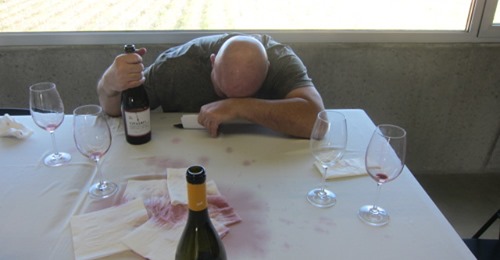
blank paper makes as much sense as the music of the turnstiles constant inflow and outflow eddies of confusion fail to distract the frustration and the odious discomfort of mesmerized pacing brings little solace as insanity clasps the narrow ledge of its opposite sister masses of flesh ooze their way to compartmentalized homelessness a man makes love to his sherry bottle amidst the red-eyed concert crowd and greedy chocolate smeared wretches who annoy with mimicked telescreened adventures
eros remains helpless joylessly suffocating while thanatos gleefully offers an exit and frustrated young poets sit in buses unable to meet the 5 year plan of literature futilely attempting to explain all
Chapter 46 “so what did we learn from all these plagues: the never-ending stream of diseases”
It is quite plain and clear as day humanity will always be hunted down by diseases. Germs and bacteria are smarter than humans. As you as you knock out polio, then there is a surge in cancer which as you know despite billions in research funding there is no cure. Then AIDs, Ebola, COVIDs and Virus # 26. Viruses have an incredible ability to mutate and stay ahead the virus hunters.
Now why is this? As a physician it all can be rationally explained where diseases emanate from but that seldom addresses the issue of why we have diseases. Some may argue it serves to keep the population down and as there are limited resources to be shared or monopolized the killing factor of diseases brings about equilibrium. Some may take a spiritual view saying it is God punishing wicked humanity or that it is Mother Earth seeking revenge from too many human abuses to it.
Why were Virus # 26 and COVID-19 so deadly? Could it have been a coincidence the spate of natural disasters preceding these diseases was a warning from a higher source? Tsunami’s, horrific forest fires, devastating floods and hurricanes. Was the warning in your face with deforestation of the Amazon and global warming?
Well let me take a bold step as a minimally spiritual man and say the plagues were an act of God. I don’t mean the God that Europe or Asia bows down to but an inexplicable force and something that can’t be explained to or understood by the scientific mind.
The truth is God can be a brutal and unforgivable force that kills even those that believe in God whether that be Allah or Buddha. Perhaps the godly people of the world were killed by Virus # 26 to teach survivors a lesson how fragile and insignificant they are. As it was said Jesus died to save us did these godly people have to die to save us. Perhaps these events caused all us survivors to query why these events happened. To simplify matters in a generic way the consensus was that humans had acted very badly towards each other and their environment and were being punished by some force we could only guess about.
I spend many hours thinking about why this all happened but of course I’ll never find the answer in life but perhaps in death? My daughter Alexis has since joined a quasi religious group “The New Humanist Movement” that spends an incredible amount of time discussing why humanity was slammed so badly by COVID and Virus # 26. It recognizes a higher force had a hand in all this calamity and in prayer asks for forgiveness for the sins of humanity that were conditions precedent to the plagues. The New Humanist Movement is not a cult but survivors seeking answers and praying for guidance on how such terrible waves of viruses can be dodged by humanity. I don’t discourage Alexis from participating in the New Humanist Movement but one thing I can say with certainty there has always been a plague of some sort and I pray to the unknown that Alexis and her future family will not have to suffer through yet another one
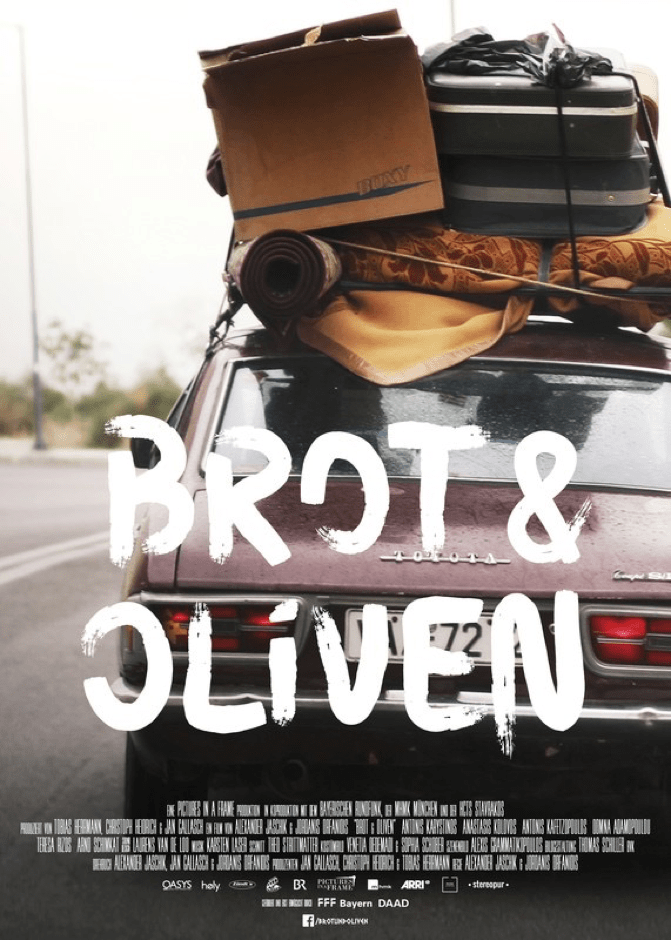
Greek brothers Vangelis and Leonidas have a coffeeshop and bar that had to close due to harsh times in 2014 Greece so they phone their uncle Giannis in Munich who leads them to believe he owns a successful Greek restaurant in Munich so off the brothers go with their mother leaving Greece behind.
Well Giannis operates out of a ramshackle food cart and the restaurant he told the bothers he owned is actually across the street and owned by a German. Giannis admits he has been a failure in Greece and returns home with Leonidis and his mother but they open a beachside hut and sell big mugs of German beer and pretzels doing good business. And their mom’s olives are purchased by the German Greek restaurant owner. Vangelis and Nicole, the German Greek restaurant owner’s dcaughter, are becoming very chummy so he stays behind in Munich. Considering the wreckage caused by the Greek financial crisis I suppose we have a happy ending.
Yet another film dealing with the economic pain suffered by Greeks during the financial crisis. Well it is not a doom and gloom film being more of a comedy where at that time in Greece there was not much good humour around.
Counterbalance Collective is a new game in town operating out of Toronto. Very determined young women operating as a collective learning their craft of making film by assuming interchangeable roles of film production. All done with high intentions and spirit but short on funds.
I watched their little over 9 minutes short “Green” and the camerawork has improved and the musical score by Kiia is snappy and perfectly suited. A young lady (Seled Calderon) is given a fern by her friend in the hope that it will help her “get her shit together”. Well the opposite happens as she tries to transplant the little fern she has named Christina and creates a disaster of epic proportions. Calderon shows good range from determination, frustration and then tears and in the end her self proclaimed title “Plant Momma” is rather exaggerated!
A study in good intentions being bombed to smithereens by lack of technical ability and the range of emotions that can flow over a plant and a personality not suited for caring for a plant. Plant Momma loveable and human as she is lacks the ability to care for a fern. If you are searching for a deeper meaning learning and understanding your limitations often is a result of what we might call insignificant events. In fact Calderon is so Chaplinesque in her physicality this could very well be a silent short!
From British Columbia’s Okanagan Valley we have a Meritage from Sunrock Vineyards which is a blend of Merlot, Cabernet Sauvignon and Cabernet Franc. The Okanagan does a splendid job with these grapes on a singe varietal basis so I expect that usual high quality in a blend! Unfortunately expectations can sometimes be shattered.
A lush and plush nose. Seems like Okanagan Merlot is showing its stuff. Blackberry, black cherry, blueberry and a bit of coconut courtesy of I am guessing some older American oak? On the palate you get what you got on the nose. Perfect balance of acids, tannins and oak with this wine. Really well put together. It is rich and full bodied with a moderately long finish. I really only eat meat a few times a year. I have not even grilled anything on the barbeque this year. Yes I admit at times I miss it but quite frankly a plant based diet is much better for your health and over the past few years digging deep I have discovered some very satisfying vegetarian dishes so I’ll say go ahead and have this with a steak or lamb and you’ll be well rewarded but tonight I had roasted squash, heirloom carrots and potatoes drizzled with olive oil and beer with red pepper flakes and maple syrup served over some basmati rice. Delicious and this wine would have suited it so well.
Another excellent wine from our neighbours in British Columbia. A veritable treasure trove of wines the world should experience.
(Sunrock Vineyards Red Meritage 2016, BC VQA Okanagan Valley, Sunrock Vineyards, Oliver, British Columbia, $34.95, Liquor Control Board of Ontario #408392, 750 mL, 14.5%, Robert K. Stephen A Little Birdie Told Me Rating 94/100)
We move lastly to a Monte Creek ranch 2017 Cabernet Merlot. A predominant nose of blackberry and blackberry all very clean and pure. On the palate noticeable tannins with Santa Rosa plum, black cherry and a hint of coffee. The finish is moderate. This is a right at you type of wine. I say it is made for food and my vote would be a vegetarian lasagna preferably with all local produce which unfortunately is months away but you can try it with the less than tasty California or Mexican produce. And canned Italian tomatoes.
(Monte Creek Ranch 2017 Cabernet Merlot, BC VQA, Monte Creek Ranch Winery, Monte Creek, British Columbia, $23.95, Liquor Control Board of Ontario #15770, 750 mL, 14.4%, Robert K Stephen A Little Birdie Told Me Rating 86/100)
Service means a giving of yourself to others for the purpose of helping their purpose and goals. The mere fact you are giving yourself immediately enables you to traverse the “me” barrier.
One hopes humans have the ability to determine if the service is for a worthy cause. In this regard there are bad purposes and ambitions you can give service to and increase human suffering. Determining if you are offering service to a “good cause” involves a value judgement not all individuals can readily make. Like if you are offering your services to the anti-abortion movement is this a good cause? What moral code can we adhere to determine the validity and decency of our service? We are at the mercy of reliance on individuals to assess what is good service. Quite frankly beyond me mindfulness characteristics may often be used for evil so at the end of the day you have to decide if your service is for promoting and reducing suffering for humanity or reducing it.
In simplistic terms you are making someone’s life better. In the easily recognizable forms it is giving someone or organization your time as a community service. It can be volunteering as a hockey coach, sorting food at a community foodbank or volunteering at a charitable organization.
Your giving of time to third parties shows you are interested in more than yourself. This giving has the ability to make you happier as you feel better about yourself. I can only hope it is a genuine act of your heart and not simply a sense of duty. As Martin Luther King stated, “An individual has not started living until he can rise above the narrow confines of his individualistic concerns to the broader concerns of all humanity.”
As Alison Murdoch and Deyki-Lee Oldershaw say in their “16 Guidelines For Life”, ‘The people who serve most deeply and sincerely seem to be those who can expose themselves the most fully to another person’s needs and problems. It can be painful and difficult to open up to the suffering of someone else. Our minds recoil, seeking a more pleasurable focus of attention. Yet if we can stay open and aware, we may find the answer for many of our own needs and dilemma.’
Practitioners of mindfulness soon realize compassion is a key component of mindfulness. There is self-compassion and compassion for others. If you can’t be compassionate with yourself how can you be compassionate to others?
In fact there are even specialized meditations that focus on compassion.
I would argue if you can’t exercise compassion for yourself you may be setting yourself up for undue misery. Assume a terrible event has occurred in your life and you are bothered with it. You can be bitter and resentful if you react to that terrible event leading to emotional upset. Or you can respond to that event by showing some compassion to yourself. Through showing this compassion you may overcome the event, learn to accept it and believe it or not you might even be thankful for the event or it may be a combination of all three. You can’t truly escape sorrow but you can “manage” it so it does not become self destructive.
I refer to the “arrow story” for a bit of analogy. You are shot with an arrow and are in pain. If you start criticizing yourself for a myriad of reasons for being an easy target you are heaping fuel to the fire accomplishing little but adding to your pain.
Assuming one is not a psychopath or sociopath compassion is infinite or can be infinite.
It is as simple as closing your eyes and giving yourself or anyone else compassion. Recognize the sadness, anger or whatever the negative emotion is swirling in your head and send kind wishes of health, safety, understanding and in some cases forgiveness. Compassion has become so important there is actually a companion to mindfulness called compassionate cultivation training. Compassion does lead to a degree of neuroplasticity.
Empathy can be somewhat tricky in mindfulness. Empathy is in essence connecting with yourself or a third party and can be painful and draining. Perhaps instead of feeling for yourself or that third party send out thoughts of compassion.
If you have been exposed to an MBSR/MBCT course through a hospital which is quite often a step for people suffering from depression, anxiety or obsessive compulsive disorder mindfulness becomes a bland therapeutic tool focusing on a apparently simplistic tool of meditation focusing on the breath to give the mind a respite from what has upset it. At the end of the day it is therapeutic type of tool. Whether it be MBSR or MBCT in an institutional setting it really has very little soul. A constant Jon Kabat-Zin theme of being in the present moment in a non-judgemental fashion. Often boring body scan meditations. Breathe, breathe and think of nothing else but the breath. This has so much wisdom in it but having been at least 14 days of MBSR training at a local hospital I can say only a few of my fellow participants really understood its significance .Nor is there any understanding of Buddhist or Daoist traditions that form the core of modern mindfulness.
Yes MBSR and MBCT may simply be tools. Like prescribing an anti-depressant MBSR/MBCT has become a “drug” to deal with stress and psychiatric disorders. I participate in, or used to before COVID, a monthly mindfulness group meeting headed by a psychiatrist at a local hospital. Yet try to talk about “being in the present moment” or “feeling as one” during meditation very few participants understood these concepts. That is a shame to see that mindfulness is just another RX script. A new nondrug drug. The way I see it taught within the hospital situation is that mindfulness is a state of mind and not a state of how to live mindfully.
Now if it works to reduce or control stress and psychiatric conditions bravo!
But mindfulness living requires more than a technical sophistry if one wants to take that path. Should there be a value-based mindfulness? By this I mean a conscious attempt to import certain values into a mindful practice. Arguably if one becomes aware of these values isn’t one mindful of them?
Can we move beyond that shallow technical application of head towards a value-based mindfulness that involves principles of living and relating that involves more than a quick and dirty meditation that frees the mind from adverse reactions to life?
Perhaps this is something we should delve into? Are there principles of mindfulness that take us beyond the quick and dirty technical use of mindfulness and shape our lives to a richer and rewarding intellectual existence beyond that trite “living in the present moment” expression. Well it is not that trite but in my experience, it is trite as MBSR participants have absolutely no or little understanding of how it feels and how it means.
Yet should we have a cup of “mindful tea” wearing our mindful T-shirts. Or should we be suckered in by employers offering mindful courses to possibly exploit and manipulate their employees. Yes, the employer says, we have given you the tools to manage stress so let’s heap more work on you!
Let us delve deeper into what mindful living might encompass. Coming up a discussion on the 16 guidelines of life.
(The author is certified in mindfulness by the University of Toronto and the University of Leiden.)



 A Bird's Eye View of Fashion, Food, Travel, Culture, Beverage and Curiosity