The Singapore Times Exclusive: THE ABDUCTION OF RORY DYLAN STEPHEN: KAMPONG GLAM, LITTLE INDIA AND CHINATOWN REFLECTIVE OF ETHNICITY IN SINGAPORE
As a bright white West Highland Terrier perhaps I should dare to say there are very few Caucasians visible in Singapore despite the fact of its British colonial heritage.
Ethnic Chinese comprise 75.5 % of the population, Malays 15.1% and Indians 7.6% with Eurasians at 1.8%.
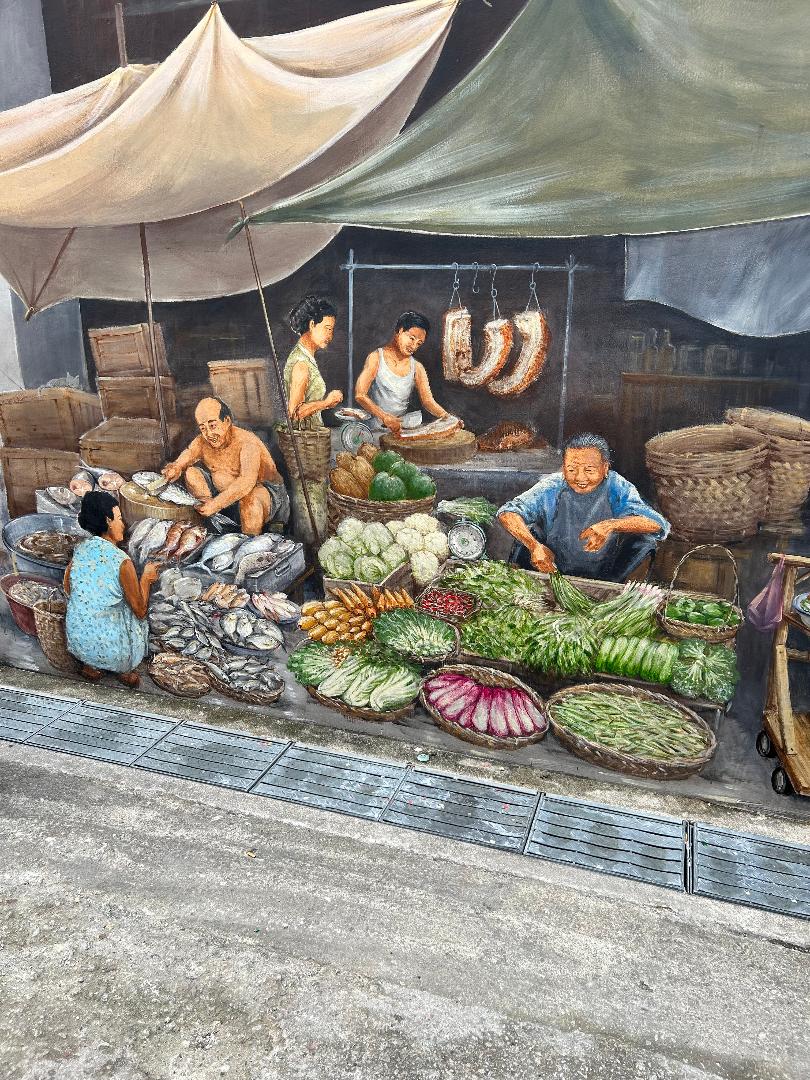
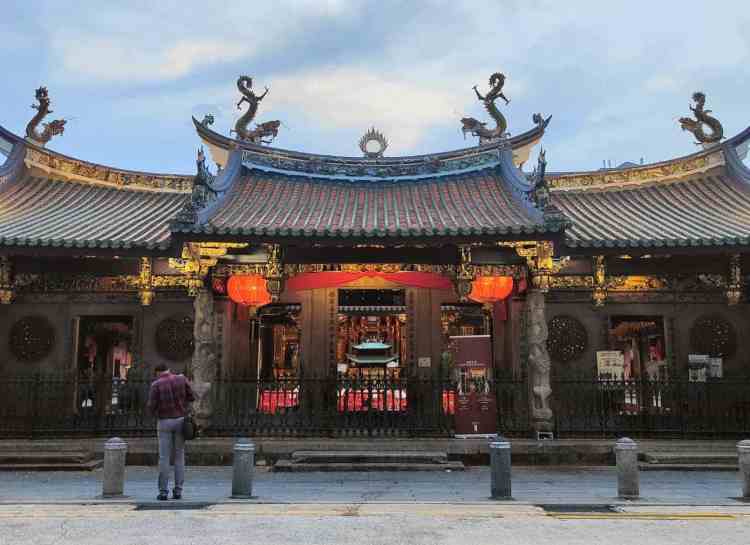
Toronto has a more commercial and vibrant “traditional” Chinatown than Singapore’s although one might say Singapore in its totality is a sort of Chinatown. I was impressed by the Thian Hock Keng Temple built between 1839 and 1842 by early Chinese immigrants who came to Singapore seeking a better life. It was constructed using traditional Chinese methods serving as a place of worship for the Hokkien community. A prime example of southern Chinese temple architecture it featured intricate carvings, colourful tiles, detailed sculptures and imposing columns with its roof adorned with mythical creatures and scenes from Chinese folklore. The interior is decorated with delicate porcelain figurines and the temple’s vibrant colors and artistic elements make it a visually striking place. Often called the Temple of Heavenly Bliss it is not only a religious site it continues to be a place of active worship and a symbol of the rich cultural heritage of Singapore’s Chinese community.
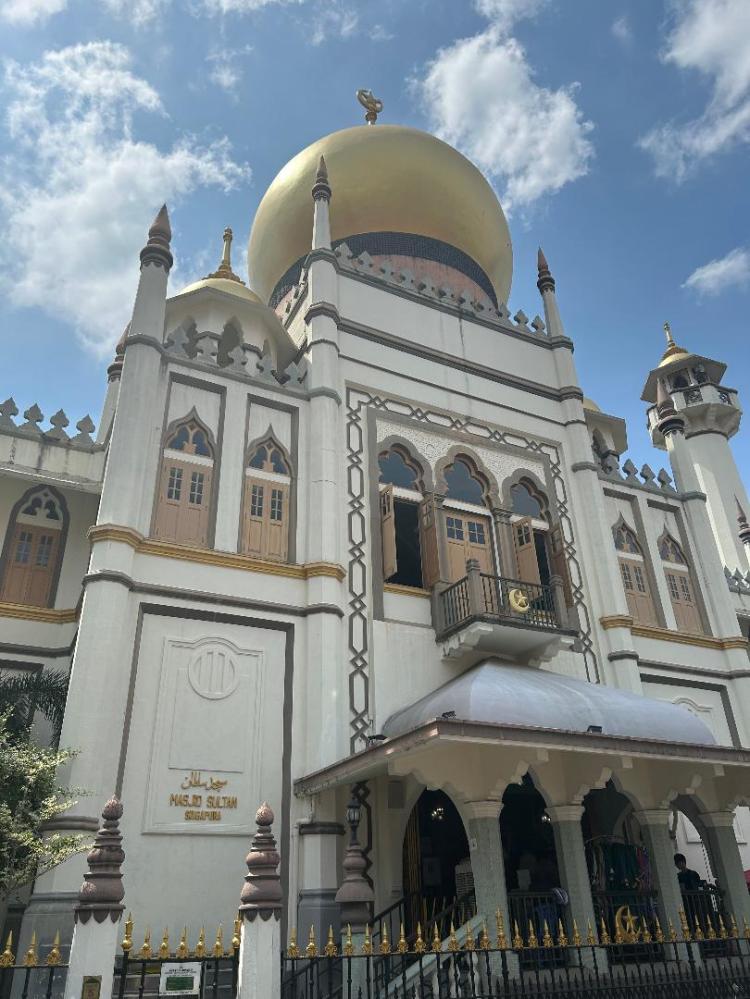
Kampong Glam, the Muslim quarter and Malay enclave that originated as a fishing village at the mouth of the Rohor River. The golden domed Sultan Mosque stands out. There are many Indonesian tourists here. The main street is very commercial and lined with restaurants including two Greek restaurants! There are many traditional shophouses restored and serving as home for shops and restaurants.
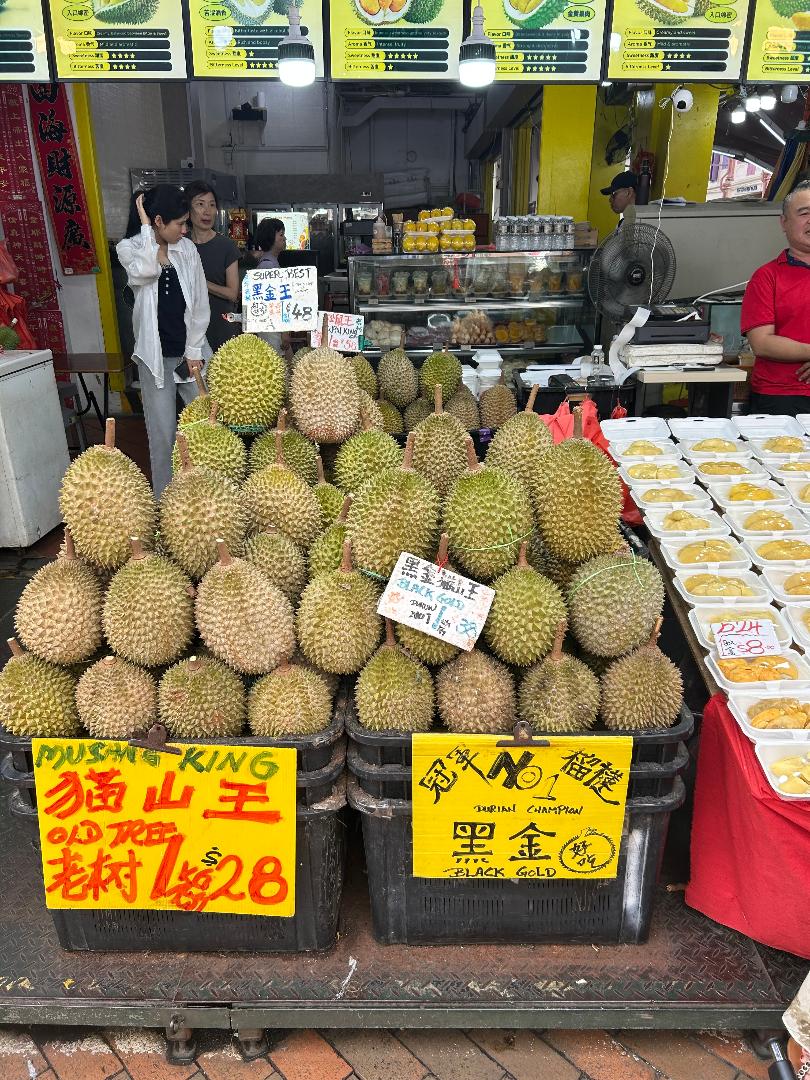
Little India strikes me as jam packed and crowded with a particular food smell to it. Bobby Jr. loves the Durian juice here!
Bobby Jr. added his team of pickpockets operated in these three areas and one needed pickpockets with extraordinary skill to lift gold jewellery the Indonesian women were wearing.
While Bobby Jr. chugged down a mega Durian juice he was thoughtful to keep me hydrated with lots of Evian in a portable Gulpy. He is a thoughtful man far different than his mother the dragon lady Madame Fong. He has not mistreated me in any way.
Next stop, The Raffles Hotel garden bar for an afternoon cocktail.
THE ABDUCTION OF RORY DYLAN STEPHEN: KAMPONG GLAM, LITTLE INDIA AND CHINATOWN REFLECTIVE OF ETHNICITY IN SINGAPORE
The Singapore Times Exclusive: THE ABDUCTION OF RORY DYLAN STEPHEN: KAMPONG GLAM, LITTLE INDIA AND CHINATOWN REFLECTIVE OF ETHNICITY IN SINGAPORE
As a bright white West Highland Terrier perhaps I should dare to say there are very few Caucasians visible in Singapore despite the fact of its British colonial heritage.
Ethnic Chinese comprise 75.5 % of the population, Malays 15.1% and Indians 7.6% with Eurasians at 1.8%.
Toronto has a more commercial and vibrant “traditional” Chinatown than Singapore’s although one might say Singapore in its totality is a sort of Chinatown. I was impressed by the Thian Hock Keng Temple built between 1839 and 1842 by early Chinese immigrants who came to Singapore seeking a better life. It was constructed using traditional Chinese methods serving as a place of worship for the Hokkien community. A prime example of southern Chinese temple architecture it featured intricate carvings, colourful tiles, detailed sculptures and imposing columns with its roof adorned with mythical creatures and scenes from Chinese folklore. The interior is decorated with delicate porcelain figurines and the temple’s vibrant colors and artistic elements make it a visually striking place. Often called the Temple of Heavenly Bliss it is not only a religious site it continues to be a place of active worship and a symbol of the rich cultural heritage of Singapore’s Chinese community.es
Kampong Glam, the Muslim quarter and Malay enclave that originated as a fishing village at the mouth of the Rohor River. The golden domed Sultan Mosque stands out. There are many Indonesian tourists here. The main street is very commercial and lined with restaurants including two Greek restaurants! There are many traditional shophouses restored and serving as home for shops and restaurants.
Little India strikes me as jam packed and crowded with a particular food smell to it. Bobby Jr. loves the Durian juice here!
Bobby Jr. added his team of pickpockets operated in these three areas and one needed pickpockets with extraordinary skill to lift gold jewellery the Indonesian women were wearing.
While Bobby Jr. chugged down a mega Durian juice he was thoughtful to keep me hydrated with lots of Evian in a portable Gulpy. He is a thoughtful man far different than his mother the dragon lady Madame Fong. He has not mistreated me in any way.
Next stop, The Raffles Hotel garden bar for an afternoon cocktail.
The Singapore Times Exclusive: THE ABDUCTION OF RORY DYLAN STEPHEN: KAMPONG GLAM, LITTLE INDIA AND CHINATOWN REFLECTIVE OF ETHNICITY IN SINGAPORE
As a bright white West Highland Terrier perhaps I should dare to say there are very few Caucasians visible in Singapore despite the fact of its British colonial heritage.
Ethnic Chinese comprise 75.5 % of the population, Malays 15.1% and Indians 7.6% with Eurasians at 1.8%.
Toronto has a more commercial and vibrant “traditional” Chinatown than Singapore’s although one might say Singapore in its totality is a sort of Chinatown. I was impressed by the Thian Hock Keng Temple built between 1839 and 1842 by early Chinese immigrants who came to Singapore seeking a better life. It was constructed using traditional Chinese methods serving as a place of worship for the Hokkien community. A prime example of southern Chinese temple architecture it featured intricate carvings, colourful tiles, detailed sculptures and imposing columns with its roof adorned with mythical creatures and scenes from Chinese folklore. The interior is decorated with delicate porcelain figurines and the temple’s vibrant colors and artistic elements make it a visually striking place. Often called the Temple of Heavenly Bliss it is not only a religious site it continues to be a place of active worship and a symbol of the rich cultural heritage of Singapore’s Chinese community.es
Kampong Glam, the Muslim quarter and Malay enclave that originated as a fishing village at the mouth of the Rohor River. The golden domed Sultan Mosque stands out. There are many Indonesian tourists here. The main street is very commercial and lined with restaurants including two Greek restaurants! There are many traditional shophouses restored and serving as home for shops and restaurants.
Little India strikes me as jam packed and crowded with a particular food smell to it. Bobby Jr. loves the Durian juice here!
Bobby Jr. added his team of pickpockets operated in these three areas and one needed pickpockets with extraordinary skill to lift gold jewellery the Indonesian women were wearing.
While Bobby Jr. chugged down a mega Durian juice he was thoughtful to keep me hydrated with lots of Evian in a portable Gulpy. He is a thoughtful man far different than his mother the dragon lady Madame Fong. He has not mistreated me in any way.
Next stop, The Raffles Hotel garden bar for an afternoon cocktail.