

“Among us, for instance, in Western Europe, freedom is officially approved. But such freedom makes me think of the poor female cousin in certain middle-class families. She has become a widow, she has lost her natural protector. So she has been taken in, given a room in the top floor, and is welcome in theContinue reading “RKS Literature: Freedom Compared to the Poor Female Cousin in Certain Middle-Class Families (Albert Camus)”
Tag Archives: Albert Camus
RKS Literature: The Death of a Lying and Comfort Loving Europe (Albert Camus)

“Let us rejoice, indeed, at having witnessed the death of a lying and comfortable Europe and being faced by cruel truths. Let us rejoice as men because a prolonged hoax has collapsed and we see clearly what threatens us.” Albert Camus, “Create Dangerously”, 1957.
RKS Literature: The Justification of a Writer (Albert Camus)
“We must know that we can never escape the common misery and that our only justification, if indeed there is any justification, is to speak up, insofar as we can, for those who cannot do so. But we must do so for all those that are suffering at the moment, whatever may be the glories,Continue reading “RKS Literature: The Justification of a Writer (Albert Camus)”
RKS Literature: What Can Art Speak of? (Albert Camus)
“Of what could art speak, indeed? If it adapts itself to what the majority of our society wants, art will be meaningless recreation. If it blindly rejects that society, if the artist makes up his mind to take refuge in his dream, art will express nothing but a negation. In this way we shall haveContinue reading “RKS Literature: What Can Art Speak of? (Albert Camus)”
Albert Camus “The Plague”: The plague does not disappear it hides
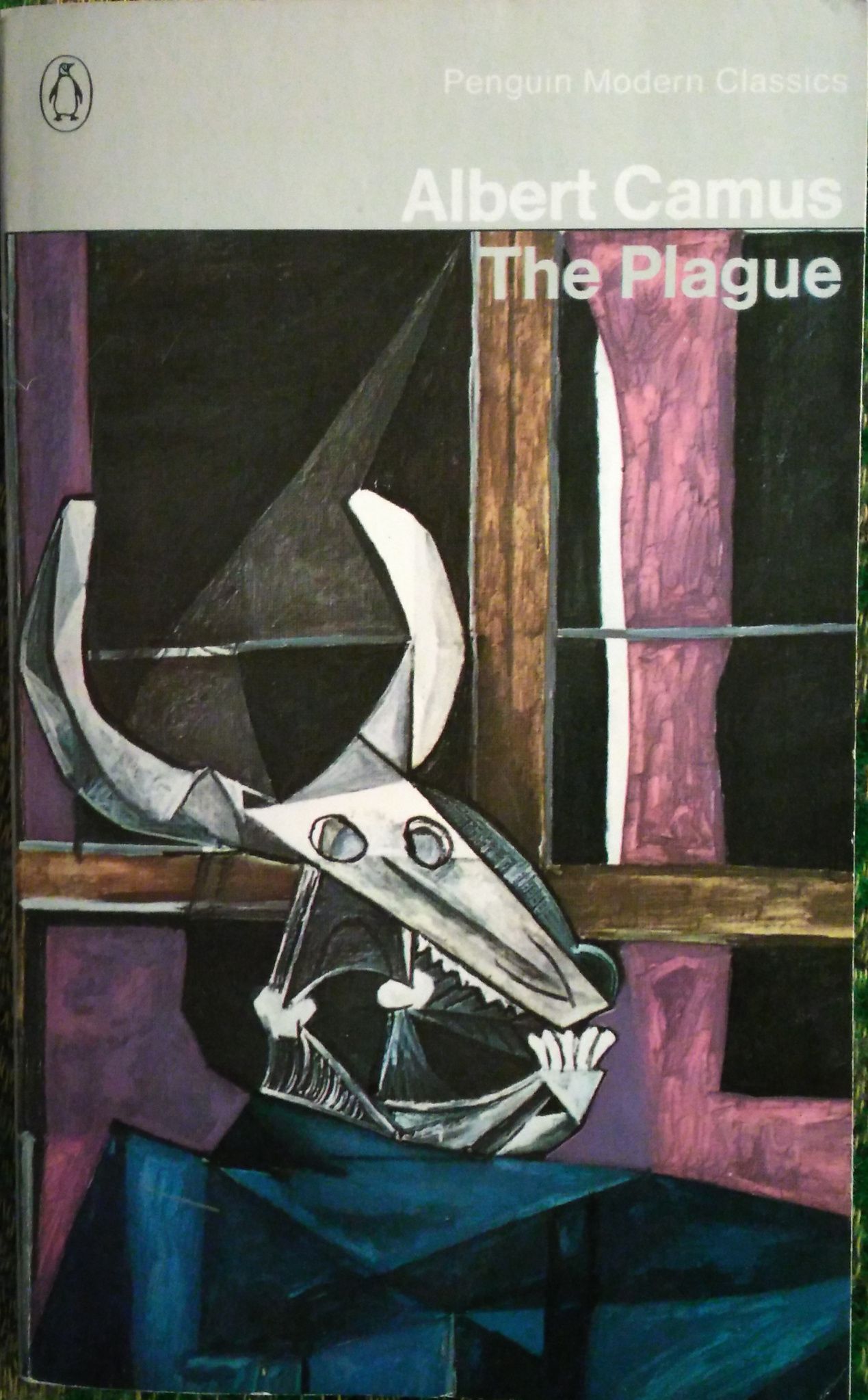
“And indeed as he listened to the cries of joy rising from the town, Rieux remembered that such joy is always imperilled. He knew what those jubilant crowds did not know but could be learned from books: that the plague bacillus never dies or disappears for good; that it can lie dormant for years andContinue reading “Albert Camus “The Plague”: The plague does not disappear it hides”
Albert Camus “The Plague”: The new order
“Through this sudden setback of the plague was as welcome as it was unlooked for, our townsfolk where in no hurry to jubilate. While intensifying their desire to be set free, the terrible months they had lived through taught them prudence. and they had come to count less and less on a speedy end ofContinue reading “Albert Camus “The Plague”: The new order”
Albert Camus “The Plague”: The power of the graph
” But it seemed like the plague had settled in for good at its most virulent, and it took a daily toll of deaths with the punctual zeal of a good civil servant. Theoretically, and in the view of the authorities, this was a hopeful sign. The fact that the graph after its long risingContinue reading “Albert Camus “The Plague”: The power of the graph”
Albert Camus “The Plague”: The lack of individual destinies
“Thus week by week the prisoners of the plague put up what fight they could. Some like Rambert, even contrived to fancy they will still behaving as free men and had the power of choice. But actually, it would have been truer to say that by this time, mid-August, the plague had swallowed up everything,Continue reading “Albert Camus “The Plague”: The lack of individual destinies”
“The Plague” by Albert Camus: Passage for Reflection: The Fight Against the Plague
” Fledging moralists in those days were going about our town proclaiming there was nothing to be done about it and we should bow down to the inevitable. And Tarrou, Rieux and their friends might give one answer or another, but its conclusion was always the same, their certitude that a fight must be putContinue reading ““The Plague” by Albert Camus: Passage for Reflection: The Fight Against the Plague”
Passage for contemplation: Albert Camus: “The Plague”: Pleasure in the Peril!
“In the early days, when they thought that this epidemic was much like the other epidemics, religion held its ground, But, once these people realized their instant peril, they gave their thoughts to pleasure. And all the hideous fears which stamp their faces in the daytime are transformed in the fiery, dusty nightfall into aContinue reading “Passage for contemplation: Albert Camus: “The Plague”: Pleasure in the Peril!”
 A Bird's Eye View of Fashion, Food, Travel, Culture, Beverage and Curiosity