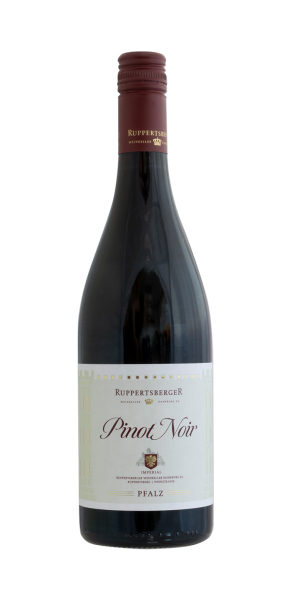
At $21 the 2021 Ruppertsberger Imperial Pinot Noir Trocken is at an attractive price but its quality?
Aroma: No doubt this is a Pinot Noir or as they say in Germany Spätburgunder! Raspberry, cherry and a tad of strawberry jam.
Palate: A jolt of kirsch mixes it up with raspberry. The fruit is a bit late in reaching the palate but when it does it is worth the wait. Lightly tannic with a short spicy finish.
Personality: I am a good price and for my price let’s not get too fussy.
Food match: Creamed lobster pasta over tagliatelle.
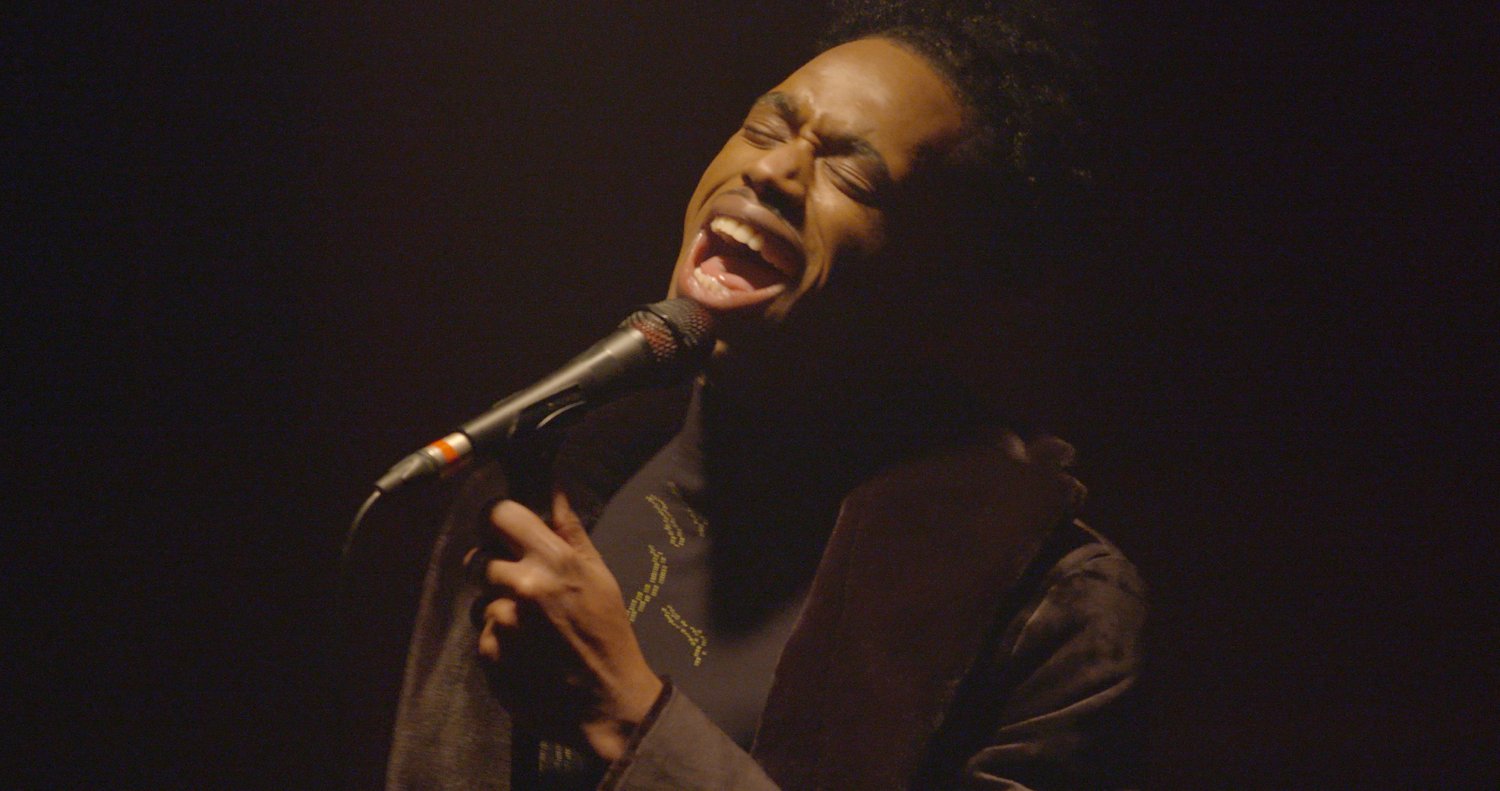
Jamaican Dalton Harris wins the 2018 X Factor UK “talent contest”. He had been preparing for an X Factor UK appearance for seven years winning several Jamaican talent contests including “Rising Star”. Now translate the X Factor UK win into stardom, fortune and fame! Pictures circulate showing Dalton hugging a man and sitting on the lap of an X Factor UK contestant. This is not well accepted by a homophobic Jamaica where gay men (batty boys) are attacked and beaten if not murdered. Still on the books is an original British colonial law over 150 years old criminalizing sex between men.
Dalton receives death threats and all manner of insults from many homophobic Jamaicans. The documentary “Dalton’s Dreams” chronicles Dalton’s struggle with homophobic elements, mental illness a traumatic childhood with a physically abusive mother and openly admitting his homosexuality which he finally does near the end of the documentary.
The homosexuality is a minor component of the documentary and what is more compelling is what an anticipated rise to fame involves. Dalton is surrounded by record company executives, record producers, agents and a troop of technicians trying to mould him into what they interpret a star to be. Endless pats on the back and compliments that are forgotten when he fails to replicate his X Factor UK moment of fame. A public dispute with his mother causes even more stress.
Some three years after his X Factor win Dalton “comes out” and makes peace with his abusive mother that beat him as a child until he bled and locked him out of the house for days.
Watch the documentary and you may be surprised by his thankfulness for winning X Factor UK and it isn’t what you think. I suppose it might how you define success.
This British documentary is directed by Kim Loginotto and Frank Murray Brown.
In person showing in Toronto on 24May2024 and virtually in Canada only 25May2024.
RKS 2024 Film Rating: 68/100.
For more information on Festival films check out insideout.ca
Ontario is a province in Canada producing excellent Cabernet Franc in Niagara, Lake Erie North Shore and Prince Edward County so theoretically there is no need to look to Chinon in the Loire for good Cabernet Franc but to escape being labelled as unadventurous one may wish to try a French version of Cabernet Franc from the Loire.
Grapes were cultivated in limestone and clay soils with a layer of pebbles on the surface. Aged 12 months in 3–7-year-old oak barrels.
Aroma: Think of black cherry, blackberry and milk chocolate. The blackberry is not a characteristic of Ontario Cabernet Franc.
Palate: The tannins are also moderate and just a tad heavier than one might expect from an Ontario Cabernet Franc. Influence of black fruit and kirsch gives the wine a richer profile than an Ontario equivalent. It hides much of its fruit giving the wine a brusque taste profile. The kirsch gives this Cabernet Franc somewhat of a distinct character and becomes more prominent if the wine is decanted.
Personality: I am a full-bodied wine with fruit presently partially restrained by my tannins. I am built for food at this point but will soften over the next 5 years if you can wait that long.
Food Match: Grilled flank steak that has marinated in ginger, garlic, honey and soy sauce.
Cellarbility: Dink now or hold until 2029. It will improve with age as it sheds some of its brusqueness.
In the early decades of the 20th century, when many artists were experimenting with abstraction, Käthe Kollwitz remained committed to an art of social purpose. Focusing on themes of motherhood, grief, and resistance, she brought visibility to the working class and asserted the female point of view as a necessary and powerful agent for change. “I have no right to withdraw from the responsibility of being an advocate,” she wrote. “It is my duty to voice the sufferings of men, the never-ending sufferings heaped mountain-high.” The first major retrospective devoted to Kollwitz at a New York museum, this is also the largest exhibition of her work in the US in more than 30 years.
“Homeworker Asleep at the Table” 1909 (Photo Robert K. Stephen)
Born in the Prussian city of Königsberg (now Kaliningrad, Russia), Kollwitz was based in Berlin from the 1890s through the early 1940s, a period of turmoil in German history marked by the upheaval of industrialization and the traumas of two world wars. Though she had trained briefly as a painter, she quickly turned to drawing and printmaking as the most effective mediums for social criticism. This exhibition includes approximately 120 drawings, prints, and sculptures drawn from public and private collections in North America and Europe. Examples of the artist’s most iconic projects will showcase her political engagement, while preparatory studies and working proofs will highlight her intensive, ever-searching creative process.
LaToya Ruby Frazier: Monuments of Solidarity opened 12May2024 and runs until 7September2024 at New York’s MoMA.
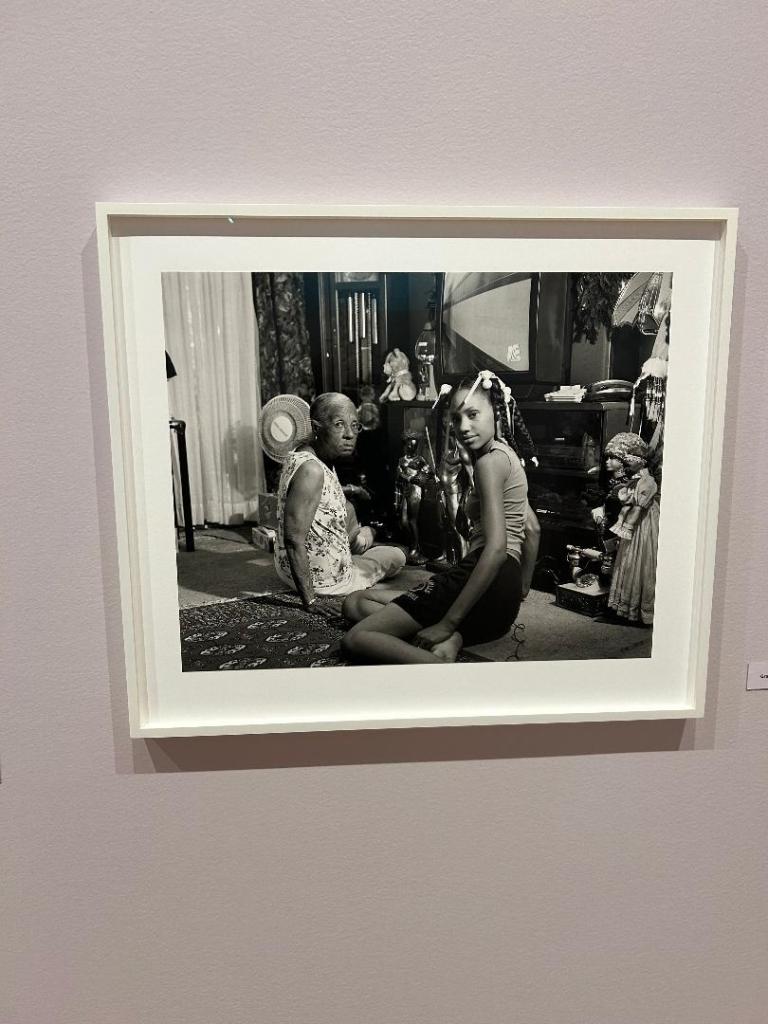
Grandma Ruby and I (2005) Photo Robert K. Stephen
For this exhibition, Frazier has reimagined her diverse bodies of work as a sequence of original installations that she calls “monuments for workers’ thoughts,” which address the harmful effects of industrialization and deindustrialization, the healthcare inequities facing Black working-class communities in the Rust Belt of the United States, the ongoing water crisis in Flint, Michigan, and the impact of the closure of a General Motors plant in Lordstown, Ohio. Monuments of Solidarity celebrates the expressions of creativity, mutual support, and intergenerational collaboration that persist in light of these denials of fundamental labor, human, and civil rights. As a form of Black feminist world-building, these nontraditional “monuments” demand recognition of the crucial role that women and people of color have played and continue to play in histories of labor and the working class. For this reason, it is incumbent upon me to resist—one photograph at a time, one photo essay at a time, one body of work at a time, one book at a time, one workers’ monument at a time—historical erasure and historical amnesia,” says artist-activist LaToya Ruby Frazier. Born in 1982 in the steel manufacturing town of Braddock, Pennsylvania, Frazier has used photography, text, moving images, and performance to revive and preserve forgotten stories of labor, gender, and race in the postindustrial era. LaToya Ruby Frazier: Monuments of Solidarity surveys the full range of the artist’s practice, highlighting her role as a social advocate and connector of the cultural and working classes in the 21st century.
Frazier at the opening of her MoMA exhibit (Photo Robert K. Stephen)
“I know I do not exaggerate, unconsciously and unintentionally, the scantiness of my resources or the difficulties of my life. I know that if a shilling were given to me by Mr. Quinion at any time, I spent it in a dinner or a tea. I know that I worked from morning until night, with common men and boys, a shabby child. I know that I lounged about the streets, insufficiently and unsatisfactorily fed. I know that, but for the mercy of God, I might easily have been, for any care that was given to me, a little robber or vagabond.”
“The only visitors I ever saw or heard of, were creditors. They used to come at all hours, and some of them were quite ferocious. One dirty-faced man, I think he was a bootmaker, used to edge himself into the passage as early as seven o’clock in the morning and call up the stairs, to Mr. Micawber- ‘‘Come You ain’t out yet, you know. Pay us, will you? Don’t hide, you know; that’s mean. I wouldn’t be mean if I was you. Pay us, will you. Come!’ Receiving no answer to these taunts, he would mount in his wrath to the words ‘swindlers’ and ‘robbers’; and these being ineffectual too, would sometimes go to the extremity of crossing the street, and roaring up at the windows of the second floor, where he knew where Mr. Micawber was.”
“No words can express the secret agony of my soul as I sunk into this companionship; compared these hence-forth every-day associates with those of my happier childhood-not to say with Steerforth, Traddles and the rest of those boys; and felt my hopes of growing up to be a learned and distinguished man crushed in my bosom. The deep remembrance of the sense I had of being utterly without hope now; of the shame I felt in my position; of the misery it was to my young heart to believe that day by day what I had learned, and thought, and delighted in, and raised my fancy and my emulation up by, would pass away from me, little by little, never to be brought back any more; cannot be written. As often as Mick Walker went away in the course of that forenoon, I mingled my tears with the water I was washing the bottles; and sobbed as if there were a flaw in my own breast, and it were in danger of bursting.”
So many Portuguese white wines have a functional element of suitability with food and their thinness and acidity making many of them a superb match with seafood a commodity which Portuguese menus are rarely lacking. Rabigato, Viosinho and Arinto do not exactly make stellar sipping wines.
I had the privilege of visiting the Dâo wine region of Portugal pre COVID and became an immediate convert to the white grape Encruzado, a very drinkable wine on its own. For lack of better words somewhat akin to Chardonay. Encruzado’s trademark is imparting a bit of abrasion on the throat or scratchiness if you wish. Possibly the granitic soils it thrives in imparting strange minerality to the wine.
This Freire Lobo 2021 Vigno is a blend of Encruzado (50%), Bical (35%) and Cerceal (15%).
Aroma: Lemon, pear, apple and peach.
Palate: Lemon roasted Portuguese almonds, pineapple and guava with a fine seam of acidity and a long peppery finish. A medium bodied wine.
Personality: I am operating at only 50% Encruzado power here. What a shame for Encruzado purists but nonetheless you can sip me or consume me with food. I am not one of those austere Portuguese white wines.
Food Match: A good match with grilled sea bream or seabass but it would also suit a simple Portuguese roast pork with cabbage and roast potatoes.
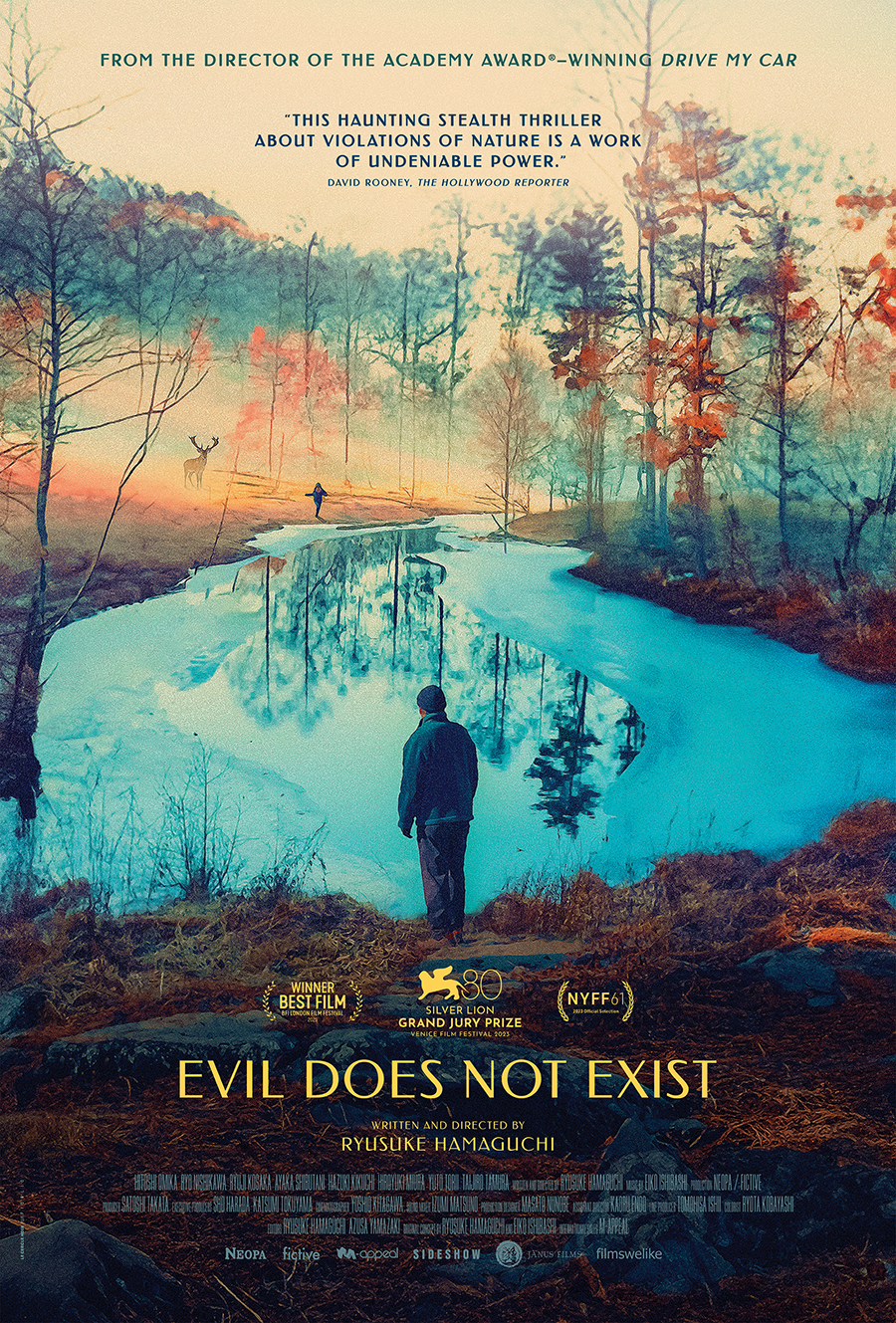
The most recent Ryusuke Hamaguchi film entitled “Evil Does Not Exist” is a puzzling one considering evil is omnipresent in the film. The best I can devise here is that there is an absence of evil in nature but interpose man with nature and evil is inescapable. Debate it if you wish but has Ryusuke Hamaguchi accomplished a goal of having the audience seriously ruminate the lack of existence of evil then attempt to apply that proposition to the movie? The avoidance of spoon feeding?
The plot is hardly innovative. Takumi Yasumura (Hitoshi Omika) is an oddjobber living in the forest with his 8-year-old daughter Hana on the outskirts of a small fictional Japanese village Mizubuki 2 hours proximate to Tokyo. His house sits in a beautiful forest at the foot of mountains. There are streams of pure mountain water running through the forest. There are numerous birds and deer. It is beautiful setting and what evil could exist here?
Takumi and daughter Hana
Yes after 4 minutes of bottom to top filming of trees in the snowy forest the viewer must be relaxed and lulled into thinking that perhaps evil does not exist in this forest but that is quickly shattered by gunshots of deer hunters in the distance as Takumi and his friend Kazuo collect tanks of stream water that are used in the village udon and soba noodle shop to make exceptional noodles far better that ever could be consumed in Tokyo . And then the skeleton of a gut shot deer on the forest floor is ominous.
A Tokyo talent agent working in conjunction with a “consultant” has plans to build a glamping site in the forest latching onto the latest touristic craze. An explanatory meeting with the villagers is a disaster for the talent agency represented by Mayuzumi (Ayaka Shibutani) and her cynical colleague Takahashi (Ryuji Kosaka). Concerns of the villagers are not directly addressed or lost and obfuscated in corporate double talk. The lack of supervision of the glamping site is of particular concern due to the dry pine forest subject to destruction by improperly supervised campfires and the septic tank is not configured to full glamping capacity as after all what it a little pollution? The residents are cognizant how important water is to the village and those downstream. Should there be a leak of sewage those downstream will be affected.
Mayuzumi and Takahashi report back to Tokyo and are instructed to offer Takumi a caretaker position at the glamping site and unsuccessfully attempt to give him gifts of liquor with the goal of divide and conquer. They also offer him a “consulting” position as he knows the area and villagers. Dialogue between Mayuzumi and Takahashi indicate both are dissatisfied with life and increasingly suspicious and concerned with the glamping proposal. Are they both good people at heart induced to propagate corporate evil by economic insecurity. Could it be that evil is introduced into the village and forest not by Eve picking the apple but Tokyo corporate interests seeking profits without any serious environmental care.
There is an inconclusive dark screen conclusion to the film possibly even death and murder. And could it be that oddjobber Takumi is also capable of the worst evil?
A tremendous soundtrack by Eiko Ishibashi somewhere between mournful and ominous.








 A Bird's Eye View of Fashion, Food, Travel, Culture, Beverage and Curiosity