Ontario extends COVID freeze on tuition for colleges and universities

NEWS RELEASE

Ontario Extends Freeze on College and University Tuitions

Initiative provides families and students with more financial relief during COVID-19

April 30, 2021

Colleges and Universities


Table of Contents

  1. Content
  2. Quick Facts
  3. Additional Resources
  4. Related Topics

TORONTO — The Ontario government is extending the current one-year tuition freeze for colleges and universities by an additional year, providing more financial relief and predictability for families and students seeking access to affordable postsecondary education.

“Students and their families make significant sacrifices to attend college and university,” said Ross Romano, Minister of Colleges and Universities. “The financial uncertainty due to the COVID-19 pandemic further underscores the need to keep college and university programs affordable. By freezing tuition our government is continuing to reduce the financial strain on families’ pocketbooks.”

The one-year tuition freeze for Ontario residents builds on Ontario’s historic 10 per cent reduction in tuition in 2019-20, and one-year tuition freeze in 2020-21, making postsecondary education more affordable for Ontario students and their families. These reductions represent the first of their kind in Ontario’s history. The government’s action to reduce and freeze tuition has provided students with tuition relief of approximately $450 million annually when compared to tuition costs in 2018-19.

“It is critical to the economic recovery of Ontario that today’s students, and tomorrow’s leaders, innovators and workers can obtain the skills they need to succeed in a highly competitive global economy,” said Minister Romano. “The extended tuition freeze will ensure Ontarians have affordable access to our first-class postsecondary education system and will provide financial relief to our families.”

In addition to the freeze, the tuition framework for domestic out-of-province students will return to a system similar to the previous framework with the option for a three per cent increase in 2021-22.


Quick Facts

  • Average university tuition in Ontario has increased significantly since the mid-1990s. Prior to the 2019-20 tuition reduction, Ontario university tuition rates were the highest in any Canadian province. Ontario has now dropped to the third highest in Canada for undergraduate students and the second highest for graduate students.
  • Students enrolled in a university undergraduate arts and science degree will pay an average of $660 less in tuition than if the tuition reduction and freeze policy had not been put in place.
  • To support students and the postsecondary education sector during the COVID-19 pandemic, the Ontario government:
    • provided $106.4 million for publicly assisted colleges and universities to help address the financial impacts of COVID-19 in 2020-21.
    • helped address critical maintenance, repairs, upgrades and renewals at publicly-assisted colleges and universities with $466 million over three years, starting in 2020-21.
    • distributed $25 million in funding at the start of the pandemic to help publicly-assisted colleges, universities and Indigenous Institutes with immediate impacts of COVID-19.
    • invested $10.25 million more than previous years to bolster mental health supports for postsecondary students.
    • launched a $50 million Virtual Learning Strategy to help expand access to a high-quality, market-responsive, and globally competitive “Ontario Made” education.
    • announced $59.5 million over three years to support Ontario’s first micro-credentials strategy, which will help people retrain and upgrade their skills to find new employment.

Ontario Donating Critical Lifesaving Medical Equipment to India

April 30, 2021

Office of the Premier


Table of Contents

  1. Content
  2. Related Topics

TORONTO — Today, Premier Doug Ford issued the following statement:

“The COVID-19 pandemic has strained health care systems around the world. While our province is facing a challenging third wave of COVID-19 driven by new, more-contagious variants, we continue to be committed to helping our friends and partners.

In response to a call for help from the High Commissioner to Canada and Consul General in Toronto, Ontario will donate 3,000 ventilators to the Indian Red Cross. The Ontario government will also help coordinate the transportation of approved medical equipment that is being put together for the Indian Red Cross by the Indian diaspora and friends of India in Ontario.

While we remain very concerned about the challenges facing our hospitals here at home as more patients require intensive care, we have taken decisive action to add more hospital beds than ever before. Doing so will allow us to safely support our friends and allies in desperate need of help while never sacrificing our ability to care for Ontarians.

The made-in-Ontario e700 Transport ventilators are manufactured by O-Two Medical Technologies, a company based in Brampton, with support from the Ontario Together Fund. This partnership is another example of Team Ontario working together during this pandemic to support those in need, both here at home and abroad.

We stand shoulder-to-shoulder with the people of India during these difficult times. Our government will keep working closely with His Excellency, Ajay Bisaria, High Commissioner of India and Apoorva Srivastava, Consul General of India to Toronto and stand ready to assist further with India’s urgent needs, for as long as we are able to. We are all in this together and we will all overcome this together.”

For a short YouTube video on the e-700 ventilator https://www.youtube.com/watch?v=vtNvbxnvoK0&t=13s

“Perfumes”: Not as Sure as I Thought I Was

Make no mistake French film can produce just about everything from the banal to the complex as far as films go. Having been watching them for 45 years, often late night when I lived in Montreal, hopefully you can take my word on this.

For example, there is the classic “Indochine” with Catherine Deneuve which was released in 1992 and won the best foreign film at the 65th Academy Awards which is an “Apocalypse Now” quality film.

“Perfumes” is potentially a great romance film that does not quite turn into a romance by the time the credits role. I thought it would conclude as a romantic film and perhaps it does but that I will leave up to you.

Anne Walberg (Emmanuelle Devos) is an 50ish introvert that specializes in smells. She has created great perfumes for Dior and had the perfume world at her feet at one point but suffered from anosmia, a loss of smell, and fell from grace.

So she moves from haute fashion to industrial scents making overly tanned purses smell good, factory emissions smell like fresh cut grass and touristic recreated caves smell like the original Cro-Magnon caves.

She is an introvert and unable to form any relationship with the opposite sex.

Then enters her chauffeur Guillame (Grégory Montel) a 40ish driver from Elite Limousines in Paris that refuses to bend to her demands for obsequious behaviour. That earns her respect. Guillame is a recently separated man from his spouse that needs a solid job and a flat to get more access to his daughter Léa (Zélie Rixhon) a cutie 10-year-old.

Thinking this is a simplistic romance film may take you in the wrong direction. It is a bit of a tragedy as Walberg is forced to move from the elite world of perfume to making factory’s pollution smell like fresh cut grass, to make recreated Cro-Magnon caves smell like the original and overly tanned luxury purses more consumer friendly. Not quite the world of high fashion she once was a darling of.

Guillame loses his job as a chauffeur getting caught in a photo radar situation while rushing Walberg to a hospital after she has overdosed on sleeping pills. He has too many demerit points to continue as a chauffeur. He ends up driving a tractor at a private airport. That is until Walberg offers him a job as an assistant as he has a good practical sense of smell. So he now has an employment contract which enables him to secure a flat and enhanced custody of Léa.

So everything ends well for Guillame and Léa but for Walberg and Guillame is this simply a work relationship?

No answers on this so you’ll just have to guess where matters are going between Guillame and Walberg.

As to where the film is showing virtually  http://www.filmswelike.com/virtual-cinema

The film starts on April 30th and you can see the trailer here http://www.filmswelike.com/films/perfumes

Canada announces Aid To Indian Red Cross

Canada announces funding support in response to COVID-19 in India

From: Global Affairs Canada

News release

April 27, 2021 – Ottawa, Ontario – Global Affairs Canada

Canada is working with its partners and international organizations to control the spread of COVID-19 around the world. This is vital to helping those affected by the pandemic and protecting their health and safety.

Today, the Honourable Karina Gould, Minister of International Development, announced that Canada is providing $10 million in funding for humanitarian assistance to the Canadian Red Cross to support the Indian Red Cross Society’s response to the devastating situation unfolding in India. Canada’s contribution will support the procurement of essential supplies and medicines, including oxygen cylinders for clinics and ambulances.

Canadians wishing to donate to emergency efforts in India can do so through the Canadian Red Cross.

Quotes

“Canada stands with the people of India as they go through these difficult times. This funding will help meet some of the most urgent medical needs like purchasing and distributing essential supplies as well as supporting vital blood and ambulance services.”

– Karina Gould, Minister of International Development

Associated links

“Magaluf Ghost Town”: An awkward documentary: Toronto Hot Docs

The promotional material from the film’s distributor leaves the impression that the town of Magaluf will be the subject of the documentary “which during season becomes a Deadwood-like capital of sin and vice”.

Magaluf is a beach town on the Spanish island of Mallorca invaded in the summer season by British youth or better said legless lager louts. You will see only a part of the documentary deal with the badly behaved pale faced and/or sunburnt Brits fornicating on the beach, vomiting, urinating, participating in fellatio contests for free drinks and being picked up by the sanitation service passed out cold in the street in the morning. The small portion of the film dealing with this is just enough to make you nauseous.

Many years ago I travelled with the remnants of the hippy movement in Greece before it became a huge tourist destination but now is having its own Magaluf issues. But in those days the youth were well behaved. Magaluf Brits are so notoriously behaved their antics they are covered in the British tabloids.

Where the documentary becomes awkward is with its side stories of residents of Magaluf where there is no common thread other than disgust with the Brits yet with some of them making money in the tourism industry so they have to endure. It’s kind of feast and famine. And when the summer season ends Magaluf is indeed a ghost town.

Aside from this commonality there are just side stories dealing with the obese and in ill health Maria Teresa, her hardworking lodger from Mali, queer Rueben and his buddy and an ambitious Russian real estate agent desperately seeking capital to transform Magaluf into a five-star resort like Miami.

The weakest part of the documentary is a murder which is unrealistic given its perpetuators are filmed planning it. One wonders if the side stories, which are largely mundane, are fictional.

You can find the trailer here https://vimeo.com/539025924

You can catch the world premiere of the film at Toronto Hot Docs Film Festival from April 29-May 9 provided you are in Canada. You can purchase your tickets here https://hotdocs.ca/p/hot-docs-festival

The film can only be seen in Canada.

“Lady Buds”: Women and Cannabis in California: Has legalization created criminalization? Toronto Hot Docs

Most of this documentary is focused on the Emerald Triangle of California, namely the counties of Mendocino, Humboldt and Trinity Counties where over 60 % of California cannabis is grown but mass production seems to be shifting to Santa Barbara and the Mojave Desert.

The documentary focuses on women cultivators, distributors, educators and activists.

In many respects it was the ravages of AIDS in California that revealed to many disbelievers that cannabis could ease the pain and suffering of AID’s patients. In 1996 medical cannabis was legalized in California and for recreational use in 2016 with a supposed 5-year window for small producers before big capital moved in but big capital found loopholes and started producing cannabis in a more cost effective manner than producers in the Emerald Triangle many of whom had been producing illegal cannabis for 40 years.

It rather comes down to a struggle between deep pocket corporate producers with economies of scale and a reliable distribution network against the tough artisanal producers with their small yields and unreliable distribution network. It appears as if big business is squeezing them out.

In growing season here in Ontario I’d rather buy my produce from a local farmer I know and from a farmer at a local market. Yes these folks are in for a profit but they are proud of their produce. I’d rather eat bumpy ugly looking sweet potatoes than the tasteless supermarket junk I must take pains to avoid in the winter. I can have conversations with humans that produce foods but there are so many accustomed to mass production and consumption they mindlessly buy at the local supermarket or Costco that sells California raspberries and Mexican blueberries rather than local produce. This is the same problem small cannabis producers in California face. Due to legalization the big producers with their distribution chains can produce mass cultivated products far cheaper than the small outdoor growers passionate about their product. Add to that mass bureaucratization adding more costs to a low margin small producer and it is almost as if its cheaper to go “illegal” again. The community of independents smashed by deep pocket Megacorp. As agribusiness is destroying the family farm so is it destroying the small Californian cannabis producers.

A fascinating documentary about the female cannabis element in California but I see the film more about the squeezing out of the little guy. I wonder if you can buy cannabis at Costco in California!

I am not certain Canadians can relate to this on the cannabis front. Although recreational cannabis is legal in Canada there has never been the tight knit community of illegal producers so big business has dominated the cultivation of cannabis right at the outset of legalization. It is in the distribution that smaller distributors are starting to proliferate almost to unsupportable levels. Will they fail and the Megacorps step in and take over distribution?

The 96 minute documentary is produced by Chris J. Russo and tickets for this Hot Docs film for viewing between April 29-May 9 can be purchased here https://hotdocs.ca/p/hot-docs-festival

Only available for viewers in Canada from April 29-May9.

“The New Plastic Road”: Poor Tajik Peasants Take a Crack at International Commerce: Toronto Hot Docs

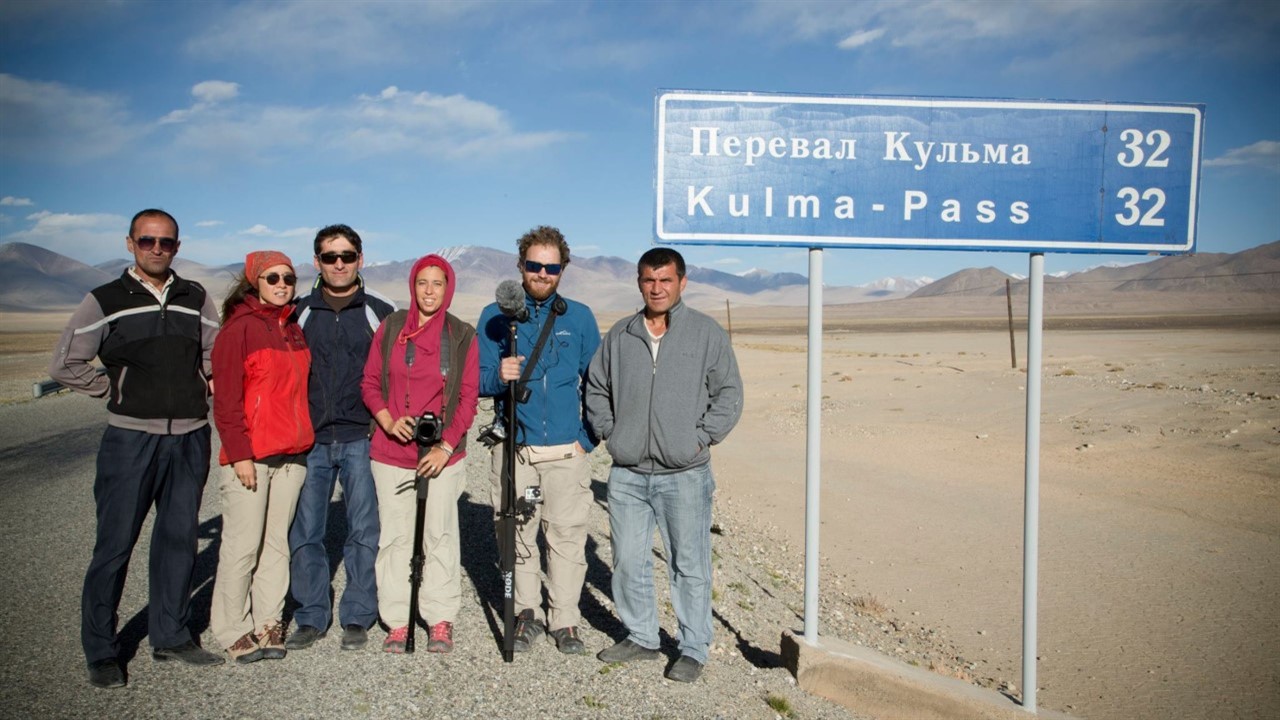
In 2004 the Silk Road between China and Tajikistan re-opened creating economic opportunities for Tajikistan the poorest of the former USSR republics.

We meet Davlat who had a meagre poverty-stricken childhood with 11 people living in his family home. He lived in Kazakhstan for 8 years and then one year in Germany before returning to his remote village Khidorjev in the Pamir Mountains where he invested in two rigs to haul Chinese goods back into Tajikistan travelling treacherous roads. He speaks in a monotone and quite frankly has the personality of a fruit fly.

Entering China is time consuming with trucks waiting at the border. Life and health is difficult for Davlat who struggles to make a living but after investing in an auto repair and resale business he seems to be doing quite well even driving a Mercedes and living in a nice house with his wife a former nurse but obediently saddled with domestic duties looking after a large brood of children.

Davlat isn’t doing too badly as near the end of the documentary he is building a grand house. It seems despite his complaints how tough matters are he isn’t suffering financially except that his restless and adventurous soul is betrayed by a weakened body.

What is the point of this documentary? No doubt the scenery is ruggedly harsh and spectacular and the story interesting but it is simply an interesting story. A glimpse into the life of a Tajikistani businessman attempting to cash in on increased access to China. An interesting story but a compelling documentary I think not.

Part of the “Changing Face of Europe” series of films at Toronto Hot Docs. You can watch the documentary between April 29 and May 9 only within Canada. Tickets can be purchased at the Hot Docs website https://hotdocs.ca/p/hot-docs-festival Query what does Tajikistan and China have to do with Europe?

This is a Greek/German production that runs for 88 minutes and is in Tajik with English subtitles. It is directed by Angelos Tsaousis and Mryto Papadopoulos.

“Seyran Ateş: Sex Revolution and Islam”: A Courageous attempt to bring Islam into the 21st century: Toronto Hot Docs

Seyran Ateş is a Turkish born woman who at a young age moved to Berlin. She had a strict Muslim upbringing making her feel like a prisoner. Only whores would go to movies with their friends. Women don’t read books so that was forbidden. Hating her lonely and oppressed teenage years she ran away from home just shy of 18. She became a lawyer and then founded a mosque The Ibn Ruschd-Goethe mosque in Berlin and became its imam. She welcomes all Muslims to her progressive mosque including members of the LGBTQ community. She is an avowed feminist saying Islam needs a sexual revolution where females are treated as equals instead of inferiors. As she says we are living in the 21st century but Islam seems stuck in the 7th century. She claims to be fighting against patriarchal hegemony in Islam and not against Islam itself.

Seyran Ateş

How has the Muslim power structure taken all this? Not well she has been shot, receives countless death threats and hate mail and is under 24-hour police protection. She reviews a few of the hate e-mails and remarks what is this common theme of being a whore used. It is indicative of hatred and sexualization of women.

Although attacked by right wing Muslims leftist feminists also attack her seeking to protect Muslim women yet overlook the patriarchal misogyny.

There are over 2,000 mosques in Germany and Ateş wants to establish more like hers in Europe. She decries extremism and notes that the result of these attacks is that some people equate Islam with terrorism. Why is there so much hate in the Muslim world? It is related to radicalization of youth living in a foreign land wanting some connection to their homeland which many do by turning to Islam a very nasty and hateful sort flooding social media. Who carries out the terrorist attacks in North America and Europe? Men and it is men that are behind the radicalization.

Tugay, her nephew was on the edge of being totally radicalized thinking after being propagandized if he were to die for Islam he would go to paradise. Tugay said he was unhappy on earth so why not be happy in paradise? It was his aunt that brought him back to reality. He notes that extremists are always trying to divide people and when you divide people they become weaker.  

Aside from travelling to Madrid to attend a memorial for the 193 victims of the March 2004 extremist bombing of the Atocha train station (where I have been in several times) she goes to Oslo and Utoya island near Oslo where white extremist Anders Breivik bombed, fearing the Muslimification of Europe by liberals. a government building killing 8 in Oslo and 69 Norway Labour Party Youth (AUF) on Utoya Island  in July of 2011. You can see my review of “Generation Utoya” which is also playing at Hot Docs here https://setthebarlifestyle.wordpress.com/2021/04/24/generation-utoya-why-toronto-hot-docs/?fbclid=IwAR3dRLwvdK2ZzeW9jhE7Xs8mUYNueJtJ3k5HyM5YLHoZF4qsQg1QS3WSK6c

Ateş blames political Islam for the killings and apologizes being ashamed for what has been done. It is only Islam that can fight political Islam.

In one of the lighter scenes, she attends a brothel in Berlin meeting with two Turkish women, one Arab and one German women. Muslim men are frequent customers. One sex worker says they party, drink and do drugs except for Ramadan where they behave themselves but as soon at that is over they flock back to the brothel.

Ateş says a Reformation is needed in Islam but unlike Martin Luther we can’t wait for 500 years.

This 81-minute 2021 Norwegian documentary is directed by Nefise Özkal Lorentzen. The film runs from April 29-May 9th.You can purchase tickets here https://hotdocs.ca/p/hot-docs-festival

“It is Not Over Yet”: Making the best of an unpleasant situation; Toronto Hot Docs

Of course, if you live in North America and the United Kingdom you simply can’t ignore how COVID-19 ripped through “long term care” or “nursing homes” drop-off depots for the immobile and those suffering from some form of dementia. Is this our fate and it could well be since Alzheimer’s Disease (AD) is the third largest killer in the United States where $84 billion in research money hasn’t really turned out much of importance.

So why the high COVID death count? Reduced governmental inspections, privatization, overcrowding, low wages that cause workers to work in multiple homes, lack of compassion or under resourcing? Perhaps some or all of these. In the 1970’s I worked part time in a nursing home in Montreal. While it was initially a tremendous shock seeing all these abandoned, demented or wheelchair bound residents. If you took time to get to know them well that made these pour souls and shocked young man feel better. Generally speaking, they were well taken care of. A different era? But it is hard to ignore that faint smell of urine, the fleet of wheelchairs and the many vacant looks. I don’t even think AD was even recognized in those days.

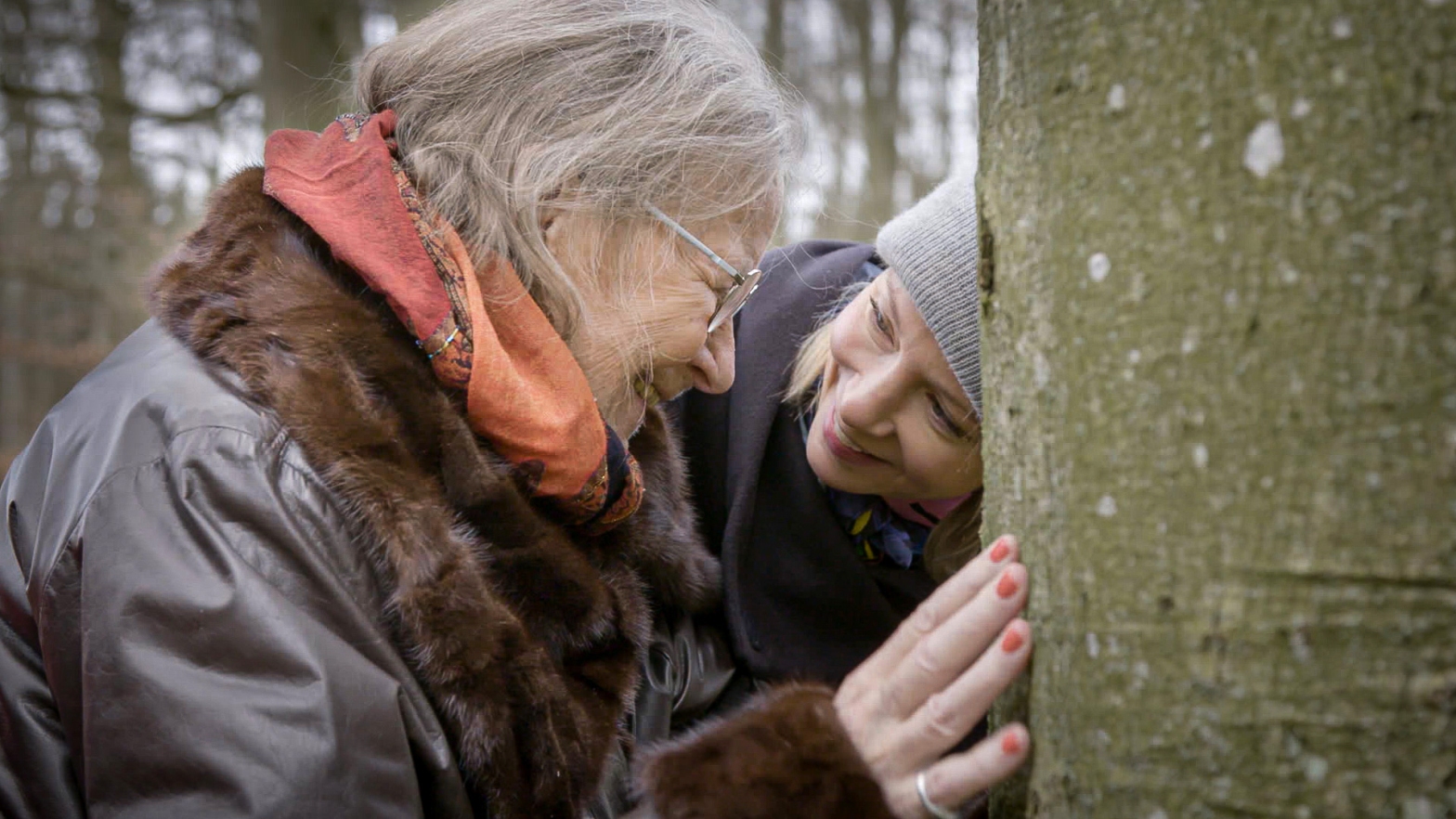
Not only that experience but seeing a parent with dementia made “It is Not Over Yet” a must see. It is about a Danish nursing home founded by nurse May Bjerre Elby and is named Dagmarsminde based on her personal experience, like me, at 17 working in a nursing home that smelt of urine, was all gray, full of unhappy staff and neglected patients that inspired her to enter nursing as a profession. Then her father entered the same nursing home with staff making no attempt to get to know him and leaving him his food when he had forgotten how to feed himself. Eventually it is her view he died of neglect. So she saved for 7 years and opened a small nursing home in the countryside. Not for the rich as most are seniors relying on Norwegian state pensions.

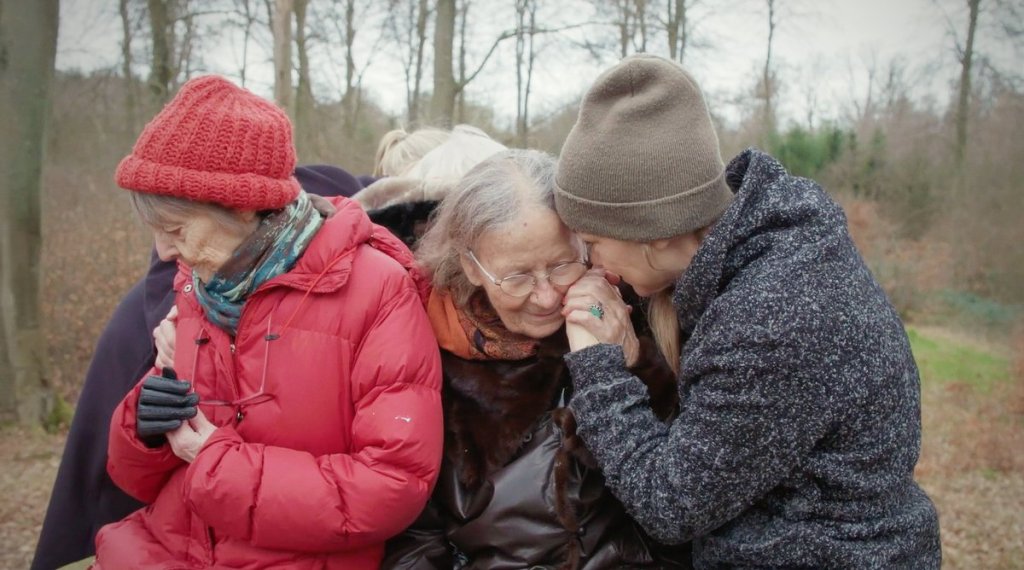
While the documentary is sad seeing these once active and intelligent elders decline and die every attempt is made to treat them with the utmost respect, dignity, compassion and love unlike most nursing homes. Drugs are kept to a bare minimum. As Elby states we like to give them lots of cake. Well actually it is not the cake and sparkling wine that is served at birthdays and anniversaries that is the medicine it is the fact they are given to celebrate. The residents are not forgotten. Regular staff meetings are held to evaluate each resident. Even when the caskets are rolled out there is a celebration of the deceased’s life with a toast. Meals are taken in a communal fashion where the setting is more like a welcoming inn than an institution. Chickens roam outside during the day and the home has its dog and cat.

Even death is treated in a respectful manner as the staff usually know when “the process” has started. They back off and if the resident does not want to eat or drink they are left to die in dignity and not harassed to eat, drink or participate in activities. Obviously many industrialized countries with nursing homes have much to learn from Elby.

I give the last words to director Louise Detlefsen,” When we first met, May told me that being happy in the moment means a life of happiness, since a life with dementia is ultimately living now. The past is disappearing, so it is all about living for the moment. What happened yesterday is not important, what was said hours ago is already gone. What is going on between us as humans at this very moment is essential. This perception of reality hit me emotionally. It was so simple, but at the same time mind-blowing. Being present in the moment is difficult for me, like for most modern people, I imagine. And coming to this realization, I learned a lot about life by spending time with the residents with their dementia. It has been a strong, emotional experience creating this documentary film about Dagmarsminde and to be reminded about the power of human contact and the joy of living here and now. This was my personal starting point and these simple thoughts have been my guideline throughout my filmmaking process.” Mindfulness as applied to dementia!

This 94-minute film is in Danish with English subtitles. It is directed by Louise Detlefsen. You can purchase tickets here https://hotdocs.ca/p/hot-docs-festival

The film is part of Toronto Hot Docs and can be seen between 29April-9May.Only available to those in Canada or as they say it is “geo-blocked”.

“Hell or Clean Water”: Not in Canada You Say! Toronto Hot Docs Festival

Yes you have seen huge islands of floating plastic in the ocean but this sort of pollution can’t happen in Canada. Right? Well perhaps we don’t have huge islands of plastic washing up on the shores of provinces that have oceans.

But” Hell or Clean Water” certainly exposes that on the coast of Newfoundland, particularly in harbour areas, there is often a junkyard of old tires, batteries and just about any garbage that sinks to the bottom. Well what you see is shocking.

Shawn Bath, a commercial diver, is a Newfoundlander who has founded Clean Harbours Initiative and he has a mission to clean up Newfoundland harbours going into personal debt to accomplish his mission. The Canadian government has given Clean Harbours Initiative $80,000 and the Government of Newfoundland another $25,000. Clearly more money and manpower is needed.

Disheartening to see all this underwater waste but inspiring to see a determined Shawn Bath in action. He even gets help from an unlikely ally considering his past involvement in seal hunting.

You can catch the documentary at Toronto Hot Docs running from April 29th-May 9th.and after that on The Documentary Channel. You can buy tickets here https://hotdocs.ca/p/hot-docs-festival

Only available from Canada.

You can watch the trailer here https://vimeo.com/532048344/591cc9ee51

Directed by Cody Westman.