Regional STEM Fairs Go Virtual with support of Youth Science Canada

The fair must go on…

Twenty-one regional STEM fairs go virtual, April 19 to 21,

with the support of Youth Science Canada

Students have one last chance to register their projects online; all others are invited to continue their STEM education through project-based learning at mystemspace.ca

OTTAWA, April 14, 2021 – Twenty-one regional science fairs will take place as one virtual fair, April 19 to 21, thanks to a partnership between Youth Science Canada and engineering.com, developers of the ProjectBoard Platform.

“The fairs must go on,” says Reni Barlow, executive director at Youth Science Canada. “This motto has been the driving force behind our efforts this year and I’m happy they’re paying off. By and large, our national STEM fair network has been successful in pivoting to help students continue to explore the world, tackle big problems and express their curiosity and ingenuity through project-based learning.”

Rather than creating a traditional poster or backboard, students post their projects on ProjectBoard, a fun and engaging platform developed by engineering.com in collaboration with Youth Science Canada. The platform allows students to share, discover, collaborate, document and receive feedback and recognition on their STEM projects, all online in a community-based and closely monitored setting.

Students are invited to provide information — why they chose to tackle the question or problem; how they went about answering the question or developing a solution; what they found out or developed; why the project matters or makes a difference; where they plan to take the project from here; plus references and a one-minute video.  Each student project is then reviewed by STEM professionals who also interview the students about their work. Top projects will be selected to participate in the virtual Canada-Wide Science Fair (CWSF) from May 19-21.

Students from the following 21 YSC-affiliated regions are eligible to register for the YSC Virtual Regional Science Fair:

·         Algoma Rotary, Ontario

·         Avon Maitland Huron Perth, Ontario

·         Canadian Rockies, Alberta

·         Cape Breton, Nova Scotia

·         Chignecto West, Nova Scotia

·         Conseil scolaire acadien provincial, Nova Scotia

·         Durham, Ontario

·         East Parry Sound, Ontario

·         Halifax, Nova Scotia

·         Island Lake, Manitoba

·         Kivalliq, Nunavut

·         North Bay, Ontario

·         Northern Saskatchewan

·         Northwest Saskatchewan

·         Omushkego, Ontario

·         Qikiqtaaluk, Nunavut

·         Sahtu, Northwest Territories

·         St. James Assiniboia, Manitoba

·         South East Saskatchewan

·         South Shore, Nova Scotia

·         Windsor, Ontario

Students can register their project at mystemspace.ca, under the “I have a project” link.

About Youth Science Canada

Youth Science Canada fuels the curiosity of Canadian youth through STEM projects. A registered charity incorporated in 1962, YSC delivers on its mission through national programs including mySTEMspace, the National STEM Fair Network, Canada-Wide Science Fair, STEM Expo, “Team Canada” representation at international fairs and Smarter Science professional development for teachers. Through these programs, YSC provides direct support to the more than 500,000 students who do STEM projects in any given year. For more information, visit youthscience.ca.

About engineering.com

Engineering.com is a global online publisher and discussion forum for problem solving, tech news, innovations and resources, with a simple mission to inspire engineering minds to be and do better. The company’s ProjectBoard platform, now powering Makeprojects.com, provides Makers and STEM communities a fun and engaging way to share ideas, develop projects and learn in groups online. For more information, please visit engineering.com.

How You Frame COVID Determines your Reaction to Public Health Initiatives: Can we say COVID ideology?

April 6, 2021

New Study Casts COVID-19 and Government Mandates in a New Light in Rural America

HOW PERSONAL VIEWS ON THE PANDEMIC AFFECT MASK WEARING AND OTHER PREVENTION BEHAVIORS

When Adam Koon, PhD, MPH, an assistant scientist at the Johns Hopkins Bloomberg School of Public Health, arrived in his wife’s hometown last summer to quarantine with their children, they were surprised to see so few people in masks. With his wife, Emily Mendenhall, PhD, MPH, a professor at Georgetown University, they set out to conduct a study in this small, rural Midwestern tourist town by interviewing local residents about COVID-19 and why so few took COVID-19 precautions seriously. The study was published in Social Science & Medicine in March 2021. According to Koon, “As a research team, we were motivated by an equal mix of concern and curiosity about a community we love dearly. Most of the team grew up in the area and the rest either live there or spend a considerable amount of time there. On a tacit level, we understood some of what was going on, but I think we learned several new things along the way.”  Midwestern Tourist Town
Photo credit: David Thoreson

At the beginning of the pandemic, the town shut down for approximately one month, and then reopened without any public health mandates in place for social distancing, masking and closures on May 1, 2020, at the outset of the popular tourist season. Although the community was mostly white, conservative, and Christian, people held widely different views that cut across political, religious, and class affiliations. “We found that when the tourist season came, people shifted their collective priorities away from the novel coronavirus to focus on saving the economy because the 100 days of summer are the only months when many locals earn income,” Mendenhall said. Yet, the researchers wanted to go further by understanding how a variety beliefs and values were tied to actions. 

Framing is a fundamental concept in the social sciences that explains how moral worldviews are constructed. Differences in framing contested issues, such as gun control and abortion, lie at the heart of policy controversy. This helps us understand, in part, how people make sense of the world around them and their relationships in which health becomes embedded. According to Koon, “I often use a particular form of framing analysis that looks more at the policymaking process, but in this instance it made sense to focus on the frames themselves. In some ways, this is kind of a classic sociological approach to frame analysis, but we also drew a little bit on some newer theories of framing from critical policy studies.” Koon’s expertise on framing and Mendenhall’s skill as an ethnographer allowed them to rapidly explore these complicated processes.

The researchers collected data through semi-structured interviews with local community members from June to August 2020. They also observed community meetings, events, and daily life. The researchers found four main frames that enabled individuals to make sense of the coronavirus: concern, crisis, constraint, and conspiracy:

  • Concern frames focused on how some people are uniquely affected by COVID-19 (e.g. the elderly, people with co-morbidities, or front-line workers) and as a result, these individuals were likely to take preventive actions, especially to protect themselves and loved ones. 
  • Crisis frames recognized coronavirus as a pervasive and profound threat requiring unprecedented action. Individuals with this frame were likely to follow science and public health recommendations closely. 
  • Constraint frames emphasized the coronavirus response as a threat to financial stability and personal growth that should be resisted. Individuals with this frame were likely to be business owners and employees more concerned about economic implications than the biological threat, or younger people who perceived the threat of COVID-19 to be minimal to themselves but with a big impact on their social lives.
  • Conspiracy frames denied its biological basis and did not compel action. Individuals with this frame were likely to have a strong anti-government sentiment and unwillingness to follow public health recommendations. 

The frames constructed around COVID-19 in this small Midwestern tourist town matter. For example, residents who subscribed to a concern frame often felt socially obligated to comply with COVID-19 safety guidance in the absence of government mandates if it only directly affected themselves or their families and not the broader community, whereas constraint and conspiracy frame adherents were much more resistant. This allowed COVID-19 to thrive and spread rapidly, as there was neither a coherent appreciation of the biological risk nor widespread adoption of control measures used in this community. These frames help to explain the controversy surrounding COVID-19, even in settings with fewer obvious political, ethnic, and class distinctions. “This is not a blue state–red state thing. We’re not talking party politics,” said Koon. “The study helps us understand why COVID-19 guidelines have been so inconsistent and divisive even in less diverse settings. These findings provide a social rationale for public health mandates—such as masking, school and business closures, and social distancing—when contested beliefs impede collective action,” he added.  

The research team is currently using this evidence to advise targeted communication and outreach efforts that seek to reframe the pandemic response in ways that resonate with greater segments of the population. In this way, they hope policymakers will be better positioned to strengthen guidance on measures to prevent viral transmission. According to Koon, “We still have more work to do, and Emily’s writing a wonderful book on the subject, but we’re pleased that we’re able to contribute in this small way.”

The study was published in Social Science & Medicine in March 2021 and written by Adam D. Koon, Emily Mendenhall, Lori Eich, Abby Adams, and Zach A. Borus. Koon and Mendenhall also wrote a companion piece with Nora Kenworthy drawing on the same data to look at the cultural politics of the American COVID-19 response. It was recently published in Global Public Health. The research for both papers was not funded by any organization and done entirely for free. 

Johns Hopkins Bloomberg School of Public Health

United States Puts Hold of J&J Vaccine

Joint CDC and FDA Statement on Johnson & Johnson COVID-19 Vaccine

The following statement is attributed to Dr. Anne Schuchat, Principal Deputy Director of the CDC and Dr. Peter Marks, director of the FDA’s Center for Biologics Evaluation and ResearchEspañol (Spanish)Media Statement

For Immediate Release: Tuesday, April 13, 2021
Contact: Media Relations
(404) 639-3286

As of April 12, more than 6.8 million doses of the Johnson & Johnson (Janssen ) vaccine have been administered in the U.S. CDC and FDA are reviewing data involving six reported U.S. cases of a rare and severe type of blood clot in individuals after receiving the J&J vaccine. In these cases, a type of blood clot called cerebral venous sinus thrombosis (CVST) was seen in combination with low levels of blood platelets (thrombocytopenia). All six cases occurred among women between the ages of 18 and 48, and symptoms occurred 6 to 13 days after vaccination. Treatment of this specific type of blood clot is different from the treatment that might typically be administered. Usually, an anticoagulant drug called heparin is used to treat blood clots. In this setting, administration of heparin may be dangerous, and alternative treatments need to be given.

CDC will convene a meeting of the Advisory Committee on Immunization Practices (ACIP) on Wednesday to further review these cases and assess their potential significance. FDA will review that analysis as it also investigates these cases. Until that process is complete, we are recommending a pause in the use of this vaccine out of an abundance of caution. This is important, in part, to ensure that the health care provider community is aware of the potential for these adverse events and can plan for proper recognition and management due to the unique treatment required with this type of blood clot.

Right now, these adverse events appear to be extremely rare. COVID-19 vaccine safety is a top priority for the federal government, and we take all reports of health problems following COVID-19 vaccination very seriously. People who have received the J&J vaccine who develop severe headache, abdominal pain, leg pain, or shortness of breath within three weeks after vaccination should contact their health care provider. Health care providers are asked to report adverse events to the Vaccine Adverse Event Reporting System at https://vaers.hhs.gov/reportevent.htmlexternal icon.

CDC and FDA will provide additional information and answer questions later today at a media briefing. A recording of that media call will be available on the FDA’s YouTube channel.

###
U.S. DEPARTMENT OF HEALTH AND HUMAN SERVICESexternal icon

CDC works 24/7 protecting America’s health, safety and security. Whether disease start at home or abroad, are curable or preventable, chronic or acute, or from human activity or deliberate attack, CDC responds to America’s most pressing health threats. CDC is headquartered in Atlanta and has experts located throughout the United States and the world.

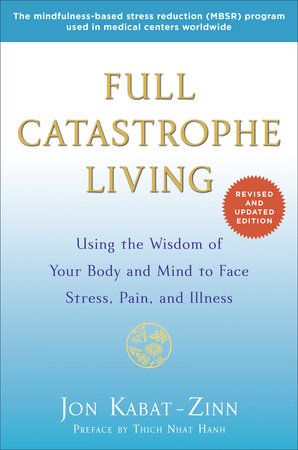
Jon Kabat-Zinn’s “Full Catastrophe Living”: thoughts during meditation

“During meditation, we intentionally treat all our thoughts as if they are of equal value. As best we can, and with the lightest touches, we bring awareness to them when they arise, and then intentionally return our attention to the breath as the primary focus of our attention, regardless of the thought and the emotional charge. In other words, we intentionally practice letting go of each thought that attracts our attention, whether it seems important and insightful or unimportant and trivial, We just observe them as thoughts, as discrete and exceedingly transient events that appear in our field of awareness. We are aware of them because they are here, but intentionally decline to get caught up in the content of the thoughts during meditation, no matter how meaningful or enticing the content may be for us in any given moment. Instead we remind ourselves to see them as simply thoughts, as seemingly independent occurring events in the field of our awareness,”

Susan Cain’s “Quiet”: Time for a “Free Trait Agreement?: A deal between introverts and extroverts?

A Free Trait Agreement acknowledges that we’ll each act of character some of the time-in exchange for being ourselves the rest of the time. It’s a Free Trait Agreement when a wife wants to go out every Saturday night and a husband who wants to relax work out a schedule: half the time we’ll go out, and half the time we’ll stay home. It’s a Free Trait Agreement when you attend your extroverted best friend’s wedding shower, engagement party and bachelorette party, but she understands when you skip  out on the three day’s worth of group activities leading up to the wedding itself.”

Passage of The Day: Marguerite de Navarre “The Heptameron”: More on Love

“ ‘ I believe” said Nomerfide, ‘ that if one loves perfectly. With a love rooted in God’s commandments, then one will not experience humiliation or dishonour, provided one does not go astray and fall from the perfection of one’s love. For the glory of loving truly knows no shame. And although her body was imprisoned, her heart was free and united with God and her husband, so that I believe she did not experience her solitude as imprisonment but regarded it rather as the highest liberty. For when one can longer think of the person one loves, one’s greatest pleasure is to think about that person incessantly. Prison walls are never confining when the mind is allowed to wander as it will’.”

Marguerite de Navarre (1492-1549)

A Couple from Côtes-Du-Rhone

The first one is a Plan de Dieu From Rémy Ferbras. It is a classic GSM blend, namely Grenache, Syrah and Mourvèdre. Its nose is full of raspberry, blackberry and that Grenache telltale very ripe local strawberries not the wooden kind we receive here in Canada from California. On the palate broad based by mild tannins and the wine has a little bite to it. Some blackberry, licorice and a bit of white pepper. Mid length finish. Neither rustic or elegant and I’d say better with food than as a sipper. The Liquor Control Board says pair with a pork and mushroom fricassee? Never had that dish before but it sounds like it might work or if you are adventuresome a Mushroom Wellington. It will smooth out a bit with decanting. It might improve somewhat with bottle ageing for the next couple of years. It is not really a case worthy wine for someone with a wine cellar though.

(Rémy Ferbras Terre de Mistral Plan de Dieu Côtes-Du-Rhône Villages 2017, Rémy Ferbras, Châteauneuf-du Pape, France, $ 16.95, Liquor Control Board of Ontario # 538009, 750 mL, 14.5%, Robert K. Stephen A Little Birdie Told Me So Rating 89/100).

As summer creeps up on us in Canada we all wonder if summer will be salvageable given we are riding a nasty third wave with a hint of a total lockdown, Heat up the grill and enjoy yet another lonely meal without family and friends.

This rosé is from the most southern part of the Rhône, Costières de Nîmes. It is a perennial Liquor Control Board of Ontario (LCBO) favourite label Mas des Bressades. In colour in the middle of dark and light pink. On the nose mostly cherry with some strawberry and a hint of raspberry. As for the palate it has some weight to it. The LCBO categorizes this wine as extra-dry. But it is more on the simply dry side. It has some cherrry, raspberry with a slight pepper finish. I think it would suit a mushroom, asparagus and tomatoes pasta from Taste of Home you’ll see below. I would suggest 250 grams of pasta.

(Mas des Bressades Cuvée Tradition, 2020, AOP Costières de Nîmes (organic), Cyril Marés, Manduel, France, $17.95, LCBO # 950576, 13,5%, 750 mL, Robert K. Stephen A Little Birdie Told Me So Rating 89/100).

Ingredients

  • 3 ounces uncooked angel hair pasta
  • 1/2 pound uncooked shrimp (16-20 per pound), peeled and deveined
  • 1/4 teaspoon salt
  • 1/8 teaspoon crushed red pepper flakes
  • 2 tablespoons olive oil, divided
  • 8 fresh asparagus spears, trimmed and cut into 2-inch pieces
  • 1/2 cup sliced fresh mushrooms
  • 1/4 cup chopped seeded tomato, peeled
  • 4 garlic cloves, minced
  • 2 teaspoons chopped green onion
  • 1/2 cup white wine or chicken broth
  • 1-1/2 teaspoons minced fresh basil
  • 1-1/2 teaspoons minced fresh oregano
  • 1-1/2 teaspoons minced fresh parsley
  • 1-1/2 teaspoons minced fresh thyme
  • 1/4 cup grated Parmesan cheese
  • Lemon wedges
  • Cook pasta according to package directions. Meanwhile, sprinkle shrimp with salt and pepper flakes. In a large skillet or wok, heat 1 tablespoon oil over medium-high heat. Add shrimp; stir-fry until pink, 2-3 minutes. Remove; keep warm. 
  • In same skillet, stir-fry the next 5 ingredients in remaining oil until vegetables are crisp-tender, about 5 minutes. Add wine and seasonings. Return shrimp to pan.
  • Drain pasta; add to shrimp mixture and toss gently. Cook and stir until heated through, 1-2 minutes. Sprinkle with Parmesan cheese. Serve with lemon wedges.


Test Kitchen Tips To keep pasta from sticking together when cooking, use a large pot with plenty of water. Add a little cooking oil if desired (this also prevents boiling over). There’s nothing like fresh pasta. The process may seem intimidating, but it’s actually very easy to do! All you need is a little time. To get a jump on it, make dough 2 to 3 days in advance and store in the refrigerator until you are ready to roll it out.

“Mutantism on the March” :Chapter 40 “The Greek Gods Descend into Irrelevance”

The jolt of landing in the Zortixian spacecraft woke the napping of Montenez. Back home to the island of Samos in Greece. Back home to humanity as squalid as it may be. The month of May saw a light crowd of tourists but Montenez knew that would change as the Northern “Palefaces” as his North American aboriginals referred to them as would soon be flooding the island and tranquility would be replaced by mayhem as the cheap Greek wine and beer would fuel latent hostilities of the members of highly technology-based countries and the baseness of legless lager louts where drunkenness, Irish pubs and public urination was a way of life.

Montenez walked back into his bar and warmly embraced his manager Kosta. After their chat on the state of the union Montenez crashed for 27 hours of sleep. He was delighted to see his friend Dr. Zodiac waiting for him with an ice-cold Fix beer and Montenez recounted to him his adventures on Zortixia.

Dr, Zodiac, physician of the Greek Gods, explained matters could have been better on Zlano the dimension the Greek Gods were residing. Dr. Zodiac said, “There is growing discontent on Zlano. A child named Bertie Foonbean was born to Aphrodite and Zeus and he is deformed lacking one leg and his face is that of a wrinkled old man. The Gods have refused to entertain visitors no matter how distinguished they are. They are ashamed of Bertie but I sense many of them are ashamed of themselves being Gods as it isn’t easy to deal with imperfection. They try to conceal him. It is rather disgusting for me to watch their lack of compassion and obsession with imperfection that mutant Foonbean has saturated them with. I just had to leave and come here for a break. As Squid himself is a mutant as he has the ability to transform himself into a giant squid the Gods thought he may be the best to deal with the situation so their messengers are looking for him.

Montenez responded, “You are telling me Doctor that the Greek Gods wish to have nothing to do with Bertie. It is heartless but understandable. I never wanted to tell you this Zodiac but I always thought the Greek Gods were annoyed with human imperfections so why not with their own? Confidentially they are a superficial lot more concerned with their pleasure than dealing with the pressing problems facing humanity. And they were blind how much harm their intervention has hurt humanity. Humanity was simple and primitive and Greek God rule was simple and all they had to do was shake a stick or send a bolt of lightning down and the humans were like dough and easily manipulated.  Pan soon found out the more “advanced“ humans became it was more difficult to soften them with jugs of wine and a few soothing tunes. It was after the French Revolution the Greek Gods had great difficulty in being witnesses to human history rather than shaping it. They were in fact losing control of humanity. The Greek Gods in a sense were defeated by industrialization and the growth of liberal democracy. In a sense they were like the British aristocracy finding the authoritarianism of Fascism attractive as a measure of controlling the masses. You know if Hitler had refrained from implementing the Final Solution the Gods just might have taken his side along that of Mussolini but instead they remained neutral. Remember how Zeus had almost developed ulcers over the uprising of 1848. Why were those humans acting so irresponsible over ideologies that threatened the collective good?

Toronto Hot Docs Festival Adds three New Musical Documentaries to its Line Up

HOT DOCS ADDS THREE NEW MUSIC DOCUMENTARIES TO FESTIVAL LINEUP

Toronto, April 13, 2021— Hot Docs is pleased to announce that it has added three additional titles to its 2021 Festival lineup. Making its Canadian premiere in the Special Presentations program will be the Sundance Grand Jury Prize-winning film Summer of Soul (…Or, When The Revolution Could Not Be Televised), directed by popular musician Ahmir “Questlove” Thompson, about the legendary 1969 Harlem Cultural Festival that celebrated African American music. A special screening of the episodic documentary series from Apple TV+ Watch the Sound with Mark Ronson, about the evolution of music and audio production with revolutionary music producer Mark Ronson, will be included in the Deep Dive program; and The Sparks Brothers, directed by Edgar Wright, about the members of American cult pop rock band Sparks and their musical legacy, will make its international premiere in the Special Presentations program.

THE SPARKS BROTHERS (picture shown)

D: Edgar Wright | P: Edgar Wright, Nira Park, George Hencken, Laura Richardson | USA | 2021 | 140 mins | International Premiere | Special Presentations

Acclaimed filmmaker Edgar Wright’s charming love letter to innovation, music and two rebel artists takes us on a mood-elevating musical odyssey guaranteed to delight the faithful and create a whole new fanbase for this uniquely talented duo.

SUMMER OF SOUL (…OR, WHEN THE REVOLUTION COULD NOT BE TELEVISED)

D: Ahmir “Questlove” Thompson | P: Joseph Patel, Robert Fyvolent, David Dinerstein | USA | 2021 | 117 mins | Canadian Premiere | Special Presentations

In his acclaimed debut as a filmmaker, Ahmir “Questlove” Thompson presents a powerful and transporting documentary—part music film, part historical record—created around an epic event that celebrated Black history, culture and fashion.

WATCH THE SOUND WITH MARK RONSON

D: Jason Zeldes | USA | 2021 | 72 mins | Special Screening | Deep Dive

GRAMMY®-winning producer and artist Mark Ronson explores music’s intersection with artistry and technology. This docuseries dives deep into the tools and techniques that revolutionized music, like Auto-Tune, sampling, and reverb. Mark and a who’s who of hitmakers—including Paul McCartney, Dave Grohl, Questlove, King Princess, Adrock and Mike D from the Beastie Boys, and Charli XCX—revisit the moments of genius and happy accidents that shaped modern music as we know it. Watch all episodes exclusively on Apple TV+, premiering July 30.

-30-

Hot Docs, North America’s largest documentary festival, conference and market, is a not-for-profit organization dedicated to advancing and celebrating the art of documentary and to creating production opportunities for documentary filmmakers. Hot Docs will present its 28th annual edition online from April 29-May 9, 2021, during which a full roster of industry conference sessions, market programs and networking events will be held for Canadian and international delegates, including the renowned Hot Docs Forum, Hot Docs Deal Maker, Distribution Rendezvous and The Doc Shop. Year-round, Hot Docs supports the Canadian and international industry with professional development programs and a multi-million-dollar production fund portfolio, and fosters education through documentaries with its popular free program Docs For Schools. Hot Docs owns and programs the Hot Docs Ted Rogers Cinema, a century-old landmark located in Toronto’s Annex neighbourhood and the world’s first and largest documentary cinema, and operates Hot Docs at Home streaming platform.

Alice Cooper’s “Schools Out For Summer” May be a Reality in Ontario as Schools Shut Down and Parents Struggle with Remote Learning Until When?

NEWS RELEASE

Ontario Moves Schools to Remote Learning Following Spring Break

Continued Rise in COVID-19 Cases Demands Shift to Protect Students and Staff and Slow Community Spread

April 12, 2021

Office of the Premier


Table of Contents

  1. Content
  2. Quick Facts
  3. Additional Resources
  4. Related Topics

TORONTO — The Ontario government, in consultation with the Chief Medical Officer of Health, has made the difficult decision to move elementary and secondary schools to remote learning following the April break. This move has been made in response to the rapid increase in COVID-19 cases, the increasing risks posed to the public by COVID-19 variants, and the massive spike in hospital admissions.

Details were provided today by Premier Doug Ford, Christine Elliott, Deputy Premier and Minister of Health, Stephen Lecce, Minister of Education, and Dr. David Williams, Chief Medical Officer of Health.

“We are seeing a rapidly deteriorating situation with a record number of COVID cases and hospital admissions threatening to overwhelm our health care system,” said Premier Ford. “As I have always said we will do whatever it takes to ensure everyone stays safe. By keeping kids home longer after spring break we will limit community transmission, take pressure off our hospitals and allow more time to rollout our COVID-19 vaccine plan.”  

With appropriate measures in place, schools have been safe places for learning throughout the pandemic, as confirmed by the Chief Medical Officer of Health and local medical officers of health and have demonstrated low rates of in-school transmission. However, increasing rates of community spread pose a threat to the health and safety of school communities. As a result, all publicly funded and private elementary and secondary schools in the province are to move to teacher-led remote learning when students return from the April break on April 19, 2021. Private schools operating in-person this week are to transition to remote learning by April 15, 2021. This action is being taken in support of the Government’s broader efforts to limit the spread of COVID-19. Data will be assessed on an ongoing basis and health officials will be consulted to determine when it will be safe to resume in-person learning.

Child care for non-school aged children will remain open, before and after school programs will be closed and free emergency child care for the school-aged children of eligible health care and frontline workers will be provided. To protect the most vulnerable, boards will make provisions for continued in-person support for students with special education needs who require additional support that cannot be accommodated through remote learning.

“This was not a decision we made lightly, as we know how critical schools are to Ontario students. Our priority has always been to keep schools open, however sharply rising community transmission can put our schools and Ontario families at risk,” said Minister Lecce. “While Ontario’s plan has kept schools safe, as confirmed by the Chief Medical Officer of Health, we are taking decisive and preventative action today to ensure students can safely return to learning in our schools.”

Case rates, hospitalizations, and ICU occupancy are increasing rapidly, threatening to overwhelm the health care system. The number of COVID-19 hospitalizations in the province have increased by 22.1 per cent between the period of April 4 and 10, 2021. In addition, during this same period of time, Ontario has seen the number of COVID-19 patients in intensive care increase from 494 to 605.

Since April 8, the province has been under a provincewide Stay-at-Home order, requiring everyone to remain at home except for essential purposes, such as going to the grocery store or pharmacy, accessing health care services (including getting vaccinated), for outdoor exercisewith your household in your home community, or for work that cannot be done remotely. As Ontario’s health care capacity is threatened, the Stay-at-Home order, and other new and existing public health and workplace safety measures, will work to preserve public health system capacity, safeguard vulnerable populations, allow for progress to be made with vaccinations and save lives.

With students moving to remote learning, vaccine prioritization of education workers who provide direct support to students with special education needs across the province, and all education workers in select hot spot areas, starting with Peel and Toronto, will continue. Starting today, special education workers across the province and education workers in Peel and Toronto hot spots will be eligible to register for vaccination by calling the provincial vaccine booking line at 1‑833‑943‑3900. More information is available at Ontario.ca/covidvaccine.

It is critically important that as Ontarians receive the vaccine, everyone continues to wear a mask, maintain physical distancing when outside of their immediate household and frequently wash their hands. As well, continue to monitor for symptoms of COVID-19 and get tested if symptoms are present.

“As we continue to see rapid growth in community transmission across the province, it is necessary to take extra precautions and measures to ensure the continued health and safety of students, teachers and their families,” said Dr. David Williams, Chief Medical Officer of Health. “As the fight against this third wave of the pandemic continues, everyone must continue following all public health and workplace safety measures and stay at home to prevent further transmission of the virus, so we can once again resume in person learning in our schools.”


Quick Facts

  • As of April 10, 2021, Ontario currently has 1,646 COVID-19 patients requiring acute care, which includes 605 patients in ICU, with 382 on a ventilator.
  • Based on the latest modelling data, cases across the province are continuing to grow and the number of people requiring an intensive care bed is projected to rise to approximately 800 people within the next 10 days.
  • Some jurisdictions around the world, including those in Canada have implemented similar time-limited measures to respond to a dramatic resurgence in cases. Based on their experiences, measures of four to six weeks are expected to interrupt transmission of COVID-19 in Ontario.
  • Municipalities and local medical officers of health may have additional restrictions or targeted requirements in their region.
  • Get tested if you have symptoms compatible with COVID-19, or if you have been advised of exposure by your local public health unit or through the COVID Alert App. Visit Ontario.ca/covidtest to find the nearest testing location.
  • Prior to April break, more than 99 per cent of students and staff did not have a current case of COVID-19. Since September, 99.2 per cent of students and 98.6 per cent of staff never reported a COVID-19 case.