RKS 2025 Greek Film: “Stelios”: Yet Another Shining Example of Greek Cinema

“Stelios” is yet another example of why widely ignored Greek cinema should be no longer ignored by filmgoers.

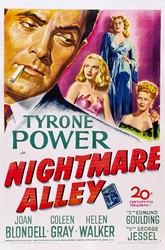
It is an epic film marking the rise of legendary Greek singer Stelios Kazantzidis (Christos Mastoras) from abject poverty in an Athenian refugee camp into Greece’s most beloved singer.

“Big Stelios”, affectionately referred to in his native Greece, fled the Pontian region of Greece to Athens with his mother and infant brother in 1945 after his father, a suspected Communist, was bludgeoned to death by Monarchist fighters in front of Stelios and his mother.

Stelios was discovered by a passing musician walking on the street in Athens hearing his voice drifting from an open window. Initially he performed in a small taberna in Athens and progressed to larger bouzoukias and subsequently to a stellar recording career. His lamentations on the difficult life and the tortures of Greek romantic relationships captured the soul of Greeks both in Greece and the Greek diaspora throughout the world.

Having been to Greece many times and attended many Greek community events in North America I know the voice well. It is inescapable in Greece. It is magnetic and deeply soulful. Perhaps I might make a comparison of Big Stelios to B.B. King, Leona Boyd, Jimmy Hendrix and Frank Sinatra the latter being an admirer of Kazantzidis stating if he was singing in America, he would be more popular than me!

This film has all the elements of an epic; history, romance, a nasty and domineering mother-in-law “Fonissa” style, gangsters, manipulative music moguls and even absurdity a la Lanthimos!

That scene with the two gangsters crashing the bouzoukia with guns and grenades with one of them dancing revolver in hand is a priceless scene of terror and absurdity one might expect in a Lanthimos film! Surely this scene will be known as a classic Greek cinema moment.

The dancing gangster!

Kazantzidis’ existential struggle, a central theme of the film, is between Stelios as a man and Kazantzidis as a legend. It examines the exploitation of Greek musicians by Columbia Records and Minos Records and Kazantzidis’ struggle to strike a fairer deal for musicians in Greece.

The film also points to the temper, selfishness, Oedipal complex and moral cruelty of Kazantzidis. The man was no saint.

The film has had theatrical releases in 15 countries and at a yet to be determined date in August will be released on VOD.

For Canadians the film can be viewed at the upcoming Greek International Film Festival Tour Canada screening in 11 Canadian cities 26September-5October2025. Check out their website for further details at https://gift.ca 

In Greek with English subtitles.

You can watch the trailer for this 2024 film here: https://www.youtube.com/watch?v=k9BoQ_GBaNY

Directed by Yorgos Tsemberopoulos.

RKS 2025 Greek Film Rating 95/100.

RKS Literature: What to Expect at the Italian Frontier (James Baldwin)

“And then, abruptly one is at the Italian frontier. They seem extremely surprised, but, on the whole, delighted that you decided to drop by. Between extravagant offers of extravagant dinners, and impassioned questions as to what drove you from your part of the world, they are perfectly willing to glance at your passport and stamp it on a random page. They swear eternal brotherhood, and so you pass out of their offices and out of their lives.”

James Baldwin, “Tell Me When the Train’s Gone”, 1968.

RKS Literature: What to Expect at Swiss Customs (James Baldwin)

“Within seconds, the time it takes to cross a small backyard (French customs), one has left this outpost, the last witness to this indisputably dour and extraordinarily interesting people and one is facing the apple faced Swiss. Their quarters are impeccable, as are their uniforms. The Swiss do not smoke their cigarettes but leave them quietly burning in one of their millions of ashtrays. Their uniforms are ironed every morning and laundered every night; and the man within the uniform would find himself in something worse than purgatory if he were not laundered and ironed too. He examines everything very carefully, passport, luggage, voyager; causes one to think of the dirty socks and shorts in one’s baggage, one’s filthy armpits and abruptly active intestines; is unspeakably polite. As patient as a ferret, as distrustful as a thief; and when one has escaped the Swiss correctness, one feels that one is being pursued-they are hoping to delude you into leading them to your accomplice.”

James Baldwin, “Tell Me How Long the Train’s Been Gone”, 1968.

RKS 2025 Wine: From Portugal’s Dão Comes Cota 700 From Magnum Wines

I had the pleasure of visiting Magnum wines in Portugal a few years ago. A very commercial winery in comparison to most of the other Dão wineries I visited. I remember well the commercial Christmas cases and displays. So nontraditional for most of Portugal at the time. Good quality wines at different price points corresponding to a few “brands”.

This wine is a blend of Touriga Nacional (40%), Alfrochiero (30%) and Tinta Roriz (30%).

Aroma: Blackberry, black cherry, blueberry with an overlay of smoked meat and dark chocolate.

Palate: Brusque, scratchy, rough and tumble but not coarse. Full mouthfeel and some friction on the after palate you’d expect more from a white Dão Encruzado. Granitic soils at work. Medium finish.

Personality: No nonsense down to business. Plays all its cards on the table now. Honest as aged in stainless steel but it reminds one just a bit more of concrete perhaps attributable to the granitic soils of the area imparting some steeliness to the wine. Apparent and in your face.

Food Match: For a French bistro wine this is your wine. Move over Côtes du Rhône! Rabbit at my favourite traditional Portuguese “bistro” in Porto Abadia do Porto or perhaps Tripas à Modu do Porto in which case the wine should be served chilled.

Tripas!

Cellarbility: Drink by 2026-year end.

Price: $17 CDN.

RKS 2025 Wine Rating: 89/100.

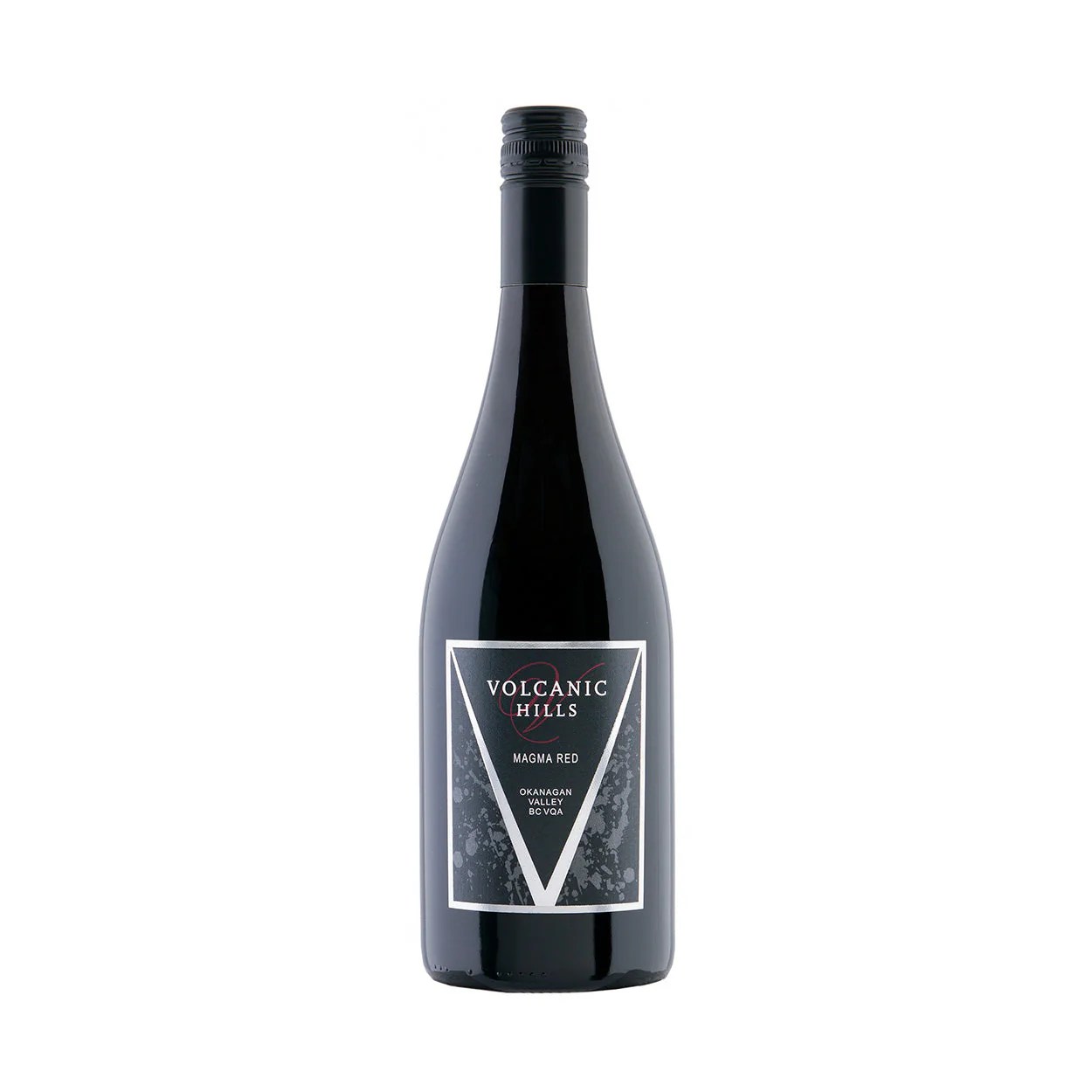
(Cota 700 2022, Dåo D.O.C., Magnum Wines, Carregal do Sal, Portugal, 750 ml, 13%).

RKS Health: The Great Hernia Adventure: Post Surgical Mindfulness

Being certified in mindfulness from both the University of Toronto and the University of Leiden I might venture to say I have both a North American and European perspective of mindfulness. Being frank there are some flaky elements to mindfulness but some concepts should (or could) be applied to your hernia adventure.

There is more than your pain to focus on and excessive focus on that may lead to an unhealthy obsession.

Express some self compassion. You have been through diagnosis and surgery and despite some commentary noting the “minor nature” of hernia surgery you prepped in perhaps less than a modest nature, are anesthetized in several possible ways some of which are highly stressful and then are left in pain. BUT YOU MADE IT! Congratulate yourself. If you are suffering it is therapeutic to show yourself some compassion which is a notch over sympathy. Yes you may be in pain and suffering but lamenting your “sorrowful state” may do little more than augment your suffering. Take some pride in yourself and understand there is nothing ashamed to feel pain and discomfort. Give yourself a break.

Mindfulness has an in the moment focus and if you meditate, you’ll understand that. You think this type of meditation comes easy? Think again. It took me months to learn the technique. Being in the present moment is an art and for all its faults and hyped benefits what it might accomplish for you is the ability to focus on the present and avoid rumination on the past. What matters is not so much your past suffering but what is happening to you now. The happenings of the past are over. You are in the present and recuperating from hernia surgery which may be an unpleasant road to travel but you are further along the road today at this moment than you were yesterday, tritely said think better days are ahead and jettison the past sufferings.

RKS Literature: What to Expect at the French Frontier (James Baldwin)

“The man at the frontier has cigarette ashes all up and down his uniform, and a cigarette is established between his lips. He has not the remotest interest in the voyager, or his passport. Sometimes he forces himself to squint at both. Sometimes he looks at the baggage, sometimes not. Sometimes he stamps the passport; sometimes one has to ask him to stamp it. His office, were it not in France, would remind one of nothing so much as a cell in purgatory; and he and his confreres seem to feel that they are serving a sentence which they probably, after all, deserve.”

James Baldwin, “Tell Me When the Train’s Leaving”, 1968.

RKS Literature: The Brutally Manufactured Lola San-Marquand (James Baldwin)

“I never knew her to dress in any other way. She must have had hundreds of black dresses and scarves-though-in fact, a black and impetuous toque sometimes did duty for the scarf, This, however, was mainly on opening nights. She impressed me-she impresses me still-as one of the most curious, most loving, devious, ruthless, and single-minded people I have met in all my life. She was brilliantly and brutally manufactured: she had not grown into her present shape but had been hammered into it, or perhaps, as in some unspeakable vat, been lowered. Her hands were white and pudgy and soft. Yet, they were not without power, and the fingers were elegant. One felt that the pudginess of the hands was no more inevitable than the rings they bore-rather awful rings; that trapped within Lola San-Marquand, was a beautiful dying girl. But alas, fatally, overwhelmingly at last, one became aware of the odor of that corruption.”

James Baldwin, “Tell Me How Long the Train’s Been Gone”, 1968.

RKS Health: The Great Hernia Adventure: Devolution of Pain Into Annoyance as a Pain Management Tool

Imagine on day 28 after your hernia procedure the pain remains unwavering. It is on the low level of let’s say 4 or 5 out of ten. You have given up on your over-the-counter pain meds as how much more can your body tolerate and at a certain point they don’t seem to annihilate or lessen the pain.

Does your pain denigrate to an annoyance as you are so accustomed to it? Is this your mind’s way of pain management? It is a tool in your pain management kit. Good for your liver and kidneys? This presupposes annoyance is preferable to pain.

Sounds inane, does it?  Try it. You have nothing to lose but pain itself.

RKS Health: The Great Hernia Adventure:  Recovery from Inguinal Hernia Surgery: The Terror of Anticipated Pain and Opioid Pain Relief

Dr. Google/ChatGPT explain the over-the-counter pain relief medications and the big guns like opioids the latter instilling, perhaps rightly so, terror of opioids.

I am sure you have your personal perceptions of the evils of opioids. On a scale of 1-10 my view is I’ll take post hospital when my pain scale is a 12/10. I had two doses of 2 mg Hydromorphone in the surgical recovery unit. They worked their wonder. I was asked if I wanted a third dose and declined. Two were the perfect remedy and a little light bulb popped in my head “warning me” another dose might take me a place I have never been before. I am uncertain what this meant but it was a warning.

I walked away from the hospital with 10 days of “over the counter” pain meds and some Hydromorphone. I took the entirety of the over counter pain meds and for the most part they effectively kept the pain at a 4/5 but one bad day at 8/10 all day long and at three in the morning it was tempting to crack open the Hydromorphone vial.

The terror of anticipated pain and of its remedy.

RKS Literature: White Police: Black Men (James Baldwin)

“Because I’m black and they paid to beat on black asses. But, with a kid your size, they just might get into trouble. So they let us go. They knew you weren’t nothing but a kid. They knew it. But they didn’t care. All black people are shit to them. You remember that. You black like me and they going to hate you as long as you live because you’re black. There’s something wrong with them. They got some type of disease. I hope to God it kills them soon.”

James Baldwin, “Tell Me How Long the Train’s Been Gone”, 1968.