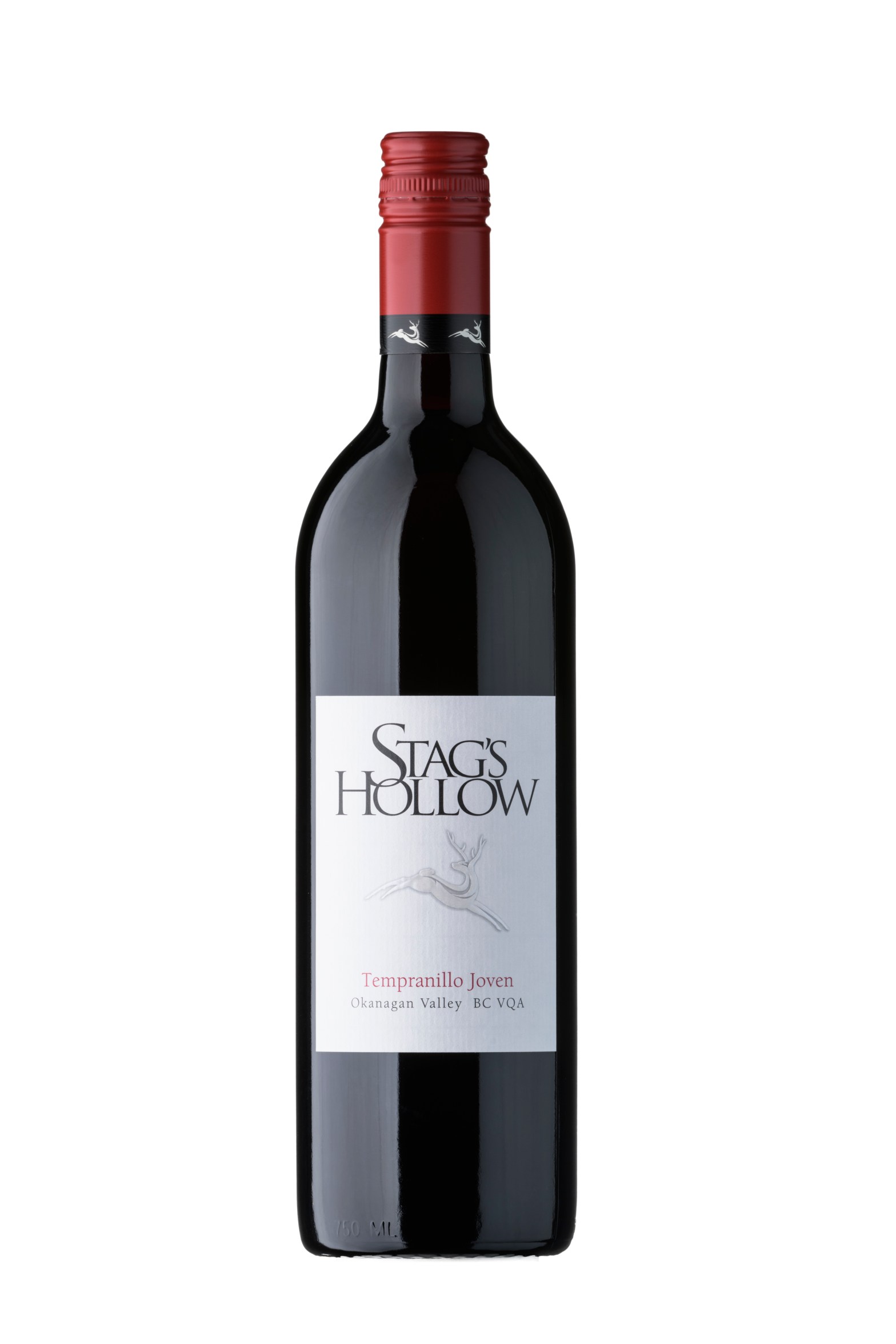
Stag’s Hollow Has Guts! 2019 Tempranillo Joven

There is an ocean of Tempranillo in Spain and quite a lot in the Douro in Portugal where it is known as Tinta Roriz. But in Beautiful British Columbia? You just may think you are hallucinating when you see “Tempranillo” on a Stag’s Hollow bottle. No dreaming buddy you are staring at bravery and innovation.

Many wine drinkers I bet have no familiarity with Tempranillo unless of course they are savvy customers of Stag’s Hollow nestled in the Okanagan Hills of British Columbia or have travelled to Spain and returned with a love of Tempranillo. So you introduce an unknown on your shelves you are a risk taker. Risks can pay off or explode in your face. So what is the result here?

In this case it is a Stag’s Hollow 2019 Tempranillo Joven (Young Tempranillo) with 3% Dolcetto in the blend. Fermented in both stainless steel and neutral oak and then aged for an additional 9 months sur lees.

The aroma is basically screaming “Black Cherry” at your nose, raspberries, dark chocolate and some pomegranate add to the mix. I think the nose is hinting at a serious wine? On the palate warm and inviting with a certain lightness to it. The technical sheet describes this wine as “zippy and fresh”. “Zippy” makes me nervous as noticeable acids in red wine can be volatile and destructive. No I would call this light and seductive. I am picking up some sour cherry, blueberry pie and loganberry jam. The tannins are light. And at 12.3% alcohol surprisingly robust.

I agree with the technical sheet stating drink through to 2024.

153 cases were produced.

The winery recommends Spanish tapas, robust and spicy lamb dishes, paella, American BBQ, Mexican food, burgers. Spicy Indian dishes and Cajun dishes. Right on. Note than in Ribera del Duero in Spain baby lamb is a favourite match with a clone of Tempranillo called Tinto Fino.

To Stag’s Hollow I say your risk has paid off well and if only we could get this wine distributed throughout Canada you’ll need at least 15,000 more cases. Bravo “Braveheart” Stag’s Hollow.

(Stag’s Hollow 2019 Tempranillo Joven, Okanagan Valley, BC VQA, Stag’s Hollow Winery, Okanagan Valley, British Columbia, $ 21, 750 mL, 12.3%, Robert K. Stephen A Little Birdie Told Me So Rating 92/100).

If you want to see the Stag’s Hollow line-up see www.stagshollowwinery.com If you want to order and help a Canadian winery in these COVID times call 250.497.6162

“Mutantism on the March” :Chapter 60 “Dr. Zodiac Hunts California’s Zodiac Killer”

After a brief stay with Montenez, Dr. Zodiac made his way to San Francisco to ferret out the Zodiac Killer. He needed results quick as Venus back in Zlano was gossiping about Dr. Zodiac as the killer. Dr. Zodiac was a healer and not a killer. Even if people were making comparisons to Dr. Zodiac as the killer in jest it was not appreciated. The evidence was very clear as at the time of the killings he was in Zlano but humour and innuendo sometimes trump alibis! If only the killer had not used the name Zodiac his life would have been so much better.

For his own mental state and reputation he had to track down the killer. Initially he had planned to bring the killer to justice or terminate him with extreme prejudice. However terminating the killer or bringing him to justice would accomplish very little. Perhaps Squid might be a better alternative, As he had aided Bertie Foonbean perhaps he could effectively deal with the killer.  If the authorities captured the killer it would mean an eternity of institutionalized care at the mercy of self-proclaimed Freudian psychiatrists.

Dr. Zodiac knew little about the killer other than the sensational media story about each new kill. The patterns were similar. The Zodiac Killer after murdering his victim would carve astrology signs on the body and leave clues in code no one could decipher. Thirteen people were known to have been killed by the Zodiac Killer. Fear was rampant in the state and also in Nevada where there had been two kills. San Francisco was jittery and there was talk of mandating a curfew until such time as the Zodiac Killer was dragged before the wise judgment of the legal system.

Because the murders were committed under the cover of darkness Dr. Zodiac would have to patrol the city hoping to discover clues. A few of the murders were committed in Wino Alley but no clues could be found there. There must be some other way. Why hadn’t he thought of it before! On Zlano he had been studying earth psychology and recalled reading a theory postulated by the great Professor Hofner called “confused oedipal revenge complex” believing that any killers affected by it were motivated to kill by traumatic events occurring in their childhood. It was the murder of a mother at the time the oedipal complex was developing in the child that caused severe damage to the growth of the child’s super ego. In a great number of cases the super ego, which functioned as a deterrent to criminal acts, reversed its normal function to a degree which dictated an insatiable desire for revenge of the murder of the mother and that often-meant recourse to violent homicide. The theory was novel and sill in the supra hypothetical stage being debated in various medical journals and in medical circles. Dr Zodiac had been impressed with this research and wondered if it was applicable to the Zodiac Killer. It was a long shot but what the hell.

Meyer Family Vineyards: A COVID Themed Dr. Bonnie Henry Chardonnay from British Columbia?

I will admit being taken aback by a Meyer Family Vineyards (MFV) Chardonnay named after British Columbia’s Provincial Officer of Health, Dr. Bonnie Henry. Is this Canada’s first COVID themed wine? Given the damage done to British Columbia wineries by public health orders I say MFV is gutsy in naming a “Tribute” wine after Dr. Bonnie Henry. Now that is respect.

I can see why. Henry is cool, calm and collected. Even more than that she creates a very trustworthy and earnest impression unlike other provincial health officers I have seen in Canada. Quite frankly given the political-medico elites seemingly controlling the democratic process I’ll give Dr. Henry a pass and would be delighted to share a glass of this Dr. Bonnie Henry Chardonnay with Henry herself. I get the sense she enjoys a good glass of British Columbian wine unlike Premier Doug Ford of Ontario who strikes me as a wobbly pop type of guy. Speaking of Ontario I also like Dr. Eileen de Villa Toronto’s Medical Officer of Health whose style reminds one of Dr. Henry.

Dr. Bonnie Henry: Photo Darryl Dyck Canadian Press

Enough political meandering.

The wine has a golden colour. On the nose this is definitely a Chardonnay in the oaked camp. And it’s not subtle oak at least on the nose not surprising as it was aged in French oak 22% of which was new. Notes of pear, apple, guava, pineapple and butterscotch. On the palate the oak is very well integrated into the wine so it compliments rather than overpowering it. There are notes of Baked Alaska, lemon meringue pie, Portuguese custard tarts and pear-almond galette. The finish is moderate in length and the acids are completely under control, like Dr. Henry.

Now given the oak streak in the wine shellfish come to mind. A simple clam sauce made with white wine with loads of garlic butter over egg pappardelle with this wine will lift you far away from COVID. Revel in the present moment and mindfully enjoy this excellent MFV effort. You British Columbians may want to toast her with a glass of this wine. You may want to buy a few bottles and when you have had your second jab toast Dr. Henry. If only we had an Ontario winery create an Eileen de Villa wine! I can easily picture these two ladies running for high political office. I suggest MFV create a virtual Zoom toast to Dr. Henry when she declares COVID is over!

640 cases were produced. Although a long cool fermentation began in stainless steel tanks for most of the ferment the must was transferred to 100% French oak (22% new) and as left sur lees for 11 months. The juice was from the “Old Main Road Vineyard” in the famed Naramata Bench and vines were planted in 1996 with 100% Chardonnay grapes. The tech sheet says cellaring potential is 7-10 years and given the underlying firmness of the wine I can agree with that.

(2019 Tribute Series Chardonnay-Dr. Bonnie Henry, Old Main Road Vineyard, Naramata Okanagan Valley, British Columbia, BC VQA, Meyer Family Vineyards, Okanagan Falls, British Columbia, $ 30.52, 750 mL, 13.5%, Robert K. Stephen A Little Birdie Told Me So Rating 92/100).

“Mutantism on the March”: Chapter 59 “The Montreal Mutants Continue the Battle”

Nervous Quebec bureaucrats from the Ministry of Mental Affairs twiddled their thumbs searching for some answer to the Mugless Mental Hospital breakout. Being well paid Quebec nationalists, they announced the breakout was planned by Canadian federalists uneasy with Quebec’s flexing its anti Anglo and separatist blarney. So upset were the Quebec government bureaucrats and politicians they changed the name of the Mugless to the “Trueplessis Hospital” named after fascist nationalist Maurice Trueplessis. Yes the mass escape was a plot by Canadian federalists to denigrate the current Quebec government.

The entire City of Montreal was jittery and all Quebec government officials were beet red having their mismanagement and disregard of the Mugless Mental Hospital laid bare. American FBI agents wove a different story upset their LSD experiments on Mugless residents had been exposed. According to them it was Squid that was behind the breakout plot. The FBI knew very well from Squid’s speeches in New York that he advocated the abolition of mental hospitals. The local police and the Royal Canadian Mounted Police, so well staffed with stoolies and spies, finally tracked down Squid to a deli on Rue St. Laurent in Montreal. Well Squid had an alibi and there was no crime in consuming a gigantic (fatty) smoked meat sandwich, fries, Cott Black Cherry Cola and a big fat Kosher pickle.

The escapees surfaced demonstrating at the offices of the Ministry of Mental Affairs several days after the breakout. They were carrying placards and chanting, “Free mind mutants. End institutionalized cruelty! Up with mutant self determination!”. The Minister of Mental Affairs, Pierre Foutete, had just flown in from Quebec City and urged the demonstrators to remain calm and return to the Mugless. He was greeted with a hail of rotten tomatoes and mouldy zucchini ruining his $700 suit. The director of the Mugless, Dans Lespochesamerican, fared no better being shouted down with cries, “Fuck your paternalism Big Daddy.” The poor man was so upset with the verbal “violence” of the escapees he peed his pants and fainted.

The escapees were gathering a large supportive crowd and began distributing pro mutant pamphlets but in a jiffy Montreal’s finest riot police arrived with eighty paddy wagons. The chief of the Montreal police Jean Lelackey urged the escapees to march into the paddy wagons and be taken to the “safety of the Mugless”. This infuriated the protesters that launched a barrage of rocks felling 12 police yelling, “Hell no we won’t go!” A vicious street battle ensued that lasted some six hours with 32 police and 122 mutants taken to hospital to treat injuries. Four police cars and 2 paddy wagons were torched by Molotov Cocktails. There was one policeman decapitated by a chainsaw witnesses say was perpetuated by an RCMP stoolie.

Eventually those Mugless escapees not transported to hospital for treatment were rounded up and returned to the Mugless where they threatened to burn down the hospital until their demands were meant including the cessation of the CIA LSD experimentation on patients. Compulsory sedation ended and Friday night wine and pizza was introduced The escapees destroyed the lobotomy centre and shock therapy equipment before settling down to a hearty steak and kidney pie dinner and Chateau Lapoor Pakistani Cabernet Sauvignon.

The patients slept like they had not done in years. Liberation was in sight! The next day 219 patients signed themselves out and established a United Mutations Mental Health Street Clinic. One of the sign outs, Ernie Grissol, who was a former apple grower and with money supplied by the United Mutations office in New York City bought an apple farm in Saint Scholastique an hour from Montreal and formed a mutant commune. It became a model farm and treatment centre.  

John Hopkins States Organic Meat Less Likely to Be Contaminated

May 12, 2021

Organic Meat Less Likely To Be Contaminated with Multidrug-Resistant Bacteria, Study Suggests

ANALYSIS ALSO UNCOVERS MEATS FROM PROCESSORS THAT HANDLE BOTH ORGANIC AND CONVENTIONAL RETAIL MEAT MAY BE LESS LIKELY TO BE CONTAMINATED WITH PATHOGENIC BACTERIA

Meat that is certified organic by the U.S. Department of Agriculture is less likely to be contaminated with bacteria that can sicken people, including dangerous, multidrug-resistant organisms, compared to conventionally produced meat, according to a study from researchers at the Johns Hopkins Bloomberg School of Public Health.

The findings highlight the risk for consumers to contract foodborne illness—contaminated animal products and produce sicken tens of millions of people in the U.S. each year—and the prevalence of multidrug-resistant organisms that, when they lead to illness, can complicate treatment.

The researchers found that, compared to conventionally processed meats, organic-certified meats were 56 percent less likely to be contaminated with multidrug-resistant bacteria. The study was based on nationwide testing of meats from 2012 to 2017 as part of the U.S. National Antimicrobial Resistance Monitoring System (NARMS).

In order for meat to be certified organic by the USDA, animals can never have been administered antibiotics or hormones, and animal feed and forage such as grass and hay must be 100 percent organic. A longstanding concern about antibiotic use in livestock and livestock feed is the increased prevalence of antibiotic-resistant pathogens. To monitor this trend, in 1996 the federal government developed NARMS to track antibiotic resistance in bacteria isolated from retail meats, farmed animals, and patients with foodborne illness in the U.S.

For their study, the Bloomberg School research team analyzed U.S. Food and Drug Administration-NARMS data from randomly sampled chicken breast, ground beef, ground turkey, and pork for any contamination and for contamination by multidrug-resistant organisms. The analysis covers four types of bacteria: Salmonella, Campylobacter, Enterococcus, and Escherichia coli.

The study covered a total of 39,348 meat samples, of which 1,422 were found to be contaminated with at least one multidrug-resistant organism. The rate of contamination was 4 percent in the conventionally produced meat samples and just under 1 percent in those that were produced organically.

The study was published May 12 in Environmental Health Perspectives.

“The presence of pathogenic bacteria is worrisome in and of itself, considering the possible increased risk of contracting foodborne illness,” says senior author Meghan Davis, DVM, PhD, associate professor in the Department of Environmental Health and Engineering at the Bloomberg School. “If infections turn out to be multidrug resistant, they can be more deadly and more costly to treat.”

The analysis also suggested that the type of processing facility may influence the likelihood of meat contamination. Meat processors fall into three categories: exclusively organic, exclusively conventional, or those that handle both organic and conventional meats—so-called “split” processors. The study found that among conventional meats, those processed at facilities that exclusively handled conventional meats were contaminated with bacteria one-third of the time, while those handled at facilities that processed both conventional and organic meats were contaminated one-quarter of the time. The prevalence of multidrug-resistant bacteria was roughly the same in these two meat processor categories.

“The required disinfection of equipment between processing batches of organic and conventional meats may explain our findings of reduced bacterial contamination on products from facilities that process both types of meats,” says Davis.

The authors believe their findings have relevance for regulatory agencies and consumers. “How we raise animals matters,” says Davis. “As a veterinarian, I recognize that we sometimes need to use antibiotics to treat sick animals, but taking advantage of opportunities to reduce antibiotics use could benefit everyone. Consumer choice and regulatory oversight are two strategies to do this.”

First author Gabriel Innes, VMD, PhD, led the study while completing his PhD at the Bloomberg School, where he was a Center for a Livable Future-Lerner Fellow.

“Contamination of Retail Meat Samples with Multidrug-Resistant Organisms in Relation to Organic and Conventional Production and Processing: A Cross-Sectional Analysis of Data from the United States National Antimicrobial Resistance Monitoring System, 2012–2017” was co-authored by Gabriel Innes, Keeve Nachman, Alison Abraham, Joan Casey, Andrew Patton, Lance Price, Sara Tartof and Meghan Davis.

Support for the research was provided by the National Institutes of Health (1R01AI130066-01A1, K01OD019918), the Johns Hopkins Center for a Livable Future, and the Johns Hopkins Berman Institute for Bioethics.

Ontario’s Three Step Programme to Reopen: I Think it is Called “Public Pressure” and who Will the Scapegoats Be?

NEWS RELEASE

Ontario Releases Three-Step Roadmap to Safely Reopen the Province

Province Safely Reopening Outdoor Recreational Amenities Prior to End of Stay-at-Home Order

May 20, 2021

Office of the Premier


Table of Contents

  1. Content
  2. Quick Facts
  3. Additional Resources
  4. Related Topics

TORONTO — The Ontario government, in consultation with the Chief Medical Officer of Health, has released its Roadmap to Reopen, a three-step plan to safely and cautiously reopen the province and gradually lift public health measures based on the provincewide vaccination rate and improvements in key public health and health care indicators. In response to recent improvements to these indicators, Ontario will allow more outdoor recreational amenities to reopen, with restrictions in place, effective May 22, 2021 at 12:01 a.m.

“As a result of the strict public health measures we introduced to stop the spread of COVID-19 variants, we are seeing a steady improvement in our situation as ICU and hospital numbers begin to stabilize,” said Premier Doug Ford. “While we must remain conscious of the continued threat the virus poses, with millions of Ontarians having received at least their first dose of vaccine we can now begin the process of a slow and cautious re-opening of the province in full consultation with our public health professionals.”

Roadmap to Reopen outlines three steps to easing public health measures, guided by the following principles:

  • Step One An initial focus on resuming outdoor activities with smaller crowds where the risk of transmission is lower, and permitting retail with restrictions. This includes allowing outdoor gatherings of up to 10 people, outdoor dining with up to four people per table and non-essential retail at 15 per cent capacity.
  • Step Two Further expanding outdoor activities and resuming limited indoor services with small numbers of people where face coverings are worn. This includes outdoor gatherings of up to 25 people, outdoor sports and leagues, overnight camps, personal care services where face coverings can be worn and with capacity limits, as well as indoor religious services, rites or ceremony gatherings at 15 per cent capacity.
  • Step Three Expanding access to indoor settings, with restrictions, including where there are larger numbers of people and where face coverings can’t always be worn. This includes indoor sports and recreational fitness; indoor dining, museums, art galleries and libraries, and casinos and bingo halls, with capacity limits.

The province will remain in each step for at least 21 days to evaluate any impacts on key public health and health system indicators. If at the end of the 21 days, the following vaccination thresholds have been met, along with positive trends in other key public health and health system indicators, then the province will move to the next step:

  • Step 1: 60 per cent of adults vaccinated with one dose.
  • Step 2: 70 per cent of adults vaccinated with one dose and 20 per cent vaccinated with two doses.
  • Step 3: 70 to 80 per cent of adults vaccinated with one dose and 25 per cent vaccinated with two doses.

Based on current trends in key health indicators, including the provincial vaccination rate, the government expects to enter Step One of the Roadmap the week of June 14, 2021. The province will confirm closer to the expected start of Step One.

“While we know that now is not yet the moment to reopen, Ontarians deserve to know the path forward on what we will carefully reopen and when, starting with the settings we know are safest,” said Christine Elliott, Deputy Premier and Minister of Health. “Brighter days are ahead and we believe this Roadmap represents a path out of the pandemic and will encourage Ontarians to get vaccinated and to continue following public health advice.”

The provincewide emergency brake restrictions remain in effect while the province assesses when it will be moving to Step One of the roadmap with the Stay at Home order expiring on June 2, 2021. During this time, the government will continue to work with stakeholders on reopening plans to ensure full awareness of when and how they can begin to safely reopen.

Due to the continuing success of Ontario’s vaccine rollout and the collective efforts of Ontarians in following public health and workplace safety measures to date, effective May 22, 2021 at 12:01 a.m. the province will reopen outdoor recreational amenities with restrictions in place, such as the need to maintain physical distancing. These amenities include but are not limited to golf courses and driving ranges, soccer and other sports fields, tennis and basketball courts, and skate parks. No outdoor sports or recreational classes are permitted. Outdoor limits for social gatherings and organized public events will be expanded to five people, which will allow these amenities to be used for up to five people, including with members of different households. All other public health and workplace safety measures under the provincewide emergency brake will remain in effect.

At this time, publicly funded and private elementary and secondary schools in the province will continue to operate under teacher-led remote learning. Data will be assessed on an ongoing basis and medical experts, including the Chief Medical Officer of Health, and other health officials will be consulted to determine if it may be safe to resume in-person learning.

“Due to the stringent efforts of Ontarians following public health and workplace safety measures, we have reached the point where we can begin preparing to exit the provincewide emergency brake and lift the Stay-at-Home order,” said Dr. David Williams, Chief Medical Officer of Health. “We must remain vigilant however, as the fight against COVID-19 is not over and our case counts, ICU capacity and hospitalizations are still concerning. It remains critical that all Ontarians continue to follow all public health and workplace safety measures currently in place to help further reduce transmission and save lives.”

The government will continue to work with the Public Health Measures Table, Public Health Ontario, and other public health and scientific experts to determine public health guidance for Ontarians to follow, including protocols for masking and outdoor/indoor gatherings, after being fully vaccinated.

A Couple of New Pinot Noir Releases From Meyer Family Vineyards in The Okanagan

Meyer Family Vineyards (MFV) produces some of the best Pinot Noirs I have had and I mean not just in Canada but internationally.

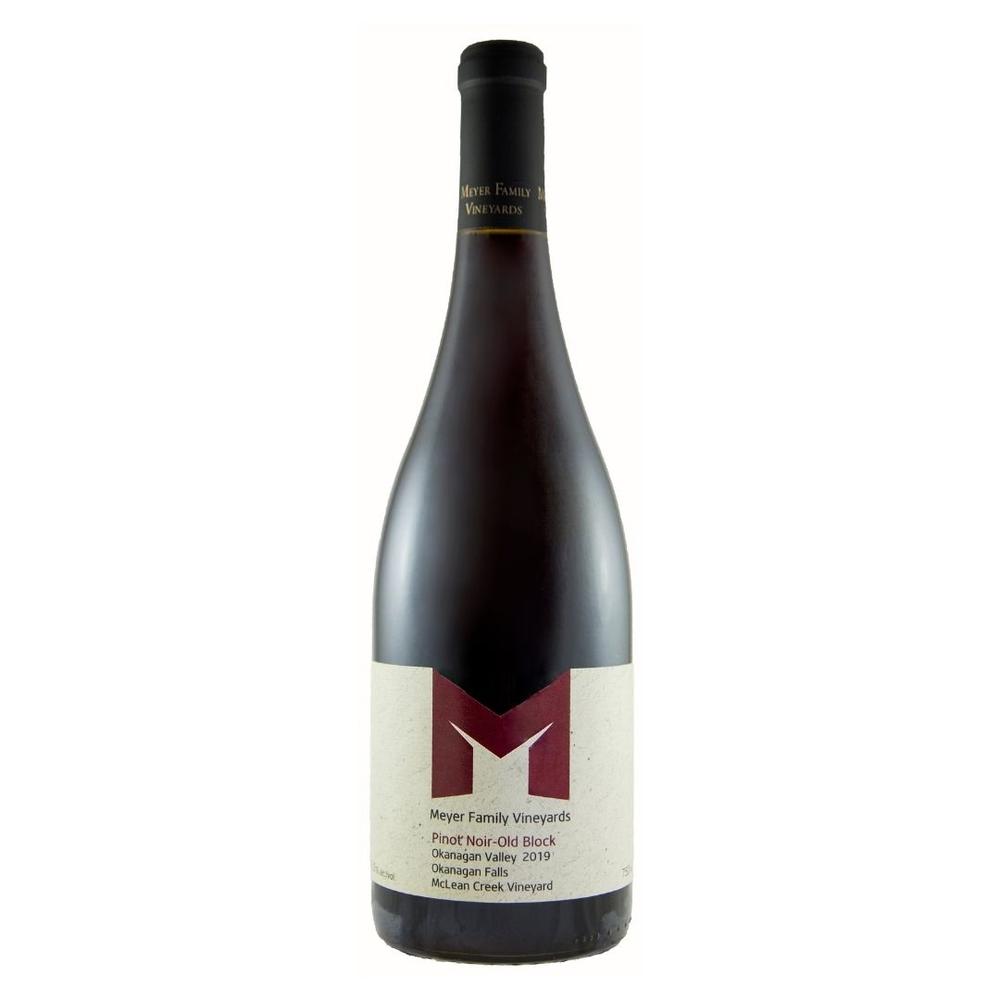
So the first one we will try is MFV’s Pinot Noir-Old Block Okanagan Valley 2019. Although an inviting ruby colour it is so very lightly clouded and this is not surprising as it is unfiltered and unfined. Don’t worry it’s not going to bite you!

On the nose full throttle foot on the gas aroma of June Taylorish Dancers black cherry, chubby Jackie Gleason raspberry and “that’s the way it is” strawberry. Although the aromas are as about intense as Riz Ahmed in “The Sound of Metal” they all just amount to the stellar performances of Elizabeth Taylor and Richard Burton in “Who’s Afraid of Virginia Woolf”. I said “intense” and not “overpowering”.

Just to be sure we are not an overpowering Cassius Clay we check in our palate.  Gently tannic with a bit of acidity, Subtle and sleek as a Natalie Wood performance like in “Bob, Carol, Ted and Alice”. Full of cherry, raspberry jam turning in a solid performance as Jack Nicholson in “Easy Rider”.

This is a full-bodied wine like Bridgit Bardot with the elegance of Catherine Deneuve. Moderate finish. I could get boring and say have with wild salmon or duck confit but to shake things up if you can find Brandon Jew’s sunchoke Fried Rice With Mushroom Gravy recipe (in last account in the Wall Street Journal) from Mr. Jiu’s, Moongate Lounge or Mamhuhu in San Francisco you can step out of the Hollywood smoothies and enjoy after dinner while watching “Parasite”.

I would say drink within the next couple of years because the slight amount of acidity in the wine which is sometimes can be a loose cannon as wine ages. Not an issue now however and might even enhance certain food.

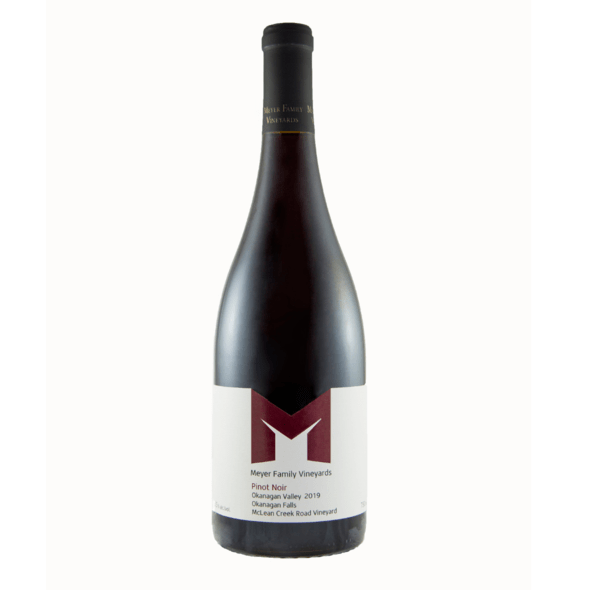
(Meyer Family Vineyards Pinot Noir-Old Block, Okanagan Valley 2019 Okanagan Falls, McLean Creek Vineyard, BC VQA, Meyer Family Vineyards Inc., Okanagan Falls, British Columbia, $43.57, 750 mL, 13.5%, Robert K. Stephen A Little Birdie Told Me So Rating 92/100).

Well one more MFV Pinot Noir. This one is a Pinot Noir from McClean Creek Road Vineyard. It is ruby coloured and transparent. Nice pure and simple black cherry, raspberry and strawberry on the nose. A solid beam of cherry and raspberry coulis on the palate. What can I say other than flavourful, pure and very clean. There can be beauty in simplicity. And unlike the Old Block Pinot Noir reviewed above I detect no acidity on the palate. Short finish.

After the post maceration period the wine was transferred into 100% French Oak barrels 25% of which were new. Although unfined and unfiltered like the Old Block Pinot Noir this wine is clearer in colour.

Drink until 2026. I would drink with just about any Thai dish with peanut sauce.

I like it more than the Old Block Pinot Noir as it is more laid back and gentle and well cheaper!

(Meyer Family Vineyards Pinot Noir McClean Creek Road Vineyard, Okanagan Valley 2019 Okanagan Falls, BC VQA, Meyer Family Vineyards Inc., Okanagan Falls, British Columbia, $34.87, 750 mL, 13.5%, Robert K. Stephen A Little Birdie Told Me So Rating 93/100).

You can order from the winery by calling 250.497.8553.

“Lost Contact”: Autistics as Aliens?

I encountered Jaina Kalifa’s film “Happy Android” as a short at Toronto Hot Docs Festival in 2019 and it was a simple uplifting story about a mentally distraught man creating a robot costume and trundling about making so many people, particularly children, happy. How could this be? A near “social reject” making people who might have labelled him a misfit so joyful!

I heard from Kalifa yesterday who said he had a new short documentary film “Lost Contact” which is having its Australian premiere at the St. Kilda Film Festival in Australia from 21 May-29 May. The festival films are geoblocked to Australia but knowing the festival circuit somehow I am sure it will be coming to Canada and many other countries.

The film is about autistic Aldo O’Donadel who due to his autism feels like he has come from another planet. After feeling isolated due to autism he seeks connection with others to give his life meaning. He could neither speak an Italian or English complete sentence until his thirties.

Aldo is autistic but complicated and full of meaningful insights that his autism may be responsible for. Often those we might considered mentally unbalanced or ourselves when mentally unbalanced can offer a creativity “normalacy” deprives us of. Like his sentence “My life journey is to find my voice.” Isn’t that what we are looking for or are we simply too busy existing we can’t grasp the fundamental truth of the statement. Funny, as a lawyer for 33 years I would not have understood this but as a novelist and writer I live this statement daily. Also Aldo has another brilliant statement that he needs someone to hear him so he can find his way to safety. Again I live this daily. Am I autistic? Or does Aldo’s autism give me an insight above and beyond what “normal people” have the patience, time or ability to think about?

While “Happy Android” was an uplifting documentary “Lost Contact” is more insightful than it is uplifting. Is autism simply being an extreme position on the “normalcy spectrum”? Although a more complex film than “Happy Android” puppeteering” keeps the documentary from being overly serious. Whereas “Happy Android” leaves you cheer and joy “Lost Contact” may have you left in serious thought quite a task for a 12-minute documentary.

Ingenious use of puppetry and an exhaustive look into autism. I feel sorry for audiences that have not watched the film at least three times. There is more than 12 minutes of meat in this one.

In addition to Kalifa , Amelia Paxman is responsible for this nifty little “short”. No, they have gone beyond “nifty” but brilliance enshrouded in a degree of light heatedness.

Stay tuned readers for this documentary to come your way.

A Modern Greek Tragedy Both Human and Societal: “City of Children”

The Greek Film “City of Children” presents the viewer with a multitude of tragedies. There is nothing like a tragedy to make one feel like a fool for wasted time and bad decisions.

There are four couples in the film and pregnancy is ostensibly the main theme but perhaps very subtly the bigger tragedy is the economic crisis that Greece faced after defaulting on its loans. We get snippets of a society in turmoil if not desperation by announcers on the radio now and then . Can Greece pull a rabbit from the hat? Demonstrations, loan renegotiations, tear gas, arrests and robberies. Having been in Greece during these times I saw the demonstrations and heard countless tales of social cuts and they were deep and painful.

So the children to be born in these awful times faced an uncertain future.

I can’t tell you the stories of these four women but I can give you some hints.

There is a Muslim Nadine (Kika Georgiou) who husband appears to be a drunk, gambler and criminal arrested while Nadine is giving birth. In effect she has been deserted by her wayward husband.

Then there is an older couple Antonis (Yorgos Ziovas) and his wife Vasso (Maria Tsima) with their teenage son Yiannis (Michalis Sarandis). This couple argues ferociously. Antonis loses a job as his employer is heading towards bankruptcy.  And in a tragic move she does something she will regret.

Then there is Dina (Anna Kalaitzidou) and her husband Spiros (Leonidas Kakouris) who is a doctor. Dina can’t conceive despite numerous in vitro treatments. Tragedy awaits Dina and Spiros.

Then there is a younger hipster couple Fotis (Vasilis Bisbikis) and Liza (Natalia Kalimeratzi) where Liza tells Fotis she is pregnant while on a road trip. A psycho nut with a gun hijacks their Audi and wreaks further mayhem and tragedy.

So it is a woman very pregnant giving birth, one who can’t, one who is pregnant but makes a grave mistake and another seriously considering an abortion. Life for the living and unborn can be cruel and this film makes that point and enhances it to some degree by the actions of a psycho nut. You may regret what you have done in the past but as with mindfulness it is the present moment that is most important. Life gives. Life takes away.

This 2011 film as the debut of director Yorgos Gkikapeppas. The film is in Greek and a tad of Arabic with English Subtitles. It won the Best Greek Film in the 2011 Thessaloniki International Film Festival.

The film is brought to you by the Hellenic Film Society USA. https://hellenicfilmusa.org/  

You can see the trailer here  https://www.youtube.com/watch?v=3dULnULgg_Q&t=2s

The film runs until May 31st virtually.

Stel+Mar’s 2019 Cabernet Sauvignon

You will not find this wine on the Liquor Control Board of Ontario’s shelves quite yet. If I remember correctly these guys brought us Rosé and Chardonnay in cans. The man behind the scenes is winemaker and master blender Phillip Zorn out of California. Years ago he wowed me with his bargain basement priced Pinot Noir under The Mandolin label.

Now California Cabernet Sauvignon only starts getting respectable at $25 and that is the starting price and littered with duds. Napa and Sonoma are simply too pricey for most wine drinkers so one has to look to either a master blender that sources great Cabernet Sauvignon throughout California or head to another less expensive AVA in California. Zorn has focused on Lodi to produce an economical Cabernet Sauvignon.

So how is the Stel+Mar 2019 Cab from Lodi?

Well on the nose classic California Cab with intense notes of blueberry, cassis and blueberry pie. Classy telltale notes of an expensive Cab from Napa and Sonoma. Lesser notes of black cherry. The nose is suggestive of a far more expensive Cab. On the palate light on the tannins so no need to cellar this to mellow the wine out. Solid beams of blueberry and black cherry on the palate. The acidity is enough to stand up to a variety of foods including beef and duck. There is a nice little smoky riff to the wine. It is soft and plush but not flabby.

I can’t say brilliant or masterfully complex but a solid and highly drinkable Cabernet Sauvignon with or without food. For musical accompaniment Chet Baker please.

Are you getting a good deal on the wine? At $17.95 for California Cabernet Sauvignon indeed you are.

Now as the label designed by Stephanie Cheng shows a label with a woman leading a dog (or is it a goat?) I have received assurances from Stel+Mar that Juniper the stolen baby goat from Riverdale Farm in Toronto is not in their Toronto headquarters willing to butt heads with wine writers that disagree with the quality of this wine!

While the residual sugars of the 10,000 cases produced, come in at 8 grams per liter it really does not convert this wine into an unnamed Millennial Cab from California.

(Stel+Mar 2019 Cabernet Sauvignon, Lodi, California, bottled by Stel+Mar, Morgan Hill, California, $17.95, to be on shelves mid June 2021, 13.7%, Robert K. Stephen Set The Bar Rating 91/100)