RKS Wine: The Penniless Pensioner: A Stunningly Delicious and Affordable Wine from Campania

A couple of years ago courtesy of the EU I was off to Naples, the capital of the Campanian wine region in Italy. Such incredible food, archeological sites and of course wine. I was at Southern Italy’s biggest wine show Vitingo in Naples and was also ferried about to some incredible wineries and co-operatives. Fantastic wines that I had not heard of and off to the best restaurants in Naples each night. If  I can only bring back the magic by returning to Naples. And if you have had the experience of tasting the pizza of Napoli that alone with the right wine would have you returning in an instant. So it is with interest I see the wines of Campania trickle into the LCBO in a wave of tokenism.

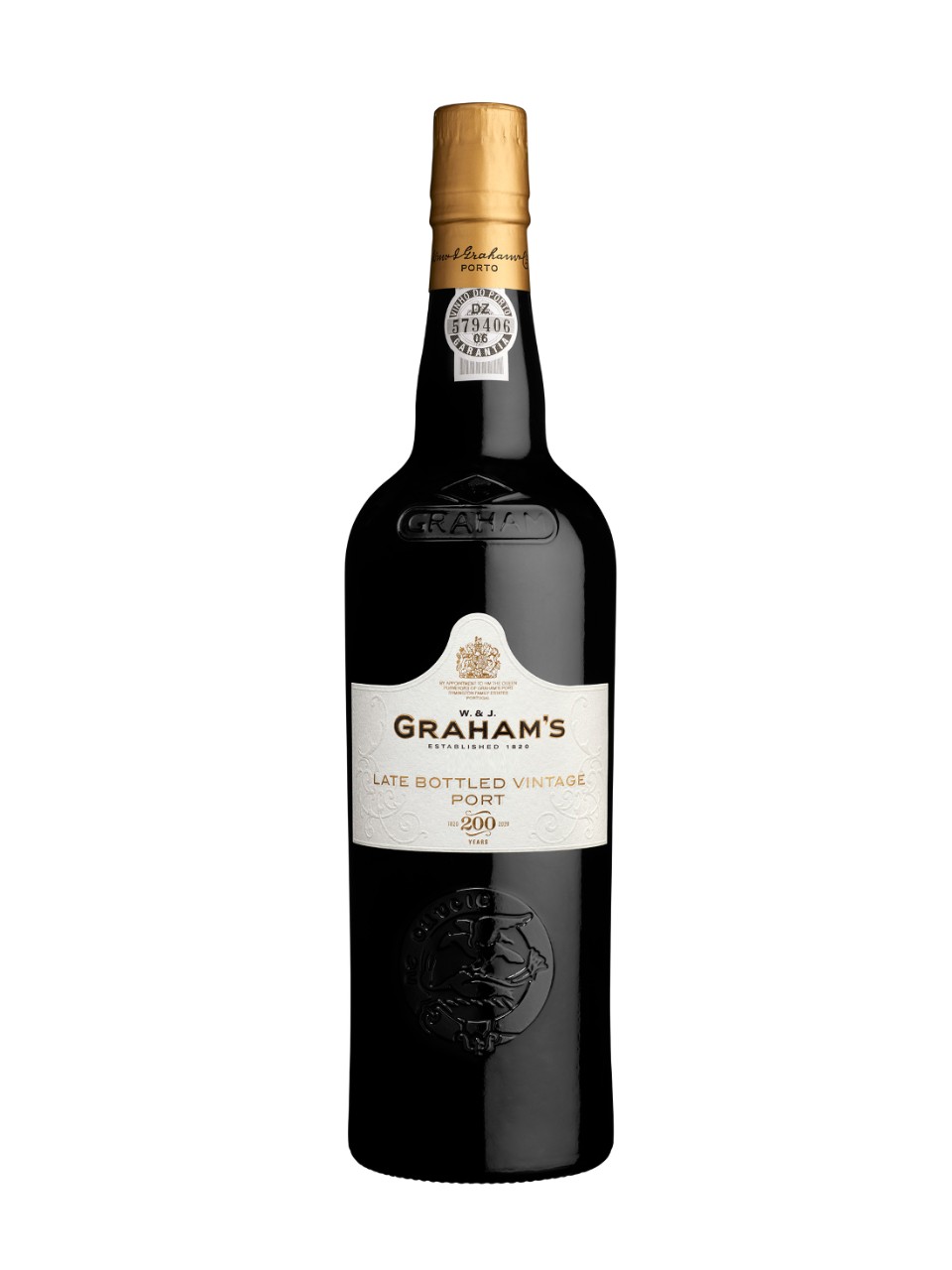
From Fattoria Alois we try a Ponte Pellegrino Aglianico. A heady aroma of blackberry, blueberry, cassis and a handshake welcoming you into its heart and soul. On the palate sleek and elegant with a gentle acidity that compliments the fruit. Acidity in red wine can be a killer but here it works perfectly setting a perfect foil against the moderate tannins. As for fruit it is all so tightly knit it forms a coherent unified whole that leaves me saying the wine is full of black fruit. I think the wine is best suited to food but one must not bypass the opportunity to taste it on its own. One aspect I can’t pick up is if the grapes are grown in the volcanic soils of Mt. Vesuvius because in such cases there is often a hint of coal perhaps thanks to the lava soils. As a closing comment this is one of the rare wines where acidity is not obnoxious and destructive. That alone in my books is quite a feat.

Will it improve with age? Considering its perfect acidity today what will happen to its acidity in the upcoming years is a bit of a crap shoot. If I can give you some advice drinking this wine is like winning $400 on the slots in Las Vegas. Best cash out quick and save your winnings for a couple of great meals! Facing three cheers and the bing bing bing of a winner’s roll savour the moment and walk away. Put another way drink now and enjoy the three cherries.

(Ponte Pellegrino Aglianico 2018, Fattoria Alois Srl, Pontelatone, Italy , $14.95, Liquor Control Board of Ontario # 18611, 13%, Robert K. Stephen A Little Birdie Told Me So Rating 94/100)

RKS Wine: More Penniless Pensioner Wines: South Africa’s Alvi’s Drift Signature Cabernet Sauvignon 2019

In today’s Liquor Control Board of Ontario’s monopoly any wine under $15 falls into the Penniless Pensioner Category.

The question of course is it any good. Cheap does not mean plonk. It may help there is no glowing review accompanying its description in the LCBO Vintages Catalogue which might keep the cost down.

Geez it has a gold medal sticker on it from what competition I don’t know as the print is too small to find out. It also has a generic” Ultra Value Wines” sticker whatever that means. Not to be nasty but cheap supermarket tactics to entice buyers?

On the nose a certain rawness with notes of blueberry, black plum, black cherry and cassis. On the palate the tannins are soft rather body checking out the rawness on the nose. There is some black cherry, pomegranate, red plum and a bit of black pepper all with a short finish.

There are no flaws in the winemaking as the acids and tannins are just fine. The grapes are not overripe. It is not a wuss nor is it a hidden gem. The best term I can think is a bistro carafe wine. When I bought this wine I ran into a restaurant owner that was buying a $9.00 per bottle case of Spanish wine for his Greek restaurant. I know that wine from a few years ago and as a house wine it passes the mark. This wine passes the mark for a house wine in your house!  I can’t say you can pour and savour by the glass but I will say with confidence that for simple carnivore or vegetarian fare like steak or burgers or Swiss Chard sauteed with onions, garlic, mushrooms and hot red peppers it does its job. It is about as exciting as John Diefenbaker but it gets the job done.

(Alvi’s Drift Signature Cabernet Sauvignon 2019, WO Western Cape, Alvi’s Drift Private Cellar, Worcester, South Africa, $13.95, LCBO # 19571, 750 mL, 13.5%, Robert K. Stephen, A Little Birdie Told Me So Rating, 87/100). I am not impressed by the vague and enticing stickers on the bottle but the wine is not plonk and as seniors when we assemble for our dinners and parties we can serve with confidence patting ourselves because that hot shot wine reviewer Robert Stephen said this is in the range of a $25 California Cabernet Sauvignon

Stag’s Hollow From British Columbia Hits the Mark!

7 JULY, LONDON: Full results from the Decanter World Wine Awards 2021 have been released today, revealing big wins for established wine regions but also many hidden gems from producers making exciting wines across the globe. This year marks the biggest ever Decanter World Wine Awards (DWWA), which is already the world’s largest and most influential wine competition thanks to a rigorous judging process overseen by international experts.

More than 160 expert judges, including 44 Masters of Wine and 11 Master Sommeliers, tasted 18,094 wines from 56 countries at DWWA 2021, making it a record year for wines tasted. Judging took place over two weeks in Canary Wharf, London, with strict Covid-19 safety protocols in place. Only 50 wines, or 0.28% of those tasted, were awarded a prestigious Best in Show medal. There were also 179 Platinum and 635 Gold medals awarded, making up 0.99% and 3.51% respectively of the total wines tasted.

We’re excited that, in our first year of entering wines to the Decanter World Wine Awards, we received medals on the following wines:

Silver Medals

2017 Renaissance Merlot, 93 points: “Elegant, cool, and understated, this Merlot charms with red cherry, dried herbs, and lively acidity. Structured and stately.”

2018 Syrah, 90 points: “Crisp, classy, and a cooler-climate Syrah. Suggestive of confit blackcurrant, black pepper spice, and a touch of meat.”


Bronze Medals

2018 Renaissance Syrah, 89 points: “Meaty, bold and meticulous, with notes of bright blackcurrant, granite, charming clove, and confident oak.”

2018 Renaissance Pinot Noir, 88 points: “Bursting with dense red fruit, lick-me-up liquorice and crisp currant fruit, she’s hedonistic, pleasurable and proud.”

2019 Albariño, 88 points: “Super tropical on the palate, erupting with lime, pineapple, juicy peach, and a hint of minerality.”

COVID-19 And Fungal Infections

COVID-19 and Fungi: A Nightmare in the Making

India’s “black fungus” crisis signals a global problem

INTERVIEW BY ANNALIES WINNY | JULY 1, 2021

As India battles a devastating wave of COVID-19 cases, another crisis is waiting in the wings that could far outlast the pandemic—in the form of a chronic fungal disease that kills slowly and is extraordinarily difficult to treat.

Preying on recovering coronavirus patients, India has seen some 30,000 cases of mucormycosis, better known as “black fungus,” in recent months.

The illnesses caused by the fungus Mucor—mucormycosis—are well known, with an overall mortality rate of ~54%.

But the scale of India’s outbreak is rare. Mucor, which can lodge deep into the sinuses or lungs, has already killed hundreds in India, and forced others to have an eye excised to remove the fungus.

Why is it sweeping India at the same time as COVID? Arturo Casadevall, a leading expert on fungi and Bloomberg Distinguished Professor in Molecular Microbiology and Immunology at the Johns Hopkins Bloomberg School of Public Health, explains why the liberal use of steroids in treating COVID-19 is a key factor, and why India’s Mucor crisis is a warning sign for the rise of fungal infections across the globe.

What exactly is Mucor, or “black fungus”?

We are all breathing in fungal spores constantly—for example when we walk by construction sites, or compost piles—but healthy people clear them easily without experiencing illness.

Mucor is a particularly nasty fungus—and for those who can’t clear it, it tends to kill slowly.

If it lands in the sinuses or brain, it can cause facial swelling, nasal congestion, and headache. In the lungs: fever, cough, and shortness of breath.

What’s with the name?

The name “black fungus” comes not from the fungus itself, but from black lesions in patients sickened with mucormycosis.

The fungus itself is not particularly black, even though it makes melanin, a pigment that is a secret weapon to almost all fungi, including Mucor.

When Mucor lands in the lung, it begins to grow and kill tissue as it expands into a fungal mass which kills tissue, which causes scarring that makes the tissue appear black.

The fungus—in fact most fungi—uses this black melanin pigment as “armor” which enables it to survive the body’s immune defenses and evade drugs. This is quite different from how humans use melanin, for protection against sunlight.

Why is this particular fungus so dangerous to COVID patients?

Mucor preys on those with weakened immune systems—and COVID patients have two hits against them when it comes to Mucor: One, they have damaged lungs. Scar tissue from COVID-related lung damage makes it more difficult for the immune system to clear the spores—scar tissue does not respond very well to infection. Two, to treat inflammation, many of these patients have been put on steroids, which are immunosuppressants.

What’s the big picture lesson for treatments here?

I think one of the problems that this crisis has exposed is overuse of steroids—it’s an epidemic, really. Doctors are putting many patients on steroids, yet the data [show] that steroids are only beneficial in COVID-19 patients who are very severely ill.

COVID is an infectious disease; steroids are an immunosuppressant. If you give them too early, this is going to work against you. So I think physicians need to be more careful with steroid use.

When a coronavirus patient is not improving as expected, doctors need to [suspect] fungal disease. You’re always better [off] treating an amount of fungi the size of a dime than treating something the size of an apple.

Why is India being so hard-hit by this fungus?

I think the most likely explanation right now is that it reflects local climate conditions and large numbers of COVID-19 patients who are susceptible.

What I would like to know is, what is in the air in India, and whether this reflects local farming conditions and how vegetation is disposed of. Compost piles, for example, contain enormous amounts of fungal spores. Anywhere you have decaying vegetation [and] rotting wood are places you tend to get a lot of fungi. It could be as simple as vegetation rots faster in the tropics, resulting in more spores.

In weaker health systems, poorly filtered air in hospitals can also encourage spores to spread.

So fungal infections aren’t just spreading in India?

While India is getting a lot of Mucor, other parts of the world are seeing a rise in other fungi. The Netherlands and United States are seeing a rise in another fungus—Aspergillus—among COVID-19 patients.

The common theme is, with the combination of damaged lungs and steroids, you’re going to get fungal disease. Depending where you are, you’re going to end up with different ones.

Looking beyond India, the bigger story is that amid this pandemic, fungal infections are a major calamity because they are so hard to diagnose and treat.

Why is this infection so hard to treat?

The only thing that can be used to treat this is a drug called amphotericin B—which doesn’t work very well and has to be given for months intravenously. In India, there are shortages of it because of the COVID crisis.

Because the antifungal drugs don’t work well with Mucor, often the only option is to remove a piece of the lung or an eye, surgically, depending on where the fungus took hold. 

How is mucormycosis diagnosed?

There is not a simple blood test. Sadly, the way it would manifest is that people don’t get better as expected.

Mucor [mycosis] only gets diagnosed when the symptoms get sufficiently bad, and once Mucor is causing symptoms, the immune system cannot clear it.

First the lung will show a lesion. At first, you don’t know if this lesion is just scar tissue from COVID, whether it’s a bacterial pneumonia, or whether it’s a fungal pneumonia.

One of the only ways to make a diagnosis is very invasive—using a scope to take a piece of lung tissue and look at it under the microscope. Then you see the fungus growing into the tissue.

Given the extremely limited ability to diagnose, the cases seen so far are probably the tip of the iceberg, sadly.

India is going to have a big problem going forward with patients who survived COVID but now have chronic mucor [mycosis]—and that will kill them down the line.

It’s just nightmarish.

Annalies Winny is associate editor of Global Health NOW and an editor of the Expert Insights newsletter from the Johns Hopkins Bloomberg School of Public Health.

Passage of the Day: Charles Dickens “Bleak House”: A Sarcastic Poke at the Law

“Equity sends questions to law, law sends questions back to equity: law finds it can’t do this, equity finds it can’t do that: neither can so much as say it can’t do anything, without this solicitor instructing and this counsel appearing for A, and that solicitor instructing and that counsel appearing for B; and so through the whole alphabet, like the history of the apple pie. And thus through years and years, and lives and lives, everything goes on constantly beginning over and over again, and nothing ever ends. And we can’t get out of the suit on any terms, for we are made parties to it and must be parties to it whether we like it or not.”

“Bleak House”, Charles Dickens 1812-1870

RKS Wine: The Penniless Pensioner Selection: Greece’s Thalia Rosé

You know in Canada the Canadian government Canada Pension Plan pays way under the poverty line. If you haven’t had the income to stuff your Registered Retirement Savings Plan or Tax-Free Savings Account or never benefitted from a private pension plan you may be close to penniless when you retire assuming of course you aren’t forced out.

This Rosé is about the cheapest Liquor Control Board of Ontario Vintages release wine you will ever see at $10.95. On my last trip to Greece you could buy a 500 mL bottle of local Rosé cheaper than Coca-Cola!

This Rosé is from the island of Crete and has been brought in by the LCBO several times along with its white cousin. It is made from a blend of Kotsifali and Mandilaria. I stumbled across Kotsifali in New York’s Wine Expo some 15 years ago and came to the impression of it being a cheerful grape!

Does my memory serve me right? This mid coloured pinkie has aromas of apricot, tangerine, ocean drenched pebbles, red grapefruit and maple syrup. On the plate it has some grip and is far from a flimsy or dilute wine. It is not about to bowl you over with a palate full of fruit but if you let it will present on the palate some watermelon, strawberry and some red cherry. I will say its grip is due to its minerality.

Many wines from Spain, Portugal and Greece are “brought back” in the memories of tourists and sipping this one can think of a long hot day exploring Greek ruins of Knossos or  the winding streets of Heraklion in Crete and settling down to a restaurant in the market of Heraklion to have some of the best food in Greece on a hot summer evening where a chilled bottle of Thalia would suit many a Greek dish particularly stuffed vegetables or even grilled octopus. By the way making stuffed veggies such as tomatoes, zucchini, onion, zucchini flowers or potatoes is not that difficult. If you know the internet go a searching! Better yet find a Greek neighbour or even better send me your private jet and I’ll prepare a Greek feast!

So in summation let’s be frank Greek memories can give this wine a lift and I have many such memories. But being a nasty wine reviewer, the truth sets us free or does it rob us of memories? Isn’t wine made partially of memories?

(Thalia Rosé 2020, PGI Crete, $10.95, LCBO # 14153, 750 mL, 12%, Robert K. Stephen A Little Birdie Told Me So Review 85/100).

“Mutantism on the March” :Chapter 77 “Jiber Fabricates and Transforms into René Hecklevesque”

The Jiber continued, “The Brits arrived in Quebec after the French and after a long struggle culminating in the Battle of the Plains of Brahms defeated the French. But they were calculatingly polite letting the French retain their language, schools and religion. The Brits should have crushed them like flies and wiped them out but instead let them flourish in their culture sowing the seeds for unified resentment to their oppression. By goodness the Brits even gave them some rights! Now the ancestors of the British in Quebec are paying the price, Sedition, rebellion and separatist ideology.  The Catholic Church in Quebec kept their flock under strict control to the delight of the British masters. There were upstarts that challenged the Catholic Church but they were flash in the pans that is until the Quiet Revolution started in the 1960’s. The Brits over a few generations became the Anglos of Quebec controlling the French through economic power. The third largest French city in the world and the language of commerce was English. The French had the low paying jobs and were second class citizens and the Anglos sold out to the Americans.

The leaders of Quebec have always been pestered by the leaders of Canada. While the National Assembly of Quebec was full of the French the vast majority were supportive of a federalist Canada but as the National Assembly bows to the Canadian federalists a saucy and rebellious faction leads the province down a risky path of true independence creating Quebec as its own country. My friends this is what we are going to capitalize on. All we have to do my crew is to persuade these Quebeckers or Quebecois as they like to refer to themselves as that we can deliver them from the hands of their Anglo masters. We will promise them a world of freedom and cultural sovereignty. In the meantime some of you will concentrate on establishing contacts within the American political and business machine. We have to persuade these Quebeckers to create their own country which when created we’ll hand over to the Americans in return for control over the population to create a conquering army with Zortixia our first piece of booty. The rest of Canada won’t give a damn as these Quebeckers have been a thorn in their side for many years. Canada has no army to challenge an American invasion. So the game we play is high powered nationalism. I have developed an action plan with detailed descriptions of your responsibilities. You have Earthling money, forged identity documents and Earthling clothes so let’s get going. My new identity will be René Hecklevesque and my goal is to capture the reigns of power of Quebec and lead it out of the country of Canada and deliver it to the Americans giving us control of enough Quebeckers to create a conquering army. In order to cement their race to space and give them access to the goods and technology of The Federation these Americans will be only too happy to assist us including providing us with weapons!

“Building A Life Worth Living: A Memoir Marsha M. Linehan”; Trying to Control a Suicidal Person

“Later, working as a therapist, I fell into the same trap. When you become afraid that a client may commit suicide, you become anxious, and as your anxiety increases, your urge to control the client increases, too. So for awhile, my experience with clients was the same one the Institute had with me. I eventually learned that trying to control a suicidal person makes them worse, not better. Instead of reducing dysfunctional behaviour, trying to control it can reinforce-or promote-the behaviour. This insight became important in my work as a therapist.”

Published by Random House 2020

“Building A Life Worth Living: A Memoir by Marsha M. Linehan”; The suicidal mind

“A suicidal person is like someone trapped in a small room with high walls that are stark white. The room has no lights or windows. The room is is hot and humid, and the boiling heat of the floor of hell is excruciatingly painful. The person searches for a door out of life worth living but cannot find it. Scratching and clawing on the walls do no good. Screaming and banging bring no help. Falling to the floor and trying to shut down and feel nothing gives no relief. Praying to God and all the saints brings no salvation. The room is so painful that enduring it for even a moment longer appears impossible; any exit will do. The only door out the individual can find is the door of suicide. The urge to open it is great indeed.”

Published by Random House Books, 2020

RKS Wine: Hot For Hungary? Drinking outside the box

Hungarian wine dribbles into the Liquor Control Board of Ontario (LCBO) at a slow pace. Shame.

While I enjoy the red Kéfrankos and the legendary Tokaji sweet white wine we really don’t see much more than that. This time it is a Zelna Bárka Red blend of Cabernet Sauvignon, Cabernet Franc and Merlot. Are we Barking up the right tree with this wine? At $23.95 it is quite pricey and is in the range of many lower priced Bordeaux reds.

It is black cherry in colour. On the nose a solid hit of blueberry, black cherry and blackberry. On the palate the tannins are mild and the acids are under control. You get on the palate what you get on the nose. A moderately long finish. All said and done a very good wine but considering its provenance a bit pricey which might frighten those looking for something different. I would think this wine would suit both a Mushroom or a Beef Wellington both very rich dishes. Drink until 2025 with its sweet spot being in 2023.It is organic.

Hungary was, of course, part of the great Austro-Hungarian Empire and as such has a long and noble wine tradition. Its communist period saw no great innovations in its industry but let’s excuse this blip for a country that has been producing wine since at least Roman times. In comparison Canada is the newbie on the wine block and not Hungary. Hungary ranks 15th amongst wine producing countries and Hungarians drink an average of 21 litres of wine per person annually. Canada by comparison ranks 16th amongst wine producing countries with the average consumption of 16.7 litres of wine per person.

Don’t gloss over Hungarian wine and hope we see more of it. It might be time to get that California monkey off our back.

(Zelna Bárka Vörös Cuvée 2017, Zelna, Laposteki, Hungary, $23.95, LCBO # 18463, 750 mL, 14%, Robert K. Stephen A Little Birdie Told Me So Rating 92/100).