“Mutantism on the March”: Chapter 24 “Squid, Columbia and Cocaine”

Indeed, odd activities were rife on the Columbian Coast. The sky was teeming with helicopters and small planes. Survey crews were busy at work in the jungle scribbling out computations and hunched over their laptops. Rumour had it that a large American company was laying grandiose plans for the construction of a huge industrial plant. There were several dozen Yankee executives camping out in the jungle escorted by a squad of soldiers the junta had sent after having received bribes from the Yankees.

The local subsistence cannabis farmers were seeing their precious crop trampled by all the soldiers and Yankee executives. Several farmers had been evicted from their lands “in the national interest” said the local governor. Compensation payments they were receiving were ludicrously low as after all the local governor needed a cut! Squid had seen this process in play several times and knew it could only deteriorate. It was time to fight which was preferable to begging in Bogotá.

The locals were becoming increasingly angry voicing their opposition to this secret gringo project. Small demonstrations escalated into riots. One evening 6 American executives were gunned down in a bordello. The oh so far away central government in Bogotá were furious and declared martial law for the province. No doubt this was because the American government had threatened to send in the Marines “to protect the Yankee executives and the American way of life”. Serious steps were taken to stabilize the area.

Santa had yet to arrive but Squid managed the situation the best he could bolstered by ardent student Marxists. If only their mothers and father in Bogota knew what they were doing.

With the help of the students he unearthed some startling facts about why there were so many gringo businessmen around. The 4N Company had discovered that cocaine fortified scotch tape a hundred-fold and could also be used in their Mr. Mean cleaning solutions. Furthermore they were experimenting with marijuana in the hope that it would make racoon proof garbage bags. If these projects continued the profitable narcotic market could be destroyed putting thousands of subsistence farmers out of business.

The Yankee executive plans were therefore cruel but when had economic development ever benefitted the masses? Large scale industry would disrupt a way of life and cause havoc and misery for so many already living on the edge. The central government claimed that hundreds of jobs would be created but that was a lie. The plant was to be high tech and robotic and few jobs would be created. It was not that Squid was anti-industrial, he just wanted it controlled by the locals and not by some profit maniacs in Minnesota. A fight was brewing. The fight was against the corrupt military and the Yankee businessmen. Some of the Columbian generals believed that since they sipped bourbon the nation should have Schlitz rammed down their throats.

One could not deny there was a great demand for Columbia narcotics in the developed world. The trade had enriched a great many Columbians to the point that not even the central government had the power to control them and in any cases their bribes made many a general wealthy! On the Colombian coast smuggler’s co-operatives with receiving co-ops in the United States were displacing the great power of the Colombian drug lords and their American based gangs. The profits earned by the co-ops were used to improve the health of the poor in both the United States and in Colombia.

There was no sense in arguing with Pepe Liquita the President of Columbia as he was a large shareholder in 4N and a beneficiary of their bribes. Squid thought about the death and destruction caused to the poor and peasants in the English Industrial Revolution. Would it happen in Colombia?

How many knew the true social and economic impact of the 4N master plan. Julio, one of Squid’s students, advised perhaps pamphlets were in order to inform the peasants of the true state of affairs. Additionally local storytellers were enlisted to spread the word. The first pamphlet was short and to the point but it lacked the polish of government publications prepared by Madison Avenue public relations firms. The first pamphlet was entitled “What idiocy and what should be done”.

WHO backs AZ Vaccine!

WHO statement on AstraZeneca COVID-19 vaccine safety signals

17 March 2021 Statement Reading time: Less than a minute (220 words)العربية中文FrançaisРусскийEspañolPortuguês

Some countries in the European Union have temporarily suspended use of the AstraZeneca COVID-19 vaccine as a precautionary measure based on reports of rare blood coagulation disorders in persons who had received the vaccine. Other countries in the EU – having considered the same information – have decided to continue using the vaccine in their immunization programmes. 

Vaccination against COVID-19 will not reduce illness or deaths from other causes. Thromboembolic events are known to occur frequently. Venous thromboembolism is the third most common cardiovascular disease globally. 

In extensive vaccination campaigns, it is routine for countries to signal potential adverse events following immunization. This does not necessarily mean that the events are linked to vaccination itself, but it is good practice to investigate them. It also shows that the surveillance system works and that effective controls are in place. 

WHO is in regular contact with the European Medicines Agency and regulators around the world for the latest information on COVID-19 vaccine safety. The WHO COVID-19 Subcommittee of the Global Advisory Committee on Vaccine Safety is carefully assessing the latest available safety data for the AstraZeneca vaccine. Once that review is completed, WHO will immediately communicate the findings to the public.

At this time, WHO considers that the benefits of the AstraZeneca vaccine outweigh its risks and recommends that vaccinations continue. 

“The Mole Agent”: Nominated for Best Documentary Feature at the 93rd Academy Awards

I see so many great films every year that are superb films but none ever make it to the Academy Awards. It is a bit like wine where you see on the label all sorts of awards and medals. Rarely does it translate into what I would call a gold medal wine. In these wine competitions you pay your fees to have judges with overloaded and burnt-out palates testing and scoring your wines. I have tried many Spanish, Portuguese, Greek and Italian wines you will never see on the shelves in Ontario but whup ass over the hyped “gold medalled darlings”!

But I will give you the skinny on “The Mole Agent”. It is one of those documentaries that seamlessly slides into the film category. After watching it I am still asking, “Are you sure this is a documentary?”

In a sense it is a feel good and light movie as far as the plot goes but given the ravages of COVID in long term care facilities perhaps it is a bittersweet movie.

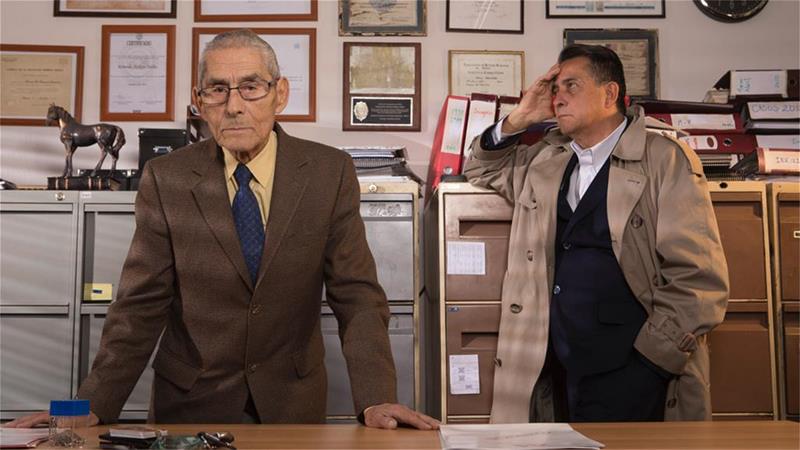
Sergio is a “mole” or spy if you prefer. Sergio works as a senior for a Chilean private detective agency and is planted in a senior’s residence to report as to whether the client’s mother, Sonia Perez, is beaten, abused and robbed. Sergio has a three-month assignment.

But the seniors are well taken care of by the staff but most feel abandoned by their families. Some are bitter and some simply accept it but the abandonment by the family is a sort of elder abuse. One elderly lady laments that she did everything for her son and wife and her grandchildren but when she became sick she was no longer of use to them.

Actually Sergio finds that Sonia is chronically anti-social but otherwise dong quite well. Sergio does discover a thief but we are not left with any facts she has stolen Sonia’s property.

Sergio notes that Sonia’s daughter expresses great concern about her well being but when the rubber hits the road she has never taken the time to visit her mother.

Sergio is a kind soul and becomes loved by all the residents and is thrown a big 84th birthday party.

The residents are portraying themselves and do the best they can to live out their last days with a sense of camaraderie. Sergio’s final report is that the residents are lonely and feel abandoned and that loneliness is the worst thing about this place. Sonia is receiving good care. Sergio does not understand the purpose of his investigation and suggests the daughter should face her own fault for not even caring enough to visit her mother.

As a part time job during my university days I worked in a long term care facility in Montreal and the memory of so many elderly and sick people pops up in my mind. I gave them the best care I could and thy were grateful. They were well taken care off by the staff and management was on its toes. Being so busy I never really had the chance that Sergio did to probe deeply. But so many sick and twisted people. Beware my dear readers this could be you. Would your loved one’s leave you behind?

Chilean director Maite Alberdi has the last word, “It’s a honour to have been among such an extraordinary range of remarkable films on the shortlist and we are truly grateful to the Academy and to the Documentary Branch. For a Latin American female led team, this type of dream seems impossible, but this year has taught us to see life from a different angle. This nomination signifies to every elder that the world still sees them and values them and helps us remember that it’s not just important to increase life expectancy, but the desire to live. This year, after so many losses, we took a look at our seniors again and understand that they were living in a pandemic prior to COVID- the “pandemic of loneliness”- and we are proud to see how “The Mole Agent” has helped families reconnect with their elders.”

According to the official website for the film themoleagentfilm.com the documentary is streaming in the USA, Great Britain and Chile. Now as we move closer to the Academy Awards streaming may be available in Canada but the documentary is available at DVD sellers in Canada such as Amazon. In Spanish with English subtitles.

From Data Rape to Data Sovereignty

Tim Berners-Lee’s plan to save the internet: give us back control of our data

February 5, 2021 8.12am EST

Author

  1. Pieter VerdegemSenior Lecturer, School of Media and Communication, University of Westminster

Disclosure statement

Pieter Verdegem does not work for, consult, own shares in or receive funding from any company or organisation that would benefit from this article, and has disclosed no relevant affiliations beyond their academic appointment.

Partners

University of Westminster

University of Westminster provides funding as a member of The Conversation UK.

View all partners

CC BY NDWe believe in the free flow of information

Republish our articles for free, online or in print, under Creative Commons licence.

Republish this article

Releasing his creation for free 30 years ago, the inventor of the world wide web, Tim Berners-Lee, famously declared: “this is for everyone”. Today, his invention is used by billions – but it also hosts the authoritarian crackdowns of antidemocratic governments, and supports the infrastructure of the most wealthy and powerful companies on Earth.

Now, in an effort to return the internet to the golden age that existed before its current incarnation as Web 2.0 – characterised by invasive data harvesting by governments and corporations – Berners-Lee has devised a plan to save his invention.

This involves his brand of “data sovereignty” – which means giving users power over their data – and it means wrestling back control of the personal information we surrendered to big tech many years ago.

Berners-Lee’s latest intervention comes as increasing numbers of people regard the online world as a landscape dominated by a few tech giants, thriving on a system of “surveillance capitalism” – which sees our personal data extracted and harvested by online giants before being used to target advertisements at us as we browse the web.

Get your news from people who know what they’re talking about.

Sign up for newsletter

Courts in the US and the EU have filed cases against big tech as part of what’s been dubbed the “techlash” against their growing power. But Berners-Lee’s answer to big tech’s overreach is far simpler: to give individuals the power to control their own data.

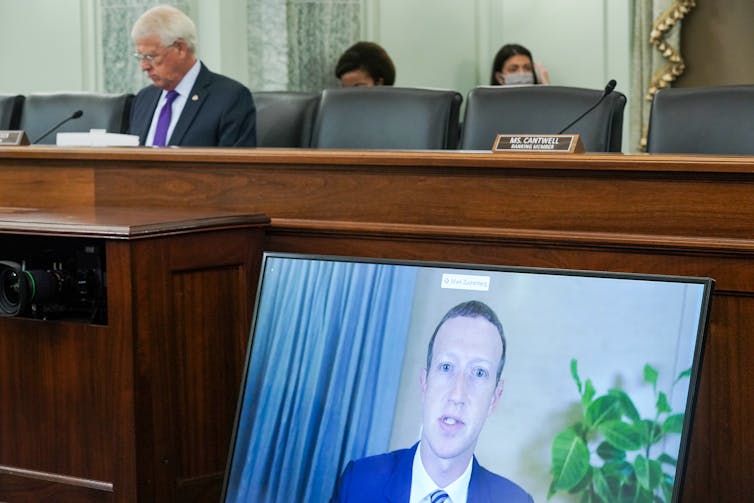
A screen showing Mark Zuckerberg lies against a desk in the US senate for a hearing
Big tech has been facing increasing scrutiny in Congressional and Senate hearings in the US. Greg Nash/EPA

Net gains

The idea of data sovereignty has its roots in the claims of the world’s indigenous people, who have leveraged the concept to protect the intellectual property of their cultural heritage.

Applied to all web users, data sovereignty means giving individuals complete authority over their personal data. This includes the self-determination of which elements of our personal data we permit to be collected, and how we allow it to be analysed, stored, owned and used.

This would be in stark contrast to the current data practices that underpin big tech’s business models. The practice of “data extraction”, for instance, refers to personal information that is taken from people surfing the web without their meaningful consent or fair compensation. This depends on a model in which your data is not regarded as being your property.

Scholars argue that data extraction, combined with “network effects”, has led to teach monopolies. Network effects are seen when a platform becomes dominant, encouraging even more users join and use it. This allows the dominant platform more possibilities to extract data, which they use to produce better services. In turn, these better services attract even more users. This tends to amplify the power (and database size) of dominant firms at the expense of smaller ones.

This monopolisation tendency explains why the data extraction and ownership landscape is dominated by the so-called GAFAM – Google, Apple, Facebook, Amazon and Microsoft – in the US and the so-called BAT – Baidu, Alibaba and Tencent – in China. In addition to companies, governments also have monopoly power over their citizens’ data.

A smartphone screen showing the five 'GAFAM' branded apps
The world’s largest tech companies are increasingly regarded as monopolistic. Koshiro K/Shutterstock

Data sovereignty” has been proposed as a promising means of reversing this monopolising tendency. It’s an idea that’s been kicked about on the fringes of internet debates for some time, but its backing by Tim Berners-Lee will mean it garners much greater attention.

Building data vaults

Berners-Lee isn’t just backing data sovereignty: he’s building the tech to support it. He recently set up Inrupt, a company with the express goal of moving towards the kind of world wide web that its inventor had originally envisioned. Inrupt plans to do that through a new system called “pods” – personal online data stores.

Pods work like personal data safes. By storing their data in a pod, individuals retain ownership and control of their own data, rather than transferring this to digital platforms. Under this system, companies can request access to an individual’s pod, offering certain services in return – but they cannot extract or sell that data onwards.


Read more: Web 3.0: the decentralised web promises to make the internet free again


Inrupt has built these pods as part of its Solid project, which has followed the form of a Silicon Valley startup – though with the express objective of making pods accessible for all. All websites or apps a user with a pod visits will require authentication by Solid before being allowed to request an individual’s personal data. If pods are like safes, Solid acts like the bank in which the safe is stored.

One of the criticisms of the idea of pods is that it approaches data as a commodity. The concept of “data markets” has been mooted, for instance, as a system that enables companies to make micro-payments in exchange for our data. The fundamental flaw of such a system is that data is of little value when it is bought and sold on its own: the value of data only emerges from its aggregation and analysis, accrued via network effects.

Common good

An alternative to the commodification of data could lie in categorising data as “commons”. The idea of the commons was first popularised by the work of Nobel Prize-winning political economist Elinor Ostrom.

A commons approach to data would regard it as owned not by individuals or by companies, but as something that’s owned by society. Data as commons is an emerging idea which could unlock the value of data as a public good, keeping ownership in the hands of the community.

Tim Berners-Lee’s intervention in debates about the destiny of the internet is a welcome development. Governments and communities are coming to realise that big tech’s data-driven digital dominance is unhealthy for society. Pods represent one answer among many to the question of how we should respond.

“Mutantism on the March”: Chapter 23 “Squid Meets Santa Claus The Revolutionary”

Squid had spent many years wandering the globe recently encountering the phenomena of foreign economic penetration and domination. Perhaps it was the Frenchman he had first encountered then the slavers but there was an increasing band of greed-stricken characters. If it wasn’t Cartaway then it was Cortez, Columbus, Livingstone, IT&T or Bestinghouse Electric. Unfortunately few lands escaped the ravaging greed of such personalities and corporations. For example Squid had been living with his friends on the banks of the Amazon River until a consortium of Korean industrialists bought the land from the Brazilian government to build a huge hydro-electric plant. Squid had no desire to be “resettled” to some squalid drug and crime infested settlement so he transformed himself into a Squid and swam downstream.

It was if all the frontiers of a once virgin world were broken. The business slickies were unavoidable like a bunch of Willie Loman and Dale Carnegie piranhas. He tried to talk with these fast talkers but whenever he disagreed with them he was labelled as an eccentric or a communist subverter of healthy free enterprise. They admitted they witnessed poverty but the answer was free enterprise. Sure it had made a few very wealthy but in time that would change and in time all people would benefit from the system. These modern investors were similar to the early explorers; profits were more important than Christianity but often the two worked symbiotically. The evangelists saved the souls the free enterprise investors had destroyed.

Squid decided to settle down in Columbia but once again the locals in the area were in trouble! They were subject to the usual brutality sanctioned and performed by the ruling military who spent more time saluting the GNP and that which went into their pockets than saluting each other. If the local populace resisted troops were sent in to quell the revolutionaries. Their envoys also discussed foreign investment with local village councils the progressive nature of foreign investment. Most of the high-ranking junta members had received their education in the industrialized world so shared their moral, philosophical and economic ways. It was so tempting for Squid to jump ship but perhaps this is where he should take a stand. How could he leave these locals to be so maltreated if not murdered? Squid was aware of a rather fat and jolly mutant named Santa Claus. I mean he was well known in Montreal for leading the Santa Claus gang into a slew of spectacular bank robberies raising money for anti-colonial fighters. Santa Claus was receptive to the idea of meeting Squid but for the time being his elves were finishing off a large shipment of automatic weapons for the Shining Path guerrilla fighters in Peru. Squid had hoped to recruit Machine Gun Molly from Montreal who was the brazen leader of a gang of bank robbers but word has trickled out she had been shot down by the police.

COVID-19 Rules for Temporary Foreign Workers in Canada

Backgrounder:  New measures to protect foreign workers and prevent the spread of COVID-19 for the 2021 season

From: Employment and Social Development Canada

Backgrounder

The Government of Canada recognizes the vital role temporary foreign workers (TFWs) play in key sectors such as agriculture, agri-food, and fish and seafood processing that are critical to Canada’s food supply, food security and the Canadian economy. Allowing foreign workers entry into Canada is the first of many steps the government has taken to facilitate employer access to this important labour supply, while also protecting the health and safety of foreign workers and Canadians during the COVID-19 pandemic.

In order to enter Canada by air, all travellers five years of age or older, regardless of citizenship, must provide proof of a negative COVID-19 test result taken within 72 hours of the scheduled departure time of their flight to Canada. As of February 22, 2021, all air travelers, including TFWs, are also required to take a COVID-19 molecular test upon arrival in Canada while at the airport, and later in their 14- day quarantine period.

The requirement for travelers to quarantine in a Government-Authorized Accommodation (GAA) while they wait for the results of their arrival COVID-19 test was deferred for certain TFWs, including those with work visas in the agriculture, agri-food, and fish and seafood sectors, until March 14, 2021. This deferral has been extended to March 21, 2021. This applies to workers in the following occupations:

Primary agriculture:

  • NOC 0821: Managers in agriculture
  • NOC 0822: Managers in horticulture
  • NOC 8252: Agricultural and related service agricultural service contractors, farm supervisors and specialized livestock workers
  • NOC 8255: Landscaping and ground maintenance: contractors and supervisors, landscaping, grounds maintenance and horticulture services
  • NOC 8431: General farm workers
  • NOC 8432: Nursery and greenhouse workers
  • NOC 8611: Harvesting labourers

Other agri-food, fish and seafood occupations:

  • NOC 6331: Butchers, meat cutters and fishmongers (retail and wholesale)
  • NOC 9461: Process control and machine operators, food, beverage and associated products processing
  • NOC 9462: Industrial butchers and meat cutters, poultry preparers and related workers
  • NOC 9463: Fish and seafood plant workers
  • NOC 9617: Labourers in food, beverage and associated products processing
  • NOC 9618: Labourers in fish and seafood processing

Today’s announcement outlines a strengthened approach that builds on existing public health measures and will further protect workers and Canadians from the spread of COVID-19 for the quarantine period upon arrival and through the entire agricultural season. 

Two-pronged approach as of March 21, 2021

The Government of Canada will be moving forward with a two-pronged approach to quarantine requirements for TFWs after March 21, 2021. This will apply to TFWs with work visas in agriculture, agri-food, fish and seafood sectors based on their final destination:

  • Asymptomatic TFWs will be able to travel directly to their place of quarantine after getting a COVID-19 test at the airport provided they travel by private transportation and are accompanied only by others who travelled with them to Canada.
  • TFWs who will need to travel by public means of transportation to a secondary location upon arrival in Canada will be required to stay in a GAA and await the results of their COVID-19 test.


The approach is built on:

  • Ensuring that workers provide evidence of a suitable quarantine plan as per current travel requirements and verified on arrival. 
    • Employment and Social Development Canada (ESDC) will work with federal partners and stakeholders to ensure workers have the necessary information so they can fully comply with requirements on arrival, and be better educated on their obligations under the Quarantine Act.
    • This includes exploring the use of alternative formats for reporting the required pre-arrival and post-arrival information that takes into account some of the barriers workers face including language and access to technology.
    • Employers whose workers who will be required to stay at a GAA will need to make reservations in advance of the worker’s arrival in Canada using the current booking system available to all travellers.
    • Provided TFWs have a suitable quarantine plan and safe transportation arranged to their place of quarantine, the government intends to ensure employers and TFWs will not assume incremental costs associated with the three-day quarantine requirement at the point of entry.
  • Ensuring workers are safely transported directly from the airport to their place of quarantine according to public health guidelines
    • A TFW’s place of quarantine may be either an employer or government facility, depending on the jurisdiction.
    • The government will work with provinces and other program partners to communicate guidelines and promote the adoption of best practices.


Workers who need to travel onward to a secondary location

As of March 21, 2021, TFWs who will need to travel to a secondary location by public transportation upon arrival in Canada will be required to stay in a GAA and await the results of their COVID-19 test. This does not apply for workers continuing to their secondary location by private air or land travel. Employers of workers who will be required to stay at a GAA will need to make reservations in advance of the worker’s arrival in Canada using the current booking system available to all travellers.

Provided TFWs have a suitable quarantine plan and safe transportation arranged to their place of quarantine, the government intends to ensure employers and TFWs will not assume incremental costs associated with the three-day quarantine requirement at the point of entry. Workers will also be provided with supports on arrival and during their hotel stay. The Government of Canada is continuing to explore how best to support TFWs and employers to ensure that TFWs can arrive and remain in Canada safely for the duration of their work.

Upon receipt of a negative test result, TFWs could continue to the employer’s location to serve the balance of the 14-day quarantine period or up to another full 14-day quarantine upon entry into the provincial jurisdiction, depending on provincial post-travel requirements. As per changes to the Immigration and Refugee Protection Regulations in April 2020, employers are required to pay TFWs throughout their quarantine period, including additional days of quarantine due to provincial requirements.

Strengthening measures to protect workers

In addition to the measures outlined above, the Government of Canada is also:

  • Working with provinces to help ensure employers have robust plans to safely quarantine and isolate workers
    • The government is working with provinces to strengthen existing approaches to help ensure employers are well prepared to safely quarantine workers. This includes suitable isolation options for positive/symptomatic workers throughout the season.
    • To complement this approach, ESDC is increasing its outreach and education efforts to employers on quarantine requirements and employer obligations.
  • Strengthening quarantine and post-quarantine measures once workers are on site. This includes:
    • Increasing the number of employer compliance inspections in agriculture.
    • Advancing partnerships with provinces to better target and coordinate inspection efforts during a worker’s quarantine and/or post-quarantine per existing practices since last year:
      • During an inspection, if informed of a potential outbreak or a TFW has COVID-19 symptoms, Service Canada investigators will immediately report this information to local public health officials who will take action as necessary.
      • Failure to comply with the quarantine conditions/regulations can result in significant penalties of up to $1 million, and a permanent ban from the TFW Program.
  • Funding migrant worker organizations to provide direct assistance to workers affected by COVID-19 for the 2021 season.
    • Leveraging new funding agreements with migrant worker support organizations to support workers through the arrival process and throughout their stay. This will include:
      • providing logistical support to TFWs through the COVID-19 testing and post-flight requirements on arrival;
      • directing them to their transportation organized by the employer,
      • supporting those who need to stay at a GAA for 3 days on arrival; and
      • providing TFWs information on the quarantine process and their obligations;
  • Improving the TFW tip line
    • This includes the addition of live agents able to offer services in multiple languages, who can help workers better communicate situations of mistreatment or abuse.
    • The government will also be providing additional education for workers on their rights;
  • Improving coordination with provinces to support timely response to emerging issues, including outbreaks.
    • ESDC is working with provinces to establish joint coordination teams that would include representatives from relevant federal, provincial and local authorities to coordinate timely responses to emerging issues by the responsible authorities on a case-by-case basis.
    • This builds on existing collaborative forums with PTs as well as other stakeholders including the Canada-Mexico Working Group established in April 2020.
    • This is in addition to ongoing work on a proposal for mandatory requirements to improve employer-provided accommodations. 

William Thackeray’s “Vanity Fair”; Inheritance

“My dear sir, you ought to know that every elder brother looks upon the cadets of the house as his natural enemies, who deprive him of so much ready money which ought to be his by his right. I have heard George Mac Turk, Lord Bajazet’s eldest son say that if he had his will when he came to his title, he would do what the sultans do, and clear the estate by chopping of all his younger brothers’ heads at once : and so the case is more or less, with them all. I will tell you that they are all Turks in their hearts.”

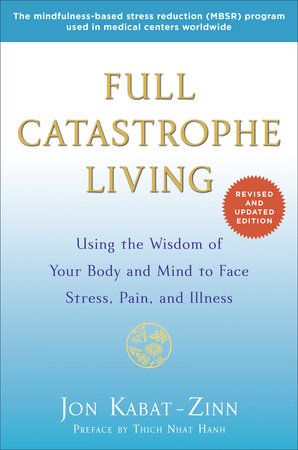
John Kabat-Zinn’s “Full Catastrophe Living”: Acceptance

“In the meditation practice we cultivate acceptance by taking each moment as it comes and being fully, as it is. We try not to impose our ideas about what we “should be feeling of thinking or seeing in our experience. Instead we remind ourselves to be receptive and open to whatever we are feeling, thinking, or seeing, and to accept it because it is here right now. If we keep our attention focused on the present, we can be sure of one thing, namely, that whatever we are attending to in this moment will change, giving us the opportunity to practice accepting whatever it is that will emerge in the next moment. Clearly there is wisdom in cultivating acceptance.

Mutantism on the March: Chapter 22 “And Now for something completely different”

The Greek Gods in their dimension of Zlano were in a tizzy. Aphrodite bore Zeus a son. Plans for the celebration of this great birth were planned months before the blessed event. Invitations had been sent to prominent guests including Willie Montenez. But after the birth of Bert Foonbean the new God of those with a “Starbucks Coffee in their Snout and a Love of Patios and Tossing Chairs off Condo Balconies” there were regrets about this celebration. This was an attempt for the Gods to reconnect with Starbuck obsessed and patio fixated Millennials. Bertie was not a run of the mill God but was a classic mutant Spartans would not have hesitated hurling off a cliff. The lad had the face of a 50-year-old mortal and spoke like an ancient philosopher and monk. Well that wasn’t too bad but he had a shrivelled arm and was missing a leg.

The birth ceremony was cancelled under the pretense the Gods wanted a private ceremony. They hummed and stammered their way out of a jam. For the Gods it was a period of mourning and not celebration, the narrow-minded bastards they were immune to the concept of diversity and global inclusion!

The Gods had always perceived themselves as perfection. Or at least that is what they always bragged about. If a mutant was discovered amongst their midst their reputation would be ruined so they thought. Bertie was immortal so he couldn’t be tossed off a cliff and murdered but how could they deal with their “issue”. Certainly, there must be someone who could be consulted about their quandary. Bertie realized he was an embarrassment to the Gods and it was best to leave. Why embarrass and disgrace the Gods and their quest for perfection and idolatry?

Perhaps there was some place where Bertie could live with dignity. Why sit in the closet all your life being glum?

Well the perfection obsessed Gods thought exile was the answer. A team of subadvisors was dispatched to find the creature on Earth called Squid who himself had once been a mutant toe but had since become an expert, through his own experience, on mutantism. As far as the Gods could see from their recent experiences on Samos in Greece the Earth was full of mutants. What difference would one more make?

Hellenic Film Society USA Celebrates 200 Years of Greek Independence through 8 films March 19-28

1821-2021
Celebrating the 200th Anniversary
of Greek Independence

A Look at Greek History through Film
March 19-28, 2021
We are proud to celebrate 200 years of Greek independence with seven films and an original Netflix episode, all inspired by Greek history, from the Persian Wars to the present. From Hollywood epics to indie documentaries, an original Netflix episode, and two films that focus on the Greek Revolution of 1821, we offer something for everyone! 
 
Presentations are accompanied by interviews with filmmakers and other conversations that provide historical context and insights about the making of the film.
 
Cliffs of Freedom and the pilot episode of Blood of Zeus are available free of charge. The remaining six films can be purchased separately or, better yet, watch them all for the special revolutionary price of $18.21!
 
This month’s programming is made possible, in part, by generous support from The Greek Online School. HFS PASSAMERICA AMERICA
Written and directed by Elia Kazan 
In English
 1963 / 174 min
 
Cast: Stathis Giallelis (Stavros Topouzoglou), Frank Wolff (Vartan), Harry Davis (Isaac Topouzoglou), Elena Karam (Vaso Topouzoglou), Estelle Hemsley (Grandmother Topouzoglou), Gregory Rozakis (Hohannes), Lou Antonio (Osman), Salem Ludwig (Odysseus Topouzoglou), Johanna Frank (Vartuhi)

Available for streaming March 19-21 only
 
In the late 1890s, a young man leaves his impoverished village in Turkish Anatolia for Constantinople and eventually fulfills his dream of coming to America, but not before he faces cruelties and betrayals along the way.  Based loosely on the life of his uncle, this was Kazan’s favorite among his 19 feature films. Featuring an unforgettable score by Manos Hadjidakis, this Oscar-winning film is one of the most stunningly poetic and powerful immigration sagas ever filmed.
 
Elia Kazan gives a penetrating, thorough and profoundly affecting account of the hardships endured and surmounted at the turn of the century by a young Greek lad in attempting to fulfill his cherished dream—getting to America from the old country.”  —Variety
 
Following the feature film presentation, we are pleased to present an interview with film historian Foster Hirsch and former HBO executive, Kary Antholis, who discuss the significance of Elia Kazan’s award-winning film.
 WATCH TRAILERBUY TICKETSBENEATH THE OLIVE TREE
Directed by Stavroula Toska
In Greek and English, with English subtitles
 2020 / 76 min

 
This award-winning documentary unearths the story behind secret diaries found buried on the Greek island of Trikeri. Written by female political exiles during the Greek Civil War in the late 1940s, the journals reveal inspirational stories of thousands of women imprisoned in Greek concentration camps. Director Stavroula Toska journeys from New York to Greece to examine a largely unknown part of women’s history and, in the process, discovers an earth-shattering family secret. Narrated by Oscar winner Olympia Dukakis.
 
Awards include Best Documentary, Santa Fe Film Festival
 
Following the documentary presentation, we are pleased to present an interview with Beneath the Olive Tree director Stavroula Toska, who provides historical context and background on her film.
 WATCH TRAILERBUY TICKETSBLOOD OF ZEUS, Episode 1: A CALL TO ARMS
Created and written by Charley and Vlas Parlapanides
In English
 2020 / 28 min


A commoner living in ancient Greece, Heron discovers his true heritage as a son of Zeus, and his purpose: to save the world from a demonic army. In this pilot episode of the hit anime Netflix original series, Blood of Zeus, demons attack the polis near the home of the outcast Heron, who finds allies in the wise elder Elias and the fierce Amazonian warrior Alexia.
 
Blood of Zeus, shown free of charge, is made available courtesy of Netflix. (See website for details.)
 
Following the pilot presentation, we are pleased to present an interview with the series creators, Charley and Vlas Parlapanides, who discuss the show’s origins and their plans for Season 2; how two brothers from a big Greek family in New Jersey, one an investment analyst and the other a law school graduate, broke into the movie business; and how being Greek has influenced their filmmaking over the years.
 WATCH TRAILERCLIFFS OF FREEDOM
Directed by Van Ling
In English
2019 / 137 min
 
Cast: Tania Raymonde (Anna Christina), Jan Uddin (Tariq), Raza Jaffrey (Sunal), Patti LuPone (YiaYia), Christopher Plummer (Thanasi), Billy Zane (Christo), Costas Mandylor (Constantine), Simon Kassianides (Gregory)
 
This is the story of an ill-fated romance between a young Greek village girl and a conflicted Turkish officer during the dawn of the Greek War of Independence against the Ottoman Empire in 1821. The drama blends ageless themes of hope, love and sacrifice with a timely narrative about one woman’s struggle to overcome oppression and shape her own destiny. Cast includes Patti LuPone and the late, great Christopher Plummer.

Cliffs of Freedom is being presented at no cost to our viewers, courtesy of the National Hellenic Society. (See website for details.)
 
Following the feature film presentation, we are pleased to present an interview with director Van Ling, and actors Tania Raymonde (Anna Christina), Jan Uddin (Tariq), and Costas Mandylor (Constantine).
 WATCH TRAILERGOD LOVES CAVIAR
Ο Θεός αγαπάει το χαβιάρι
 Directed by Yannis Smaragdis
In English and Greek, with English subtitles 
2012 / 101 min
Cast:  Sebastian Koch (Varvakis), Evgenly Stychkin (Ivan), Juan Diego Botto (Lefentarios), Catherine Deneuve (Catherine the Great), John Cleese (McCormick), Lakis Lazopoulos (Fisherman of God), Marisha Triantafylidou (Maria), Christopher Papakaliatis (Counselor)
 
The epic story of Greek patriot Ioannis Varvakis (1745-1825) is brought to vivid life by an international cast in this visually striking film. Varvakis rose from humble beginnings to become a confidante of Catherine the Great (Catherine Deneuve), who granted him trading rights to Russian caviar. Enterprising and tirelessly inventive, Varvakis headed one of the largest mercantile empires in Europe and became an early benefactor of the new Greek nation.
 
Prior to the feature presentation, director Yannis Smaragdis introduces the film with a few words about why he made a movie about Ioannis Varvakis.WATCH TRAILERBUY TICKETSTHE ROAD TO SPARTA
Directed by Roddy Gibson and Barney Spender
In English
2016 / 60 minutes
 

Award-winning documentary about four runners, including ultramarathon runner Dean Karnazes, competing in the Spartathlon, the grueling 153-mile foot race between the Greek cities of Athens and Sparta. The course, similar to the route run by Pheidippides in 490 BC during the Persian Wars, is long and brutal under the blazing Greek sun, but grit and determination keep the runners going in this inspirational testament to the human spirit.

“Enlivening and deeply touching. Combining Greek history, music, and poetry, the film extends beyond pure athleticism to culminate in a viewing experience that is both immersive and highly gratifying.” —Documentary Drive
 
Following the documentary presentation, we are pleased to present an audio interview with director Barney Spender and ultramarathon runner Dean Karnazes, featured in the film.
 WATCH TRAILERBUY TICKETSSEARCHING FOR ANDREAS: Political Leadership in Times of Crisis
Directed by Harris Mylonas and Theo Prodromidis
 In Greek with English subtitles
2018 / 95 minutes

This documentary explores the life of one of Europe’s most controversial political leaders of the 20th century. The legacy of Greek Prime Minister Andreas G. Papandreou is still felt 24 years after his death. Was he a socialist reformer or a populist manipulator? The film is not just about Papandreou’s life and legacy but rather a cautionary tale about the danger of overreliance on charismatic leaders and the challenges that democracies face in replacing them. 
 
Following the documentary presentation, we are pleased to present a discussion by distinguished Greek journalist Katerina Sokou and filmmaker Harris Mylonas about Papandreou’s legacy in the aftermath of the Greek debt crisis.
 WATCH TRAILERBUY TICKETS300
Directed by Zack Snyder
In English
 2006 / 117 min / Rated R

Cast: Gerard Butler (King Leonidas), Lena Headey (Queen Gorgo), Dominic West (Theron), David Wehham (Dilios), Vincent Regan (Captain), Michael Fassbender (Stelios)
 
 Available for streaming March 26-28 only
 
In 480 BC, Persian King Xerxes sends his army of 100,000 to conquer Greece. At the Battle of Thermopylae, Leonidas, king of the Greek city state of Sparta, leads his 300 warriors against the massive Persian army. Though certain death awaits the 300 Spartans, their sacrifice inspires all of Greece to unite against their common enemy. Award-winning Hollywood spectacle with intense battle scenes and a cast of thousands.
 
Following the film presentation, we are pleased to present an interview with writer-director Zack Snyder.
 WATCH TRAILERBUY TICKETS
CLICK HERE
to see free Greek films
and interviews with Greek filmmakers
on our YouTube channel.
TELL ALL YOUR FRIENDS!PostShareTweetForwardFOLLOW US ONYouTubeFacebookInstagramWebsiteEmailDONATEThe Stavros Niarchos Foundation is the lead supporter of the Hellenic Film Society USA. Additional support is provided by the Onassis Foundation USA, the Kallinikeion Foundation, and Queens Council on the Arts.

The Hellenic Film SocietyThe Hellenic Film Society USA is a 501(c)(3) non-profit organization rooted in the belief that Greek cinema can and should be part of the American cultural landscape. We promote feature films, documentaries, and film shorts made by Greek filmmakers and those of Greek descent, as well as films that promote the cultures of Greece and Cyprus. 
 The Stavros Niarchos Foundation is the lead supporter of the Hellenic Film Society USA. Additional support is provided by Onassis Foundation USA and the Kallinikeion Foundation.
For further information or to learn how to partner with us, please visit hellenicfilmusa.org or call  646-844-1488. We invite you to sign up for our mailing list and follow us on Facebook and Instagram.
Copyright © 2021 Hellenic Film Society USA. All rights reserved.
Want to change how you receive these emails?
You can update your preferences or unsubscribe from this