Israel Awaits Approval from FDA Before Administering PFIZER COVID Vaccination According to Jerusalem Post

FDA announces deaths of two Pfizer vaccine trial participants

Tel Aviv Sourasky Medical Center’s director-general said the hospital was planning to vaccinate staff even before FDA approval.

By MAAYAN JAFFE-HOFFMAN   DECEMBER 8, 2020 18:52

Email
Twitter
Facebook
fb-messenger
A refrigerated truck leaves the Pfizer plant in Puurs, Belgium December 3, 2020.  (photo credit: YVES HERMAN/REUTERS)

A refrigerated truck leaves the Pfizer plant in Puurs, Belgium December 3, 2020.(photo credit: YVES HERMAN/REUTERS)AdvertisementAt least 110,000 doses of the Pfizer coronavirus vaccine candidate are expected to arrive in Israel before the end of the week and the medical staff at Tel Aviv Sourasky Medical Center will likely be the first inoculated.On Tuesday, Sourasky director-general Prof. Ronni Gamzu confirmed for The Jerusalem Post that the hospital could begin vaccination even before the vaccine receives US Food and Drug Administration (FDA) approval. He said he could administer the vaccine early because it had already been approved in Britain.However, Health Ministry director-general Chezy Levy told the Post that beginning vaccination in any place ahead of FDA approval was forbidden. He added that the country had still not finalized the list of who would be prioritized to receive the vaccine first.”We hope that in the coming days, there will be FDA approval,” Levy said.The FDA advisory panel is set to review the Pfizer vaccine on December 10.”The vaccine is safe for every person on an individual level and for us as a company at the national level,” wrote Gamzu on Twitter. “I am proud to receive this treatment first as part of the global technological advancement. I am convinced that leading by personal example will help gain public trust so all citizens take the vaccine for their health.”https://platform.twitter.com/embed/index.html?dnt=false&embedId=twitter-widget-1&frame=false&hideCard=false&hideThread=false&id=1336276338798432259&lang=en&origin=https%3A%2F%2Fwww.jpost.com%2Fbreaking-news%2Ftwo-individuals-die-from-pfizer-vaccine-651488&siteScreenName=Jerusalem_Post&theme=light&widgetsVersion=ed20a2b%3A1601588405575&width=550px
Gamzu received sharp criticism from the Israel Medical Association, whose head Zion Hagay said in a statement that the move was “irresponsible” and will have the opposite of its intended effect – that it will “erode public trust.”The exact day that the Pfizer vaccine will land in Israel is still unknown. The Hebrew website Ynet said Tuesday that the first doses could arrive as early as Wednesday. Kan News reported their arrival would be Thursday.The vaccines are supposed to arrive on a special flight via the DHL shipping company and be directly transferred to the Teva SLE Logistic Center, where they will be stored and then distributed throughout the country.Pfizer vaccines are made of messenger RNA (mRNA) and are required to be kept frozen at negative 70 degrees Celsius.  Israel has purchased eight million doses of the Pfizer vaccine – enough to vaccinate four million people.Last week, Levy said during a video meeting with the country’s hospital administrators that some four million doses could arrive before the end of the month. But he said then that although they could come even before they are approved by the FDA, no one will be inoculated before approval.Ahead of the Thursday meeting of the FDA on the Pfizer vaccine, the administration announced Tuesday that two trial participants have died after receiving the Pfizer coronavirus vaccine. One of the deceased individuals was immunocompromised.This information was obtained from documents released on Tuesday by the FDA.The documents were released ahead of a meeting on Thursday of outside experts who will debate whether emergency authorization for the vaccine should be granted.The FDA also said on Tuesday that the data they’re presented with is in line with emergency use authorization, raising hopes for Thursday.At the same time, the FDA said that there currently is not enough research to guarantee the vaccine’s safety for immunocompromised groups, pregnant women and children.Israel’s Midaat Association responded to the report on the deaths, explaining that when vaccines are administered to at-risk populations “there may be unfortunate cases. One should not infer from this about the safety of the vaccine but welcome the transparency required from the pharma companies in the drug approval process.”The association noted that in large trials of tens of thousands of people, death can occur without any connection to the trial, but that companies like Pfizer are required to report those deaths.“According to the published data, six of the participants in the experiment died, two of whom received the vaccine and four of the control group,” said Dr. Uri Lerner, the scientific director for Midaat. “After an in-depth examination, no connection was found between the experiment and the cause of death.”Hospitals across the country are preparing to receive the Pfizer vaccine and inoculate their staff. Baruch Padeh, Barzilai, Wolfson and Soroka medical centers all announced that they were ready for the vaccine to arrive. Baruch Padeh held a preparatory meeting Tuesday morning and sent the it’s 1,500 staff members a message, “We are all getting vaccinated.” “We who are at the forefront of the war against coronavirus should be the first to be vaccinated,” said Erez Onn, director-general of Baruch Padeh, “so that we can continue to give professional and dedicated care… We are the ones who should serve as an example to the entire public.”Wolfson’s Dr. Anat Angel said that the vaccination process for its more than 3,000 employees would be documented and carried out “immediately and without any delays.”“Having succeeded well above average in previous years with staff vaccinations against influenza … I am sure, beyond a doubt, we will also lead in vaccinations against the coronavirus,” she said. The hospitals said that they would receive the vaccinations and inoculate staff with their first does right away. There would be a 28 day waiting period before administering the second dose.  Getting the vaccines to the hospitals will be handled by the Teva SLE Logistic Center, which the Knesset’s State Audit Committee visited on Tuesday. “The eyes of the entire State of Israel are here,” said committee chairman MK Ofer Shelach during the visit. “This is the most important and extensive national project since the beginning of the coronavirus crisis.”He said that the visit left him feeling that “the company is unusually prepared and professional. I sincerely hope that it will continue like this.”Yossi Ofek, CEO of Teva Israel-SLE, agreed and said, “there is no room for error here. We understand the magnitude of the responsibility.”Prime Minister Benjamin Netanyahu also spoke about the vaccines again on Tuesday, stressing that although the vaccines are almost here and the country is starting to hopefully see the end of the pandemic, “as in war, when we see the end of the war, we must not lose people. People will die and will be stricken with a serious disease for no reason – it is possible to prevent this.”He called on the country to continue social distancing, wearing masks and following the Health Ministry rules even as the first vaccines arrive in Israel. 
Reuters contributed to this report.

COVID-19 Vaccine: Not Perfect But the Odds Appear Fair: FDA December 8th Briefing Document Shows the Risk of “Fatal Outcomes”

Fatal COVID Vaccination fatalities are on many minds except those that blindly believe a fast tracked FDA or Health Canada approval acts like a magic protective bubble. Yet a December 8th FDA briefing paper for a December 10, 2020 meeting of the Vaccine and related Biological Products Advisory Committee (VRBPAC) on page 41 reveals fatal outcomes of COVID-19 vaccines on page 41 reproduced below. What did the Duty Sargent say in the long deceased “Hill Street Blues”….”Be careful out there”.

Perhaps a fairer point of comparison would be what is the risk of a COVID death if one isn’t vaccinated? And one must of course not use death of COVID-19 control group members but also the 21 adverse affects in the control group reported in the October 22, 2020 VRBAC meeting.

Then as a last point what is the risk to the hospital system of non vaccination.

Of course there is always the civil rights question of mandatory vaccinations and non mandatory vaccinations with social penalties attached to that such as lack of mobility, restricted access to health care and denial of social benefits that in reality may force vaccinations even where governments say the vaccination is not mandatory?

Pfizer-BioNTech COVID-19 Vaccine
VRBPAC Briefing Document
Serious Adverse Events
Deaths
A total of six (2 vaccine, 4 placebo) of 43,448 enrolled participants (0.01%) died during the
reporting period from April 29, 2020 (first participant, first visit) to November 14, 2020 (cutoff
date). Both vaccine recipients were >55 years of age; one experienced a cardiac arrest 62 days
after vaccination #2 and died 3 days later, and the other died from arteriosclerosis 3 days after
vaccination #1. The placebo recipients died from myocardial infarction (n=1), hemorrhagic
stroke (n=1) or unknown causes (n=2); three of the four deaths occurred in the older group (>55
years of age). All deaths represent events that occur in the general population of the age groups
where they occurred, at a similar rate.

Life at Up Up and Away Investment Management International: Chapter 2: (A Serialized Novel By Robert K. Stephen)

CHAPTER 2

It all started out not too badly at my first largecorp

My first legal job was in the mid eigthies with an up-and-coming insurance company in downtown Toronto by the name of Canadian Reassurance Assistance Providers Ltd. or as many referred to it simply as CRAP.

CRAP was initially a regional insurance company in Southwestern Ontario but a series of very innovative advertisements touting its easy accessibility seemed to grab the attention of the retail customers it sold insurance to. It was a revolutionary approach in the 1980’s where insurance companies were big, fat, rich, customer unfriendly and arrogant.

CRAP was held by a holding company, Bleedco Ltd., that controlled its various companies like a stack of cards. Bleedco was what one might call (by today’s standards) an unethical company as some investment managers categorize companies to invest in as aside from holding CRAP it owned companies in the armament, tobacco, South African goldmining, coal, Las Vegas casino and alcohol sectors.

I distinctly remember a colleague of mine at CRAP was making small talk in the CRAP Toronto office elevator to a senior management type visitor from Bleedco. The man from Bleedco reeked of alcohol and somehow let it slip, “We are going to clean you up and sell you off.” Prophetic words for a young buck like me! Why he blurted that indiscrete comment still puzzled me but I took it as a valid and potentially dangerous statement.

I worked in the institutional division of CRAP but there was also the retail division that sold insurance to the public. The retail division was pulling in an increasingly burgeoning profit while the institutional division was its poor cousin.

The institutional division had a half dead Montreal office, a thriving Toronto Bay Street office, a once powerful and now notional head office location in Waterloo, a decent Calgary office and a struggling Vancouver office. The retail division was present in every province of Canada and had many bricks and mortar locations.

So here I was at CRAP newly recruited and knowing virtually nothing about our institutional main lines of businesses being that of selling insurance policies of diverse types  to mid size businesses and even better to largecorps. We also sold annuity policies and recordkeeping services to employers sponsoring pension funds and other types of employee benefit funds. Most importantly we also provided segregated funds as investment options to defined contribution and defined benefit pension plans. These segregated funds were managed by professional investment managers CRAP retained.

My notional boss was Mr. Thomas Bang who was a lawyer but had made the jump to management as an executive vice president. He loved nothing more than to roam the floor asking where that miserable wretch of the day was. All in good humour that took a bit of time to get used to. He was a quirky but almost a likeable man. Unlike his Senior Management Team (SMT) colleagues, he was not afraid to take the elevator down from the CRAP executive floor and occasionally mingle “with the troops”.

Bang inhabited the executive suites on the top floor of the building. This was the home of SMT for both the retail and institutional divisions of CRAP. A sacred sanctuary with each office having its own bathroom and shower not to mention a splendid high-tech boardroom, well stocked refrigerators and liquor cabinets.

The cadres of the institutional division of CRAP were all in cubicles except for the Assistant Vice President of CRAP’s institutional division Frank Flansky who rarely showed his face as he spent all day crunching numbers cloistered in his office. He was obviously very awkward dealing with people and left that to my real boss Tommy Afar who was chief manager of the CRAP institutional division. Flansky recently arrived from Poland and his English was exceedingly difficult to understand. What he lacked in English and social skills he certainly made up for in mathematical abilities.

My job was to provide solutions on how CRAP institutional could do its business in accordance with the law. Afar was initially very frustrated with me as I simply gave options without making recommendations which was the preferred solution. He had a valid point! It was time for me to move from theory to reality.

I was a new legal resource to the business unit for the institutional division. Although I was called “Legal Counsel” I was working with and as part of the business unit. The business unit had vehemently complained of the arrogance of CRAP’s Legal Department and its incapacity to provide coherent and timely legal advice to the point that the SMT caved in and brought me into the business unit.

Apparently, John Beluga, CRAP’s General Counsel, was furious about having someone with the title of “Legal Counsel” operating outside his Legal Department however I had the impression those in the executive suites took him as a bit of a buffoon and used him to get approval to do business in a questionable fashion. He started his day in the gym and popped in the office at 10. a.m. went for long lunches and left promptly at 5. He struck me as, intellectually weak, easily manipulated and totally out of his league.

On important legal matters I was to deal with Sally Self in the Legal Department. With the backing of the SMT and according to Beluga’s demands there was no power struggle I had to fight. I lost right off the bat. Sally Self was my informal superior on all legal matters deemed significant by Self. This was rather hurtful to me as I had more than five year’s experience than the newly minted Self. In retrospect I should have walked out the door.

Working in the business unit, I gained valuable experience about how to get the job done within acceptable legal parameters. I was the go-to guy. Approachable, friendly and useful so unlike the service they were previously obtaining from the Legal Department. In the right circumstances with the right people CRAP life was not bad. I worked hard and enjoyed myself for close to a decade.

But after a few years I began to see what CRAP enjoyed doing to its employees For example there were the countless non-monetary incentive programs invented by CRAP’s Human Resources Department.

I recall one of them was the Service Award Games where gold, silver and bronze medals were handed out based on set criteria and medals were hung on the necks of the winning team. Another one was the weekly Client Delight Letter ceremony where we all gathered to hear a letter written by a client praising some aspect of our service. Of course, no monetary awards just subtle pressure to show how wonderful you were. What were those clowns in the Human Resources Department thinking of?

Although these campaigns were initially comical to the novice, they became annoying then obviously oppressive particularly with one campaign where employees were required to wear Mickey Mouse ears. Whatever for I am not quite sure. Being a lawyer, I was fortunate enough to be on the edge of most of this palaver and largely unaffected by it. Morale boosting it was thought to be but morally degrading was more like it.

After 5 years as Legal Counsel I received a promotion to Manager of Compliance for the institutional division. However, in addition to this new onerous position I continued to provide legal services to the business unit. Another largecorp lesson which is to load up as many responsibilities on an employee as possible at minimal cost. I had no one to delegate to and all this new responsibility for an extra $2,000 a year.

Speaking of money, a competitor offered me a position for $10,000 more than I was currently earning. I had the job offer and just had to sign the offer but upon reading the offer there was a probationary period. This for someone with close to 7 years of experience! I wanted this clause removed in their offer but their wonderful Human Resources Department insisted upon keeping the probationary clause in so we parted our ways.

CRAP’s Human Resources Department was also whittling down a once generous stock purchase plan where initially there were matching contributions by CRAP to those made by employees. Year after year CRAP’s contribution requirements dwindled and then a vesting period was imposed to get your hands on the shares whereas previously once the shares were awarded to you they were yours. Eventually they terminated the plan without raising salaries. Perhaps that inebriated Bleedco guy on the elevator had more truth than the vodka fumes would otherwise suggest. When you sell a company you cut costs down to the bone so your profit looks bigger than ever. A stock purchase plan with generous matching contributions by CRAP made CRAP a more expensive acquisition target…less of a bargain you might say.

CRAP’s institutional division was really doing well running from fourth position to a dead heat with the competition for first place all done in just short of a decade. Profits had quadrupled in 10 years. To be part of the team that accomplished this was rewarding to many employees despite no true financial rewards being extended to CRAP employees contributing to this remarkable growth.

All in all, I had an enjoyable time working in the business unit aside from the service campaigns and the poor compensation.

Then three things happened that caused me concern.

The first was that a new Vice President, Myra Pigall, was appointed for our division. She had no experience in the industry as she had been an accountant in her previous positions and spent all her time behind closed doors. She started interviewing employees asking them what they did. Suddenly there were a rash of terminations. Once again cost cutting and cleaning up. As a target for purchase a business unit making a billion dollars in profit with a low expense ratio is more attractive for a purchaser than one with a higher expense ratio. It soon became obvious Pigall’s snout was rooting out expenses to be trimmed like a pig hunting for truffles.

The second event was the termination of Beluga as CRAP’s General Counsel and his replacement being Felicity Poker. Poker was a hot shot corporate lawyer with a law firm that was Bleedco’s major external law firm in Calgary, Ooze & Ooze. I was commandeered into her Legal Department and no longer reported into the business unit.

The third was dealing with a major client of CRAP that wanted a refund of expenses it had paid us as a recordkeeper for its pension fund. Ooze & Ooze was CRAP’s legal counsel for this matter. The lawyer from Ooze & Ooze, Brian Cochon, had stated to me, “You repay that money or we will have you terminated.” I assumed “you” meant CRAP. As Cochon was once a partner with Poker at Ooze & Ooze my assumption should have immediately be seen as incorrect.

The FDA’s Vaccine and Related Biological Products Advisory Committee Meeting of October 22, 2020: An Overhead Reveals Possible Adverse Side Effects of COVID-19 Vaccine

FDA Safety Surveillance of COVID-19 Vaccines :
DRAFT Working list of possible adverse event outcomes
Subject to change
 Guillain-Barré syndrome
 Acute disseminated encephalomyelitis
 Transverse myelitis
 Encephalitis/myelitis/encephalomyelitis/
meningoencephalitis/meningitis/
encepholapathy
 Convulsions/seizures
 Stroke
 Narcolepsy and cataplexy
 Anaphylaxis
 Acute myocardial infarction
 Myocarditis/pericarditis
 Autoimmune disease
 Deaths
 Pregnancy and birth outcomes
 Other acute demyelinating diseases
 Non-anaphylactic allergic reactions
 Thrombocytopenia
 Disseminated intravascular coagulation
 Venous thromboembolism
 Arthritis and arthralgia/joint pain
 Kawasaki disease
 Multisystem Inflammatory Syndrome
in Children
 Vaccine enhanced disease

Don’t play with fire or you might get burnt; Revenge of American Thanksgiving (USA Today)

A very, very dark place’: Hospitals brace for crisis-care mode with too many patients, not enough staff

Ken AlltuckerUSA TODAY0:190:49https://imasdk.googleapis.com/js/core/bridge3.427.1_en.html#goog_1634236857

COVID-19 deaths and hospitalizations are at record levels, and the rising case toll from Americans’ holiday travel has created an unprecedented surge with no relief in sight.

The problem is especially ominous in the nation’s intensive care units – specialized units crowded with a record number of critically ill Americans as the nation struggles through the most dangerous phase of the pandemic.

On Thursday, California announced stay-at-home orders for regions where intensive care units are nearly full. A growing chorus of medical experts say hospitals and states must prepare to shift to crisis-care mode, a designation with standards for hospitals to navigate life-and-death decisions when they become overwhelmed.

Crisis standards mean hospitals with too many patients and not enough staff likely will need to triage patients, prioritizing care to those mostly likely to benefit when demand outstrips resources.

New York hospitals struggled to adapt to staff and equipment shortages during the deadly spring months. And although hospitals now have more drugs, equipment and expertise, strained medical staffs could limit the number of Americans who get timely care.  

“What we see now is just the beginning of the post-Thanksgiving peak,” said Eric Toner, senior scholar with the Johns Hopkins Center for Health Security. “It’s going to be huge, and it’s going to be awful.”

Of the 100,667 hospitalized with COVID-19 as of Thursday, 19,442 were in ICUs – the largest number of critically ill patients since the pandemic began, according to COVID Tracking Project figures. More than 267,000 Americans have died, including 2,879 on Thursday – a new daily record. 

U.S. Centers for Disease Control and Prevention Director Robert Redfield said this week that deaths could reach 450,000 by February.On Friday, the agency released a summary of public health recommendations to reduce spread of the coronavirus, such as masking and avoiding nonessential indoor places. Get the Coronavirus Watch newsletter in your inbox.

Stay safe and informed with updates on the spread of the coronavirusDelivery: VariesYour Email

Our neighbors, our family members’:Small-town hospitals overwhelmed by COVID-19 deaths

Hospitals already are employing strategies to stretch resources. Utah hospitals have canceled surgeries and shifted staff to makeshift ICU units to care for the growing number of COVID-19 patients. North Dakota’s rural hospitals, short on available beds and expertise, in recent weeks transferred patients to surrounding states. And in Colorado, Gov. Jared Polis signed an executive order authorizing the state health department to order at-capacity hospitals to halt admissions and transfer patients. 

In the spring, when New York City became the epicenter of the coronavirus pandemic, health care professionals flocked to the Big Apple to help besieged hospitals. But with a limited pool of nurses, doctors and respiratory therapists available for temporary gigs, experts say it’s unlikely hospitals will get meaningful relief from out-of-state practitioners.

Toner said the nation’s stretched health care workforce is “our most critical scarce resource.”

“We have ventilators. We’re doing better with PPE and supplies,” he said. “But we have no way to significantly expand our staffing.”

That is what worries public health officials. The next three months will be “the most difficult time in the public health history of our nation,” Redfield said.

Last week, Johns Hopkins published an extensive study of New York City’s hospitals during the pandemic. The study, led by Toner with input from 15 ICU directors, described gut-wrenching choices, such as when to extend or end life-sustaining care for patients.

The Association of American Medical Colleges this week urged medical schools, hospitals and states to plan or implement crisis standards to battle the latest surge – expected to be the most widespread and deadly of the pandemic. 

“We’re now up to about 100,000 a day in the hospital,” said Janis Orlowski, Association of American Medical Colleges’ chief health care officer. And, “this is just the start.”UK to receive first vaccine supply; NYC elementary students return to class – virus updatesHis father died alone in a nursing home. The obit he wrote calls out anti-maskers.Low flu vaccine rates hurdle for COVID-19 vaccineGet the latest news straight to your phone: Download the USA TODAY app

The strain on caregivers 

New Mexico’s ICU beds were at 103% capacity as of Thursday, the highest rate in the nation, according to U.S. Department of Health and Human Services figures.

Space also is tight at the state’s medical-surgical units in Albuquerque, Las Cruces and Farmington, and rural hospitals are quickly filling, too, according to Troy Clark, president and CEO of New Mexico Hospital Association. https://bbc91d2e5af312e591f5a4afea579382.safeframe.googlesyndication.com/safeframe/1-0-37/html/container.html

Hospitals used extra space in emergency departments and operating rooms not licensed for bedsto accommodate patients, but Clark said the major bottleneck is finding enough doctors, nurses and respiratory therapists to care for them.

COVID-19’s effect on health care workers is far greater now than during the spring or summer. Hospital workers can be infected at home or in their communities. Even if they are not sick, workers exposed to the virus often wait up to four days for test results, Clark said. 

“That’s where we’re stressed across the state of New Mexico right now,” he said. “While there may be physical beds, there is not a nurse, a nurse tech or respiratory therapist to care for those patients.”

Hospitals overwhelmed: Exhausted staffs, surging COVID-19 cases push nation’s limits

In North Dakota, Gov. Doug Burgum issued an order last month allowing staff who test positive for the virus but show no symptoms to keep caring for COVID-19 patients. 

Other states are trying to fill shortages with contract employees who travel out of state for temporary jobs.

Competition is so fierce Clark estimates 70% of contract workers who commit start jobs at their preferred hospitals. With staffing agencies commanding salaries up to three times normal for these positions, there might be multiple lucrative offers for gig employees to choose.

When cases surged in June and July, travel nurses and other temporary workers with Banner Health, Arizona’s largest health provider, filled shifts. With cases again on the rise, the Phoenix-based health system hired 1,500 and is seeking another 900 contract workers, but Chief Clinical Officer Marjorie Bessel acknowledged it’s difficult.  

Rhode Island opened two temporary field hospitals with a capacity of almost 1,000 beds to alleviate crowded conditions. Lifespan’s Rhode Island Hospital, which operates a 600-bed field hospital in Providence, hired temporary nurses, nursing assistants respiratory therapists and pharmacy technicians. The state’s hospitals are the fullest in the nation, with 88% occupancy, according to HHS. 

“Our staffing issues are significant,” said Cathy Duquette, a Lifespan executive.

Hospitals coast to coast are facing similar staffing challenges, experts say. 

“In the past, you could anticipate the cavalry coming,” AAMC’s Orlowski said.

Unlike past crisis situations when health care workers traveled to New Orleans after Hurricane Katrina or to New York this spring, doctors and nurses are needed close to home. 

“Reinforcements from other parts of the country aren’t going to be possible now,” Toner said. “For the most part, hospitals will have to deal with the staffing they have.” 

COVID-19 hospitalizations pass 100K in US: Experts fear weary staff will be ‘overrun’ by patients

Hospitals at a ‘very dark place’

Hospitals increasingly must stretch staffing to meet the realities of the surge.

In California, several hospitals have applied to loosen the state’s mandatory nurse-to-patient staffing ratios because of COVID-19-related patient increases and staffing shortages. Last week, Antelope Valley Hospital in Lancaster gained state approval to relax staffing ratios, drawing criticism from a nurses’ union that said the move put patients at risk.

But hospitals will continue to seek ways to stretch resources under crisis-care scenarios, experts say.

Nursing home residents who need to be hospitalized might find such stays are shortened, Orlowski said.

And when things get really tight, hospitals need to choose who gets life-sustaining therapies. A person with minor ailments might get treatment while a person with several preexisting conditions and low oxygen might not.

If doctors determine a person’s chances of death are significantly high, “they may say, you know what, we are going to use our resources not to do this miraculous save, but we’re going to concentrate our resources on people we know who will be improved by our care,” Orlowski said.

New York hospitals struggled with similar decisions when allocating ventilators and kidney dialysis for lifesaving care during the worst days this spring.

According to the Johns Hopkins report, some hospitals did not have clear written guidelines on ventilators when “capacity became limited.” Doctors had to decide whether to intubate, or insert breathing tubes into people, and which type of ventilator to use. In some cases, hospitals had the equipment but not enough staff.

The same was true for COVID-19 patients suffering kidney failure. Therapy was in short supply for these patients, so doctors had to triage, or choose whether kidney failure patients would get two or three days of dialysis, according to the Johns Hopkins report.

During the summer surge, Banner Health in Arizona faced a shortage of ECMO machines. Extracorporeal membrane oxygenation machines are a last-ditch therapy for those whose lungs are damaged and they can no longer effectively breathe with a ventilator. The machine pumps blood to an artificial lung, adds oxygen and returns the blood to the patient. 

ECMO machines are limited sodoctors across several hospitals work together to try to maximize use of the therapy. But based on the trajectory of the surge in cases, Bessel said it’s “very likely” some won’t get access.

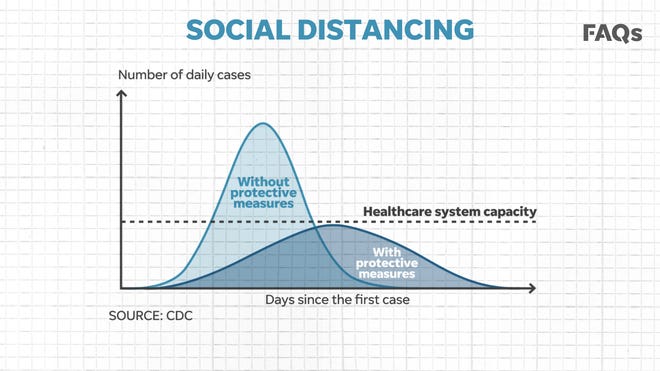
When the crisis worsens and if hospital must triage limited services, “it’s a very, very dark place to be for health care systems, for patients, for families,” Bessel said. “That’s why mitigation and other tactics right now are so important to try and flatten the curve to reduce the likelihood that we get to a point where we need to operate in such a fashion.”

Dr. Amesh Adalja, a senior scholar at Johns Hopkins Center for Health Security, said hospital administrators face tough choices.

“You have to think about capacity on a day by day basis, because we don’t see this surge ebbing any time soon.”

Ken Alltucker is on Twitter as @kalltucker or can be emailed at alltuck@usatoday.com

“The Plague” by Albert Camus: Passage for Reflection: The Fight Against the Plague

” Fledging moralists in those days were going about our town proclaiming there was nothing to be done about it and we should bow down to the inevitable. And Tarrou, Rieux and their friends might give one answer or another, but its conclusion was always the same, their certitude that a fight must be put up, in this way or that, and there must be no bowing down. The essential thing was to save as many people as possible from dying and being doomed to unending separation. And to do this there was only one resource: to fight the plague. There was nothing admirable about this attitude: it was merely logical.”

Albert Camus (1913-60) first published “The Plague in 1947.

Passage for contemplation: Albert Camus: “The Plague”: Pleasure in the Peril!

“In the early days, when they thought that this epidemic was much like the other epidemics, religion held its ground, But, once these people realized their instant peril, they gave their thoughts to pleasure. And all the hideous fears which stamp their faces in the daytime are transformed in the fiery, dusty nightfall into a sort of heroic exaltation, an unkempt freedom fevering their blood.”

Albert Camus (1913-60) first published “The Plague” (la Peste) in 1947.

Albert Camus “The Plague”: The Inevitably of Plagues

“Everybody knows that pestilences have a way of recurring in the world: yet somehow we find it hard to believe in the ones that crash down on our heads from a blue sky. There have been as many plagues as wars in history. Yet always plagues and wars take people equally by surprise.”

Albert Camus (1913-60) published “The Plague in 1947.

“The Plague” by Albert Camus: Passage for Contemplation; The Quiet Before the Plague

“The Plague” (La Peste) is a fictional work dealing with a plague in Oran, Algeria. It was first published by Camus (1913-1960) in 1947. In the following passage before the plague hits he described the nature of Oran which might very well be Toronto or New York.

“Perhaps the easiest way of making a town’s acquaintance is to ascertain how the people in it work, how they love, and how they die. In our little town (is this, one wonders an effect of the climate?) all three are much done on much the same lines, with same feverish yet casual air. The truth is that everyone is bored, and devotes himself to cultivating habits. Our citizens work hard, but solely with the object of getting rich, Their chief interest is in commerce and their chief aim in life is , as they call it, ‘doing business”. Naturally they don’t eschew such simpler pleasures as love-making, sea-bathing, going to the pictures. But, very sensibly, they reserve these pastimes for Saturday afternoons and Sundays, and employ the rest of the week in making money, as much as possible”

“Life at Up Up and Away Investment Management International”: A Serialized Novel By Robert K. Stephen: Chapter 1

CHAPTER 1

A little about myself

I suppose the veracity of this book will no doubt be filtered through some psychological analysis of the author. So that is why he was so bitter, angry, frustrated, insightful, mad or immature! Let me give you some fodder which might afford you an opportunity to better understand me so you can pat me on the back or snicker and say that this Hornet guy is a maniac or proverbially kick me in the ass. As far as I perceive it you are either on my side or not. I would consider it an honour if you consider me as a Holden Caufield of largecorp. “Catcher in the Rye” versus “Catcher of Largecorp”

My name is Tony Hornet. I was born in New Haven, Connecticut on August 2, 1953. A healthy and happy baby. A white Anglo Saxon Protestant otherwise known as a WASP. The WASPs were at the height of societal power in North America in those days. There was not even a whiff of decline of the WASP and the American Empire was vast and the American Dream that fueled it was pumping and gushing optimism particularly if you were white. The American “negro”, as we called blacks then, was not on this gravy train. The only seats on the train were for Caucasians.

My father, Bobby Hornet, was a successful insurance executive in New York City meaning we saw very little of him except on the weekends and holidays. He was picked up at our home by a car at 7 a.m. for his trip to Manhattan and dropped off back home around 7 p.m. for our family dinner. That family dinner was sacrosanct to him and he rarely missed it. He patiently listened to our stories without judgement or criticism instead proffering gentle advice. Of course, his pre dinner drink was a vodka martini.

My mother, Laura Hornet, was a stay at home as all mothers in our social circle were. Filipino nannies were about as common as a working mother in our suburban milieu. In other words, there were none of either in our upper middle-class milieu. My goodness how American and Canadian societies have changed!

It was wonderful being a WASP child in those days. How far one middle or upper middle-class income could go. We had no idea of the barbarities raging in the Southern United States.

We had a wonderful summer home in the Catskills where we spent idyllic summers fishing, hiking, exploring and experienced all the glories of a leisurely childhood in a privileged environment without realising how fortunate we were.

My father was a Second World War air force veteran who flew in the Battle of Britain with lots of memories of death, maiming and personal loss silently following him like a cloud of dirt follows Pig Pen in Snoopy. These were the days Post Traumatic Stress Disorder was simply not recognized. Whether he was afflicted by it I will never know. I am sure he loved me but being a “man” in those days compelled him to keep a stiff upper lip and display as little demonstrable affection as possible. When I was 8 he died an agonizing death of bladder cancer at the early age of 45 so being frank here I never really had the opportunity to know him. I just have remnants of a moment with him here and there. And aside from this personal loss I suffered a form of future corporate castration as not only my father died but my corporate connection did as well.

I do have memories about him of going golfing, fishing and eating chicken at our favorite chicken restaurant but they are all blurred. I was not even permitted to attend his funeral so to this day I lament the simple fact I never said good-bye to him. Aha! The seeds of bitterness sown?

I have told people I expressed no sorrow upon his death but rather a deep sense of embarrassment in social situations as I was the only boy without a father. You may call me cruel and callous, but this is what it is. Additionally, I was confused and befuddled about what had just happened. Death did not happen to good people especially when they were 45 years of age.

Speaking of death, I will always be grateful to him for saving my life as when I had measles I suffered an attack of encephalitis and had just lapsed into a coma and stopped breathing when he entered the room to check up on me. He opened the window took me by my ankles and shook me in the cold Connecticut winter air until I started to breathe. They packed me off in a big white Cadillac ambulance and I recovered and regained consciousness in the New Haven Pediatric Hospital a couple of days later.

The medical consensus was that it was a miracle I survived and an even greater one that I had no brain damage. Now after reading this book you might come to a different conclusion! This was my first of 4 narrow escapes from death. I often ponder why that huge metal fixture that came crashing down from the ceiling missed where I was standing by a couple of seconds or why the “swamp fever”, as the Catskill’s country doctor called it, didn’t stop my heart cold or why on a sharp turn when the car door flew open along with me following it until someone in the back seat grabbed me just before my head hit the pavement so I wasn’t thrown out on the roadway and killed. Perhaps my surviving these life-threatening situations enables me to tell you this story that will unfold in this book. Perhaps someone upstairs had a bigger plan for me than immediate death?

Oh, and I assure you after consulting several neurologists over the years they too confirmed my brain was not damaged.

My father’s death put me into a mental fog. By today’s standards it would have meant off to a pediatric psychologist. And the bloody bastards at my private school failed me the year after he died. People with heart. It still bothers me. Their cruelty of failing a lost soul. I vowed never to fail academically again so I went to McGill University in Montreal with a full entrance scholarship and earned of Bachelor of Political Science in honours and three law degrees.

This determination to avoid failure is one of the reasons you are reading this book. It is high time that the heart and soul of largecorp be exposed. I have been ruminating about this for years but certain events, which you shall read about shortly, have compelled me to write this book. I had started it some 18 years ago but let it slip until I found a hard copy of the uncompleted manuscript in a toy chest.

My sister Susan, 10 years my older, was a bully but preferred my older brother Nelson, 5 years my older, as a victim. Susan attended an esteemed secretarial school in Boston and drifted into several mid level management jobs in New York City and we rarely saw her. True to her character she remains a bully today. Neither did she ever marry. I expect she was a terror for many a possible suitor. She hates children with a demonic passion even though she was godmother of my son Discus. Poor Discus never even receives a birthday present from Susan who is so wrapped up in herself she can’t see what a vicious and nasty beast she transformed into. As far as I am concerned her surname would be best described as “Selfish” and not Hornet.

I can’t say Nelson and I were close. In fact, due to some unknown beef against me I haven’t spoken to him in over 20 years. That rather pisses me off as I was responsible for him not being cut out from my mother’s will. A story he has not heard.

Nelson, being a teen, was terribly affected by my father’s death and ran away from home at 16! He returned years later after being in exile throughout the world but was fortunate to pick-up a trade in Australia. But he took off shortly thereafter never really to be seen from or heard from again except to attend my mother’s funeral and to ensure he received a cut of her estate. His selfish isolation has prevented me from meeting my nephew and for my children their cousin.

My father, being in the insurance industry, had an enormous life insurance policy, so we never really suffered terribly financially after his death just slipping from the upper middle class to the upper lower middle class. There was enough to send Nelson and me to different private schools. Worse of all Nelson went to a boarding school which is not the place to send a teen with phycological problems. Nelson was so torn up with my father’s death and the cruel discipline at his private school that he ran away as mentioned above, as we learnt years later, to Los Angeles.

Bluntly put Nelson was shredded and ripped up by my father’s death but I on the other hand was terribly befuddled.

I was too young to have run away anywhere but given the World War 2 scarred teaching staff of an all-boys school I attended, Penton Academy, it very well might have been advisable. The tough militaristic attitude at Penton Academy resulted in many beatings by a hockey goalie stick on my bottom which was not what was needed by a confused boy who just lost his father. Good friends, mostly outcasts, helped me manage my last few years in the Penton hell hole. We, the hippies. were very discrete unlike the liquored-up jocks who smoked cigarettes in the back alley and guzzled beer on occasion to show their manhood. Those wonderful people with a “Daddy connection” appeared later in some extremely high level largecorps in powerful positions. In a few cases it was the Daddy that owned the largecorp they ended up in. Quite frankly they were a little bunch of fascists, racists and homophobes. And as leaders of largecorp often fall within that category their slipping into largecorp was seamless.

Penton was one of many factories grooming young men for largecorp success and perhaps rejects like me that will tell you a far different story about Penton Academy than they would. Imagine a teacher who picks up a student in a rage and throws him through the wall, a gym teacher who punches a poor student in the testicles and says, “be a man” or the human relations teacher “studying” puberty takes grade 8 classes to swim naked the local YMCA pool. These are the people who taught the great leaders of largecorp in their formative years! Is it any surprise employees in largecorp are cannon fodder for the glories of largecorp’s Senior Management Team?

If there was any saving grace in my father’s death is that in some respects it liberated my mother who I view as a rather Auntie Mame type of character. She liked a good drink, a party and to have fun. Whether she was happy I am not sure.

She hooked up for a couple of years with Bill Rook an alcoholic on a rapid decline but Rook died in a horrific car accident after leaving in an inebriated state following a terrible argument with my mother in our Catskill’s summer home.

She eventually sold the Catskills home and decided she wanted to see Europe so for three summers in the early 1970’s we wandered throughout Greece, Yugoslavia and Germany. I mean in those early Greek tourist days in a couple of Greek islands we visited there were not even any hotels, so we stayed in rented rooms and in one instance stayed in cots under a grape arbour. Of course, there was bickering between us now and then but in retrospect it was a wonderful and incredible experience. I think it was my mother’s attempt at becoming a hippy. But it converted me from a suburban twit into a savvy traveller. It opened my eyes about how the world worked and how humans interacted. In fact, my early success at publishing travel articles as a teen got me hooked on writing.

After graduating from Penton, I decided to move to Montreal, Quebec as a “foreign student” at McGill University. Tuition and accommodation was about half of what I would pay in the United States and my scholarship reduced costs even more.

Now it reached a point when I was in University I worked at part time jobs throughout the school year and used those savings to travel for 4 months every summer for 4 years. I covered just about every country in Europe other than the USSR. Eastern Europe, which was then behind the Iron Curtain, was fascinating to me particularly as I was studying its political system. Surprisingly despite being tailed a few times and the locals telling me frequently the police had told them not to associate with me I was left undisturbed and able to live on a few dollars a day.

I learnt quickly that communism had failed in Eastern Europe and that the Communist Party officials were the ruling class benefitting from many perks that ordinary working person was not entitled to. The high-level Communist Party officials were running Eastern European countries like they were largecorps.

After graduating from McGill University, I met a local girl Fay and a year later we married. At that time I was living in a low rent apartment complex in the North End of Montreal so Fay and I took up residence in this less than luxurious setting. It was full of Vietnamese boat people and a stubborn army of cockroaches. At least we had no student loans to pay off. So, I took off a year after my undergraduate degree to write a 236-page quasi political and science fiction satire of Canadian politics. Unfortunately, I had suspicions it was stolen, reworked and ended up as the beginning of a successful Hollywood franchise. After that fiasco I decided to apply to law school at McGill University and was accepted but I rejected the offer.

I decided instead to work as a casting agent with Brown and Brown in Montreal. It wasn’t long before I realized modelling and acting in Canada was no way to make a living. Success seemed limited to getting as many underwear adds in a Zeller’s flyer as possible. The big screen certainly was not in Montreal, so I applied again to McGill University law school and again was accepted.

My experience at law school was deadening. Massive amounts of work piled on with the excuse this was the type of pressure you could expect in the “real world” so get used to it and shut up. The academic leaning professors were the most interesting trying to explain why things were what they were in the legal world. Those part time professors working in the “real world” were very practical teaching you what they were using daily in their practice but even then it was teaching about what it was rather than why it was. Then there were the pricks just plain and nasty. I recall one professor used to fly in from another Canadian city twice a week where he worked as an in-house counsel for a Canadian Bank to teach civil procedure. His final exam had people in shock. Most of us only could finish half of it. We were all convinced of failure but to our surprise we all passed. He jokingly told us, “This is the type of pressure you’ll face out there. I just wanted to get you used to it.” Then he laughed. A stellar product of a largecorp.

And then there was the incident a friend told me of her seeing of a maintenance man in the law faculty handing what my friend alleged were advance copies of exams to a small group of students near exam time. My informant on this swears money changed hands. Truth or fiction? In any case many of the student recipients of these “papers” went to rise to the top of largecorps, top tier law firms and academia. Their suspiciously high marks no doubt helped them.

How did I fare? I walked away with three law degrees after 4 years and was rather burnt out. If anyone tells you law school is difficult let’s just say at McGill University that was an understatement. At least my wife was in it with me which made it more palatable.

My wife and I passed our bar exams with the New York State Bar and the Upper Canada Law Society in the late 1970’s and were ready for the real world. Quebec was embroiled in a nationalistic pogrom against the English and the ethnics so remaining in Montreal was not a viable option for anglophones. Along with 400,000 anglophones we fled out of Quebec to Toronto like refugees.

Then life really got started with the birth of our first child Lexia a cute as a button strawberry blonde. In a sense it was the beginning of the end. Welcome to real life!

(Please note that is a work of fiction. Any resemblance to real life characters is totally a coincidence)