RKS RUSSIAN LITERATURE: The Tedious and Unbearable Frenchman (Fyodor Dostoevsky)

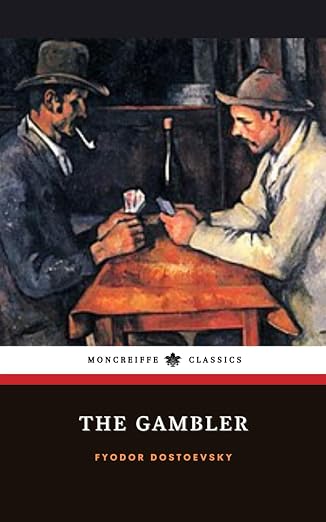
He was a true Frenchman insofar as that, though he could be lively and engaging when it suited him, he became insufferably dull and wearisome as soon as the need for being lively and engaging had passed. Seldom is a Frenchman naturally polite: he is polite only to order and for a purpose. For example, if he thinks it is incumbent on him to be whimsical, original and unconventional, his behaviour is always silly and unnatural because it consists of trite and hackneyed forms. In short, the natural Frenchman is a conglomeration of commonplace, petty, everyday sobriety, making him the most tedious person in the world. I believe that the only the innocent and inexperienced, especially the Russians, feel an attraction towards the French; for to any man of sensibility, such a compendium of outworn forms, of drawing room manners, familiarity and gaiety, becomes instantly noticeable and quite unbearable.

Fyodor Dostoevsky, “The Gambler”, 1866

RKS RUSSIAN LITERATURE: Yet Another Satirical Knock on the Germans (Fyodor Dostoevsky)

I remember that the baroness was clad in a voluminous silk dress, pale grey in colour, and adorned with flounces and a crinoline and train. Also, she was short and inordinately fat, while her gross, flabby chin completely concealed her neck. Her face was purple, and the little eyes in it had an impudent, malicious expression. Yet she walked as though she was conferring a favour on everybody by doing so. As for the baron, he was tall, wizened and, like most Germans wry faced, and he was wearing spectacles. He would be about forty-five. And he had legs that seemed to begin almost at his chest – a sign of good breeding. Yet for all his air of peacock like conceit, his clothes were a little baggy, and he had a sheep-like look on his face which some might have taken for a look of profundity.

Fyodor Dostoevsky, “The Gambler”, 1866

RKS CANADIAN LITERATURE: Teen Phone Obsession and Illiteracy (Joanna Goodman)

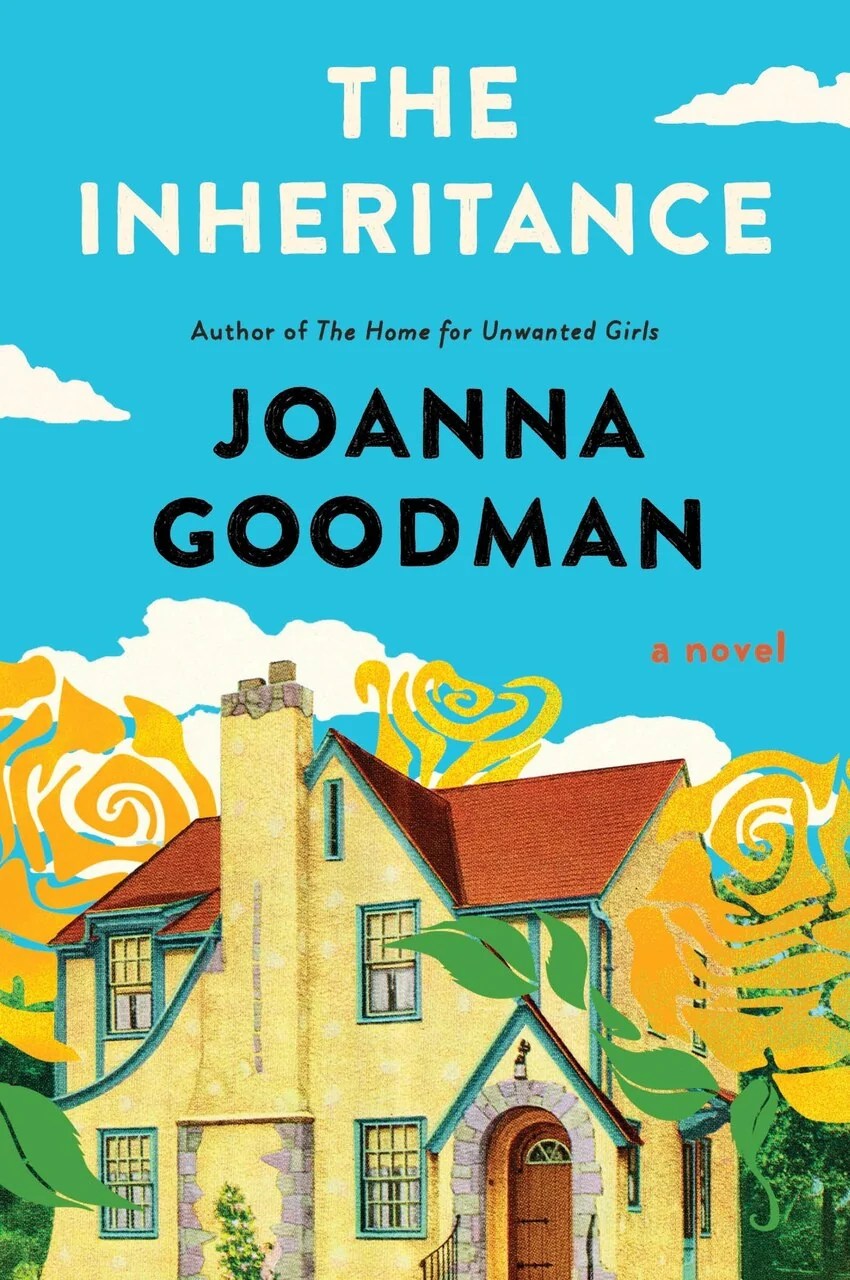
Arden looks helplessly around Ivey’s room, her eyes darting wildly from the closet to the backpack on the floor to the drawers of her desk, wishing she could tear it all apart and uncover some piece of her child, something stashed away, hidden. Letters, a diary, poems, notes she’s passed to friends in class. Arden used to do that, save all her notes in a shoebox, but she won’t find any of that in here. Kids don’t write anymore. There are no more paper trails. Everything is on their phone now, locked behind impenetrable passcodes or messages that evaporate into thin air. Technology makes them as slippery as eels. Arden has never felt so powerless.

Joanna Goodman, “The Inheritance”, Harper Collins 2024

RKS RUSSIAN LITERATURE: Russian Ineptitude and German Efficiency (Fyodor Dostoevsky)

‘On the fact that to the virtues and merits of the civilized Westerner, there has, historically, been added – almost as his main virtue – a capacity for acquiring capital, whereas not only is the Russian incapable of acquiring capital, but he also loses what he has wantonly and by sheer folly. Nonetheless, we Russians often need money, so we are glad of, and greatly devoted to, a method of acquiring it such as roulette, whereby one may grow rich in a couple of hours without doing any work. This method, I repeat, has a great attraction for us, but since we play recklessly, and without taking any trouble, we almost invariably lose.

I would rather live a wandering life in a Kirghiz tent,’ I cried ‘than bow the knee to the German idol!’

‘What idol?’ exclaimed the General, now seriously angry.

‘The German method of amassing riches.’

Fyodor Dostoevsky, “The Gambler”, 1866

RKS CANADIAN LITERATURE: Teen Phone Obsession (Joanna Goodman)

Scott didn’t think Ivey having her own phone at eleven was a problem. Meth is a problem he’d say. Opioids are a problem. Let her have a phone. But he isn’t here to see how the powerful triumvirate of Instagram, Snapchat, and TikTok have brainwashed his sweet daughter; how it’s shaped her personality, reprogrammed her developing mind, afflicted her self-esteem, taught her to live and die by the number of likes and comments and the twin gods of comparison and FOMO.

Joanna Goodman, “The Inheritance”, Harper Collins 2024

RKS EURO FILM: “Familia”: Doorways to Hell

See a door in this film and hell and a disciple of the devil is not far away. Based on a true story.

Franco Celeste (Francesco Di Leva) returns to his Rome home after serving 9 years for armed robbery. Given that his wife Licia (Barbara Ronchi) expects his return and changes the locks on her door Franco is not welcome but nonetheless he worms his way in to play the role of husband.

Immediately after his release Franco approaches his two children Luigi (Francesco Gheghi) and Alessandro (Marco Cicalese) and when Alessandro refuses to hug him Franco gives him a nasty slap in the face.

School authorities advise Licia her children are increasingly isolated and show her a writing from one of them wishing their father would stop slapping their mother.

Licia obtains a restraining order against Franco and is “rewarded” by the state seizing her children and placing them in foster homes for 4 years.

As a young man Luigi joins a fascist group comprised of angry young men fuelled by nonsensical slogans and hatred of all political groups. Luigi stabs a “leftist” in a street brawl and is sentenced to nine months in prison.

Both Franco and Luigi have done time for violent acts. Like father like son?

Franco and Luigi establish a friendship and again Franco worms his way into the household saying while he has been living with his sister, he had an argument with her and asks to join his sons and wife for “a few days”.

Harmony ostensibly is established until again Franco erupts violently sneaking into Licia’s workplace and seeing her enjoying a cigarette and chatting with a male colleague nearly chokes her to death leaving large bruises on her neck as of course “you’ve been fucking him.”

Luigi persuades the police to investigate and charge Franco but upon arriving at the house and questioning Licia she responds saying all is fine. Luigi attempts to throw Franco out but he worms back saying to Luigi that he is just like him. Yes, both have been convicted and sentenced for violent crimes but the similarity ends there.

Franco says to Luigi he will never change and you know what you must do. A violent ending and one must query in certain circumstances is violence the only solution?

A study of domestic abuse where there appear no easy solutions for effectively curbing psychopathic violence. And where the solutions fail to work dysfunctionality mushrooms causing misery and anger for the innocents.

You may ask why does Licia continue to take Franco back into the home? She is terrorized and perhaps she realizes, like Franco, he’ll never change and continue the abuse state authorities simply are incapable of eradicating and in this case exacerbating by seizing two young children and placing them in foster homes destroying the lives of whom they are supposedly protecting.

Both a gloomy story and cinematography. Strong performances throughout.

Watch the trailer here https://www.youtube.com/watch?v=d7m56uOUH8I

Directed by Francesco Costabile.

RKS EURO FILM RATING 93/100.

RKS RUSSIAN LITERATURE: A Gentlemen is Not Concerned About Money When Gambling (Fyodor Dostoevsky)

Yes, even if a gentleman should lose his whole fortune, he must never give way to anger. Money must be so far beneath a gentleman as never to be worth a thought. Of course, the supremely aristocratic thing is to be entirely oblivious of the rabble and all one’s surroundings, but sometimes it may be just as aristocratic to adopt the opposite course and to notice, and even gaze at, the mob (preferably through a lorgnette) as though one were taking the crowd and its squalor for some sort of spectacle that has been organized specially for a gentleman’s diversion.

Fyodor Dostoevsky, “The Gambler”, 1866

RKS RUSSIAN LITERATURE: The Nature of a Gentleman Gambler (Fyodor Dostoevsky)

For instance a gentleman may stake, say, five or ten louis d’or – seldom more, unless he is a very rich man, when he may stake, say, a thousand francs – but he must do this simply for the love of the game itself, simply for sport, simply in order to observe the process of winning or losing, and, above all, as a man who remains quite uninterested in the possibility of coming out a winner. If he wins he, is at liberty, say, to laugh or pass a remark on the circumstance to a bystander, or place a stake again, or double his stake, even this he must do solely out of curiosity and for the pleasure of watching the play of chances and calculations and not from any vulgar desire to win.

Fyodor Dostoevsky, “The Gambler”, 1866

RKS RUSSIAN LITERATURE: Roulette a Sordid Gambling Activity (Fyodor Dostoevsky)

In the first place, everything about it seemed so sordid – morally nasty and dirty, that is. I’m not talking about the expectant, restless folk who, in their scores – even in their hundreds – could be seen crowded around the gaming tables, because I could see nothing sordid in a desire to win quickly and win a lot. I have always applauded the opinion of a certain well-fed and well-off moralist who replied to someone’s excuse that ‘they only gambled for small stakes’ by saying ’So much the worse, since it’s just petty greed.

Fyodor Dostoevsky, “The Gambler”, 1866

RKS CANADIAN LITERATURE: Guilt the Unavoidable Destiny of Widowhood (Joanna Goodman)

He slams the car door and steps back onto the sidewalk with a friendly wave. Alone in the cab, Arden lets her head fall back against the seat. She closes her eyes, feeling a little bit tipsy and disappointed, a lot guilty. As the taxi pulls into the street, she wonders if her feelings for other men will always be tangled up with guilt – if in fact, guilt is the unavoidable destiny of widowhood.

Joanna Goodman, “The Inheritance”, Harper Collins 2024