

“The one great principle of English law is to make business for itself. There is no other principle distinctly, certainly, and consistently maintained through all its narrow turnings. Viewed by this light it becomes a coherent scheme and not the monstrous maze the laity are apt to think. Let them but once clearly perceive that its grand principle is to make business for itself at their expense, and surely they will cease to grumble.”
RKS Wines: Wines from The Outer Limits: Austria; Audrey Hepburn Type of Wine!
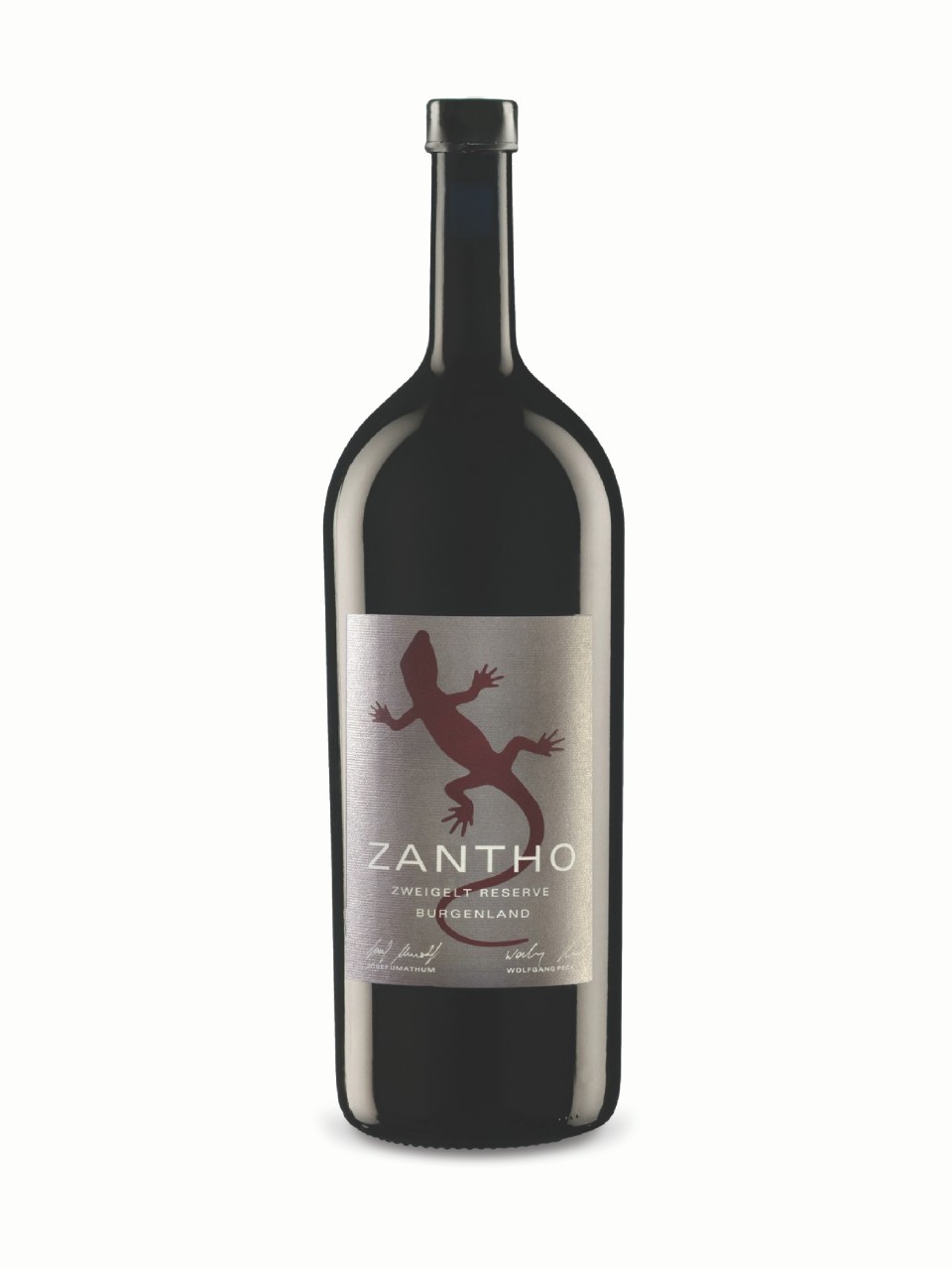
Austrians drink approximately 30 litres of wine per person a year which is twice as much as Canadians drink. More white is produced than red.
As for red wine Zweigelt is a popular red and is a cross between Blaufränkisch and St. Laurent and as stated in Karen MacNeil’s “The Wine Bible” the wine is “reminiscent of California’s Zinfandel; inky, fruity, with a briary edge.”
We try a Zantho Zweigelt Reserve 2017. It has a black cherry colour. On the nose smoky black cherry predominates. On the palate the tannins are fine and thin. The flavour profile is a bit of brackish infused cherry although there is a tad of date and the tiniest amount of cinnamon. The finish is short. Immaculately constructed it comes across as a pure, clean and simple wine. Its simplicity sets it apart from so many red wines one encounters these days. It is simply not making any attempt to be what it isn’t. I am afraid Karen I do not see any Zinfandel comparison. I would call it more of a lean Gamay.
I have not been to the winery and talked with the winemaker nor I have I been invited to Austria to do some extensive tastings so the memory bank may not be as full as I would like it to be for Austrian wines.
It has been some 30 years since I was in Austria so my knowledge of Austrian cuisine is bereft. What I would venture to say the gentle and fine tannic structure means avoid beef or any dish that is too rich. I’ll take the lunge and say go with a well-made vegetarian pizza with artichokes, green olives and Oyster Mushrooms. You can easily treat this as a sipping wine but with those that appreciate a pure and true wine not desperately trying to be a wine everyone likes because it is like the last wine and the wine before that they tried.
You can try and twist my arm and get me to say that this is an elegant wine and given that I am increasingly fed up with wines that taste like each other I am leaning towards a wine that is true to itself and not fouled by excessive winemaker manipulation and calling that wine pure and simple is what this wine deserves. If I could make a comparison to wine and film (which I also review) I would say it is Audrey Hepburn in the 1954 film “Sabrina” which must mean it is elegant.
(Zantho Reserve Zweigelt 2017, Burgenland, Austria, Burgenland, Qualitätswein Trocken, 15784, Andau, Austria, $ 24.95, Liquor Control Board of Ontario # 21141, 750 mL, 13.5%, Robert K. Stephen A Little Birdie Told Me So Rating 90/100).
“Mutantism on the March ” : Chapter 106 Canada’s Worst Enemies: Its Politicians
Premier Poorassa of Quebec held his press conference and laced into both the MSQ and René Hecklevesque claiming they had been a thorn in the side of Canadian unity and Quebec’s integrity. He accused Hecklevesque of inciting populist riots and asserted the “frog politician” Affliction had referred to in his transcript was none other than Hecklevesque. Many Quebeckers were wavering about support for Hecklevesque. His supporters were desperately trying to manufacture a martyr sort of like a Lady Fatima in the church of Quebec politics.
Hecklevesque’s popularity started its plunge after the kidnappings of James Dentalfloss and Pierre Laflirte and his subsequent murder. He was associated with the bad times haunting Quebec. The province was tired of his criticism and vague solutions to problems. Hecklevesque (aka Jiber) suffered from a total lack of confidence and the rare time he was asked to speak he mumbled and stuttered and looked the fool. When his contacts returned from Washington and advised him that Affliction was on the edge of losing it he started drinking vast quantities of Screech. And when Affliction resigned he knew his dreams of assembling a conquering army of Quebec zombies was now only a dream no longer a plan. Forget ever making a pact with any President of the United States. Could the Soviets help and they were so much like the American in their lust for colonies and profits but as for them ever invading Quebec that was impossible. It simply was time to give up and rip up his brain and liver with another bottle of Screech.
While the Jiber looked like a defeated enemy Squid, Ergot, Montenez, Foonbean and Reseudo were ready to celebrate and party however when desperation strikes desperate measures could be undertaken. The silence of the Canadian government’s silence was disconcerting. At the time of the release of the transcript the Canadian government was in the midst of negotiating an auto pact with the United Sates and any governmental criticism of the United States was a matter of very bad timing. The crusade for a few thousand auto manufacturing jobs took precedence over national unity. The electoral life of a politician was so short why waste it contemplating the long run. Political glory was a now and not a later. There were too many benefits to the politicians and their cronies to selling out Canada.
Jointly in the United Mutations International Herald Reseudo and Squid published the following;
Canada’s Worst Enemy
The federal politicians, bloated by their fat salaries, pension benefits and subsidized meals in the Parliamentary cafeteria, are oblivious to the grim realities of the country. They incessantly harp on the value of national unity and it is quite ironic they focus on the nationalists of Quebec as the great disrupters. Quite frankly the great peril to national unity lies within the federal government and its policy of sellouts to the United States. Quebec is a French speaking province. Why is hashing out a solution so difficult? The federal politicians might learn something if they listened to the Quebec nationalists. Ottawa likes to create an IMAGE of national unity. National unity is impossible however peaceful co-existence is not. The only reason Canada exists is because of historical fears of an expansionist United Sates and the clever salesmanship of railroad tycoons and Canadian politicians. This is a unity based on a fantasy. Canada has had numerous opportunities to rally the country behind it but it failed, just as it did now with the revelations contained in the Affliction tape, to stand up and challenge the Yankees. The silence of the Canadian government to this afront to national unity clarifies whose side they are really on…their own.
In many countries with such an insult staring them in the face they would be rioting and burning down American embassies. This is an impossibility in Canada thanks to federal government fear of the Yankees. One prominent Canadian politician once said living next to the United Sates is like a mouse sleeping beside an elephant.
Quebec politicians really aren’t much better welcoming enormous American investment thinking they were creating a great industrial power base. Well they were correct but they omitted to advise the population who was really controlling this power base. They were the leading auctioneers in the selling of Quebec. Of course the Catholic church helped to keep the population in line by creating a workers syndicate! Imagine the Catholic Church in Quebec fighting for the rights of workers! What happens to Quebec when there is nothing left to sell?
“My Life as a Golf Marshall” : What do Sausages and Golf Have to do with Each Other?
Well strictly speaking not much intellectually speaking. However in my course there is a snack hut at the 10th hole that serves an appallingly small selection of food. At one point in time there was a person at that hut that grilled the tastiest sausages with pride and became somewhat of a golf course legend. Well this year the hut was open and serving sausages using a pathetically small barbeque to grill the sausages. It was almost as if they had no interest in repairing or replacing the more powerful vandalized barbeque so sausages could be grilled more quickly.
As a golfer I admit I never had one of those sausages preferring to bring healthier food from home for a snack. Well this wimpy replacement barbeque barely had the power to cook the sausages and the time it took caused jam ups to develop as people waited for their sausage to cook. Damn sausages became a Marshall’s nightmare so yes there is a connection with sausages and golf. The third-party caterer refused to accept orders on the ninth hole so the sausages would be ready when the golfers arrived on the 10th hole progressive and astute company that they were. Demand for sausages died up due to the delay they caused and the catering company closed the hut claiming it was not profitable. Strange as it had been profitable for decades.
“My Life as a Golf Marshall” :The Golf Marshall’s Vow of Poverty!
Let me assure you there is no career in acting as a golf Marshall.
There is a group of Marshalls who are “volunteers”. They receive no money but in lieu of that there is “free golf” sometimes unlimited and often so restricted as to timing the free golf does not exist. Some Marshalls are severely exploited like a friend of mine outside of Toronto that when courses were COVID closed for 5 weeks in April and May was (as a volunteer”) painting the clubhouse on his shifts despite there was no “free golf” involved.
Then some Marshalls actually get paid minimum wage which is not even pure cash but golf green fees factored into your “salary” as a taxable benefit so as actual cash goes in Ontario you would be making $7.50 an hour in actual cash. Up to you to play enough “free golf” to not be taken advantage of and earn at least minimum wage.
Whatever the case salary is rarely an actual issue for golf Marshall’s as the golf benefits, fresh air, camaraderie and interaction with golfers is more important than cash in the pockets, although at my course Pro-Shop employees get full cash remuneration plus “free golf”. This makes a golf Marshall feel that he is at the bottom of the heap whereas a golf Marshall is in control of pace hence the golfer’s best experience. Does a cashier in the Pro-Shop have such a direct influence on a happy customer base?
Of course, would it bother you to know the worker who empties garbage cans and cleans toilets is making 4 times in cash what you receive?
Are there well-paid golf Marshalls anywhere?
“Mutantism on the March” :Chapter 106 The President Affliction Tape Sparks Further Anti-American Attacks: Premier of Quebec Loves George Wallace Policies!

In the seminal issue in the United Mutations International Herald Ricky Rigirdle of the United Mutations in New York wrote:
Isn’t this Montreal CIA scam disgusting behaviour of the United Sates government. This government is not the government of mutants or the people of the United States. The government is gladhanded by the military industrial complex and the wealthy that sent so many American boys to die in Vietnam in a fruitless but very profitable war for the American military industrial complex. It really has been like this throughout the history of the United States that was founded by a group of petit bourgeois opportunists.
Unfortunately, we are Americans as we live in this corrupt and cursed country. Don’t blame us for that. Give us a break. And as outcast Americans we say beware of any private bible thumping group of Christians that seek to shove Christianity down your throat with food and medicine or by any American government official. Once they have their foot in the door it is impossible to shove the entire body away. “Our government” is a greedy apparatus feeding off profits it can suck out of peasants and the impoverished. The DEA “Drug on Wars” kills farmers by spraying paraquat on their marijuana cash crop and them and then sickens Americans who smoke the contaminated Mary Jane. The CIA is a dangerous tool of the most corrupt of the corrupt. Beware of Americans and as in Montreal with the Hexpos don’t play ball with them or thy will steal all your bases and replace them with missile bases.
Montenez of the CDQ also wrote;
In the CDQ we have always warned of the American danger. During the enactment of the War Pretensions Act in Canada we hypothesized the Americans would do their utmost to create hostilities in the Province of Quebec because once a spirit of anti-Americanism had been built the US Marines would come in and make Quebec the 51st state. We believe this “Froggie politician” Affliction had mentioned as having a deal struck with was none other than René Hecklevesque who would beg for American intervention to prop up his reputation as a great a patriotic defender of the Province of Quebec. He is no protector as he wants to sell out the province to Americans.
The Premier of Quebec, Bob Poorassa, heard of the mutants discovery of the Affliction transcript and laughed profusely. Oh what a colourful group of people these mutants were. Mostly “Têtes Carrés” for sure. But Poorassa’s merriment somewhat dissipated after finishing his Crap Dinner directly from the pot very milky just the way he liked it. The tape of Affliction was not a joke and the American NBC network had paid the United Mutations a cool million for it. Professional voice analysis had verified indeed it was Affliction on the tape.
Poorassa called a press conference at 9 p.m. where he would announce stern measures to bolster provincial sovereignty but as no new Montreal metro stations were being constructed naming the stations in honour of Quebecois nationalists was not an option but a new Bill 101 would be drafted to further the resurgence of the Quebec nationalists and send 400,000 Anglos living in Quebec driving to safety along the Highway 401 to Toronto. A foreign land where one could advertise in any language without language police slapping fines on them. It wasn’t enough that Quebec Anglo’s were 20% of the population but less than 1% of the jobs in the Quebec civil service were held by the Anglos.
Poorassa was seriously considering passing legislation requiring Anglos to sit in the back of busses and eat only in Anglo only lunch counters. George Wallace was a hero to a desperate Poorassa.
RKS Wines: Wines from the Outer Limits “Tezaur Feteasca Regala/Sauvignon Blanc 2019”

While wine has been produced in Romania since 5700 B.C. it wasn’t until after the fall of communism in 1989 that privatization of the nationalized wine industry began attracting Italian, German, British, French and Austrian foreign investment. Under communist rule making quality wine and innovating was not in the mind of the state apparatus.
Today Romania ranks as the 6th largest EU producer of wine but exports only a fraction of its production with UK supermarkets taking some 30% of exports while Canada a mere 2%. Many producers are small and don’t have the volume to export large amounts of wine and although land is cheap wine production costs are high. And as far as I know while Romania is part of the EU I haven’t heard of the EU coughing up vast sums of money for media tours for Romania. Rather like Canada not coughing up cash to get the ear of wine writers and bloggers. I recall on my first media trip to Portugal in 2013 I wrote an article on all of the 14 wineries we visited plus restaurant and hotel reviews. That’s a lot of publicity for a minimal price.
It must be exciting times in Romania watching a newly revitalized industry trying to compete domestically and internationally. I have not been invited to Romania like I have been by Italy and Portugal using EU money for media trips. So it is an unfortunate case of no hear….no drink. What gems we might be missing are cause for a wine writer’s grief.
There is Feteasca Neagara somewhat like a Zinfandel which we get 4-5 times a year in Ontario. There is also Feteasca Regala which is the most widely planted white grape in Romania and we are trying here. Jidevi is the largest winery in Transylvania and was established in 1949. It has the largest white wine vine cultivated surface in Transylvania.
The wine is a 50% blend of Sauvignon Blanc and 50% Feteasca Regala and won a gold medal at Concours Mondial du Sauvignon 2020.It has a pale-yellow colour almost platinum. As for aromas you’ll get a laser beam of apricot and peach greeting your nose with yellow plum, honey, Orri tangerine, melon and toasted almonds. Very alluring! On the palate a light blanketing of soft acidity but far from zippy. The richness and diversity of the nose is toned down and you’ll pick up lighter notes of melon, pineapple, guava and some tart green apple. The wine is dry but not unpleasantly bone dry.
The finish is short. The wine is suited to both simply prepared lake and ocean white fleshed fish. Drink now.
( Jidevi, Alba County, Romania, $16.95, Liquor Control Board of Ontario # 617340, 750 mL, 12%, A Little Birdie Told Me So Rating 91/100).
“My Life as a Golf Marshall” : Dealing with Wildlife: Surrounded by Skunks!
A golf course in an urban area like Toronto with its multitude of connected trails can lead to a panoply of wildlife.
Can I start with telling you I was held hostage by a group of four skunks on the 14th hole? The buggers surrounded my golf cart and was it because of the cherries I was munching? I shouted a warning to a group leaving the green and heading towards the white striped stinkpots and they gingerly took a detour leaving me behind. The humans that is! Oh shit were the buggers going to jump on my lap and ask for some cherries! Thank goodness no as the group on 13 was ready to hit and my cart was not facing them so an errant ball might strike the back of my head! I sped off delighted at this unique opportunity to encounter the “Untamed World”.
Coyotes have flourished since the pandemic even on my street in North York which in Toronto you might call mid town. They are stealthy hunters creeping slowly and quietly flat to the ground and when they see their pray bam! What have they done to the wildlife of the golf course? I have seen mangled ducks, partially eaten groundhogs and a decimated squirrel population. I have actually seen a coyote gobble down a squirrel after playing with it.
Geese and their shit is particularly bad on the 3rd approach shot to the green. Aside from a mangled and half-digested goose they are clever and head to the water when a coyote or fox is sighted. Yes I did hit a goose that started convulsing but it was back on its feet 5 minutes later.
Foxes are seen regularly and their diet of rabbit is in abundance in the dawn and dusk hours.
Deer are rarely seen but they are there and probably too big for coyote attacks.
Turtles are seen in the marshlands on the third hole as well as snakes.
Of course, the worst wildlife might be the macho golfers playing from the blue tees thinking they are professionals with lots of balls. Usually half of them really shouldn’t be playing from the blue tees. They are the braggarts with mighty swings that end up in the creek or far less than I can hit on the white intermediate tees.
So enjoy nature you golf Marshalls and if the coyotes follow you from the parking lot all the way to the 4th hole hope they are curious not hungry.
The Montreal International Documentary Festival 2021n Programme Revealed
For immediate distribution
A hybrid edition celebrating reality on film at its best
The 2021 program revealed
Montreal, Wednesday, October 20, 2021 – The Montreal International Documentary Festival (RIDM) is proud to unveil the full program for its 24th edition. With a selection of 120 films from 44 countries, including 54 films from Quebec and Canada, and more than half by women filmmakers, the RIDM presents the best of reality film from big names and new talent alike.
To celebrate the event-based nature of the festival, each documentary in the program will be screened once in theatres from November 10 to 21. For film-lovers unable to attend in person, films will be available via the festival’s online edition from November 14 to 25. This will include almost all the program’s films, which will be available everywhere in Canada.
The RIDM is delighted to reconnect with audiences and to make this event a meaningful gathering at which to celebrate creative documentary cinema. This edition has been put together by an enthusiastic team led by Marc Gauthier, the new director of the RIDM, with support from a brand-new programming collective: Ana Alice de Morais, Marlene Edoyan, Nadine Gomez, and Hubert Sabino-Brunette.
OPENING NIGHT
The RIDM launches its new program with Futura, a feature-length documentary by Alice Rohrwacher, Pietro Marcello, and Francesco Munzi. From three of Italy’s most exciting filmmakers comes a profile of a generation for whom hope is always served with a dose of uncertainty. Presented in partnership with the Italian Institute of Culture in Montreal and The Match Factory, the screening of Futura will be held on Wednesday, November 10 at 7 p.m. at the Cineplex Odeon Quartier Latin (by invitation only). The film will be preceded by Des voisins dans ma cour, a Quebec-made short by Eli Jean Tahchi, made as part of the Regard sur Montréal residency program.
CLOSING NIGHT
The festival will close with Gabor. The first feature-length film from Joannie Lafrenière is a funny and warm-hearted depiction of her friend, the talented photographer Gabor Szilasi. Gabor will make its world premiere on Saturday, November 20 at 8 p.m. at the Cinéma du Musée, attended by Gabor Szilasi, Joannie Lafrenière, and her team.
EIGHT THEMATIC SECTIONS
Following the success of the 2020 edition, this year’s program is organized around eight thematic sections, each including short, medium, and feature-length films, as well as films from different national and international competitions. The thematic sections – THE HUMAN SPACE, IN SEARCH OF ONESELF, FAMILY TOPOGRAPHIES, STRENGTH OF THE LIVING, DIALOGUE BETWEEN THE ARTS, HAUNTED TERRITORIES, GESTURES OF RESISTANCE, and ECHOES OF THE PAST – are designed to help audiences better navigate the festival programming, whether in theatres or online.
All the films in the program will be shown in theatres during the festival. They will then be divided into three program blocks available online according to the date of screening in theatres: from November 14 to 17 (Block 1), from November 18 to 21 (Block 2), and from November 22 to 25 (Block 3).
THE HUMAN SPACE – 11 films that explore the relationship between human beings and their environment, with a focus on connection and resilience
Twice the winner of the RIDM’s Grand Prize for International Feature Competition (Another Year, 2016, and Present.Perfect, 2019), Chinese filmmaker Shengze Zhu returns this year with A River Runs, Turns, Erases, Replaces, an urban symphony that follows the long and winding route of the Yangtze River in Wuhan. Meanwhile, Jessica Kingdon’s film Ascension, which won Best Documentary Feature at the Tribeca Film Festival, is an ironic and critical portrayal of contemporary Chinese society by way of a number of unusual happenings, shedding light on the absurdity of the capitalist rat race.
Strict Regime takes us to a high-security Russian detention centre, where Nikita Yefimov turns his camera on one of the prison guards. With a glimpse of the behind the scenes inside the prison, the film reveals the power dynamics that exist there. In Le kiosque, filmmaker Alexandra Pianelli uses her cell phone camera to shoot the newspaper kiosk that encapsulates the life of a Parisian neighbourhood.
The experience of a group of migrants is the focus of The Last Shelter, in which filmmaker Ousmane Zoromé Samassékou records the dangerous journeys of three women staying at a shelter on the Sahel border. In Alone by Paul Tom (Bagages), the stories of three refugee children bring to light complex issues around exile and reception.
The many faces of Park Ex shine in Je me souviens d’un temps où personne ne joggait dans ce quartier by Jenny Cartwright,a film that hints at the relentless onset of gentrification threatening the social fabric of a neighbourhood. On a different note, Resources by Serge-Olivier Rondeau and Hubert Caron-Guay gives a voice tothose who are at the heart of the food system that sustains this country.
In Ostrov – Lost Island by Svetlana Rodina and Laurent Stoop,we meet the last inhabitants of the Russian island of Ostrov in the Caspian Sea. Sunny by Keti Machavariani is a forceful and eloquent evocation of the spirit of a post-Soviet society turned upside-down; finally, Futura by Pietro Marcello, Francesco Munzi,and Alice Rohrwacher, the festival’s opening film, completes this section.
IN SEARCH OF ONESELF – 10 introspective films on the human condition and our understanding of the world
Three films are united under the theme of a search for freedom. The winner of the Golden Leopard – Filmmakers of the Present Award at the Locarno Film Festival, Brotherhood by Francesco Montagner transports us to Bosnia to explore a challenging path to adulthood, in which three brothers’ search for identity causes them to defy their authoritarian father. In Zuhur’s Daughters by Laurentia Genske and Robin Humboldt, we travel to Germany where two Syrian sisters’ identities as trans women generate moral conflicts with the Muslim faith practiced in their home. From up-and-coming filmmaker Vadim Kostrov comes Orpheus, a minimalist docudrama reflecting on today’s Russia, from the point of view of an artistic and free-spirited younger generation.
Human connection takes centre stage in Kevin by Joana Oliveira, a hybrid piece sensitively depicting the friendship between two women separated by an ocean and different ethnic and cultural backgrounds; as well as in They Sleep Standing by Bogdan Stoica, which follows three friends at different crossroads in life, in a poetic film set in Romania’s dreamlike landscapes.
This section features two highly personal works: In Fiasco, filmmaker Nicolas Khoury points the camera at himself to challenge the social constraints imposed by his family and by Lebanese society; meanwhile, in Francis Leplay and Isidore Bethel’s film Acts of Love, Bethel, struggling to recover from a toxic relationship, decides to use his next romantic encounters as material for the film.
A Story of One’s Own by Amandine Gay (Speak Up, RIDM People’s Choice 2017) is an eloquent meditation on the various political, economic, cultural, and racial issues surrounding international adoption. Focusing on the personal agency of Black women, Wash Day by Kourtney Jackson highlights three young women’s journeys toward self-acceptance, self-care, and the courage to confront daily microaggressions.
Love Me by Romane Garant Chartrand is an intimate portrait of Laetitia, a charismatic high-school student in whose everyday life seduction and carefully controlled self-image play a crucial role.
FAMILY TOPOGRAPHIES – 10 films illuminating the complex ties that bind us to our families, those who brought us into the world and whose lives run parallel to our own, for better or for worse
In Babushka, filmmaker Kristina Wagenbauer returns to her native Russia to visit her resilient grandmother with whom she spent part of her childhood, in this film rich in tenderness and humour. Dropstones by Caitlin Durlak follows a woman taking back control of her life after an abusive marriage as she returns with her two children to the picturesque Fogo Island, off the coast of Newfoundland.
Jeremiah Hayes’ moving work Dear Audrey is a candid reflection on the incredible life of Martin Duckworth, who is supporting his wife through the final stages of Alzheimer’s. In a similar vein, Dida by Corina Schwingruber Ilić and Nikola Ilić sees the filmmaker returning to Belgrade to care for his aging mother.
Human bonds are central to these works rooted in personal experience. In Upstairs, Pier-Luc Latulippe and Martin Fournier turn the spotlight on one of Quebec’s best-loved actors, Serge Thériault, who has lived for over a decade with extreme depression. Together, his wife Anna and their neighbours try to bring him back to the land of the living. Under the Sleeping Mountain sees filmmaker Charles Duquet (Prix de la relève, RIDM 2019) coming to terms with the gradual erosion of his parents’ relationship. Yasmine Mathurin brings another tough subject to the table in One of Ours: a young man of Haitian origin, adopted by an Indigenous family in Calgary, finds his identity called into question by the authorities of the All Native basketball tournament.
Some Kind of Intimacy by Toby Bull delivers a touching message from the living to the dead, in which a flock of sheep become the benevolent guardians of our cemeteries. Becoming by Isabel Vaca explores the inner workings of a tough and controversial world through the eyes of an 11-year-old Mexican cowboy. In Les enfants terribles, filmmaker Ahmet Necdet Çupur films his younger brother and sister, who live in a small Turkish village, offering an inside look at their search for fulfilment and the possibility of a new start.
STRENGTH OF THE LIVING – 10 films that celebrate the vitality of nature, its cycles, and the roots that connect us all
Surveillance footage forms the backbone of a captivating visual journey from Sebastian Mulder on the trail of Naya, the first she-wolf seen in Belgium for over a century. Based on a huge archaeological investigation into the archives of world cinema, Animal macula by Sylvain L’Espérance teases out a troubled and often violent relationship between humans and animals. Following the life of a cow and her calves on an industrial dairy farm, Andrea Arnold’s feature Cow documents the life cycle of animals condemned to servitude. Taming the Garden by Salomé Jashi is both poetic and political, shedding light on the environmental and social issues at work when a wealthy Georgian man decides to ship over colossal, centuries-old trees to plant in his private garden.
Northern countries are at the heart of explorations into unsettling environmental changes. Luke Gleeson’s film DƏNE YI’INJETL takes up the perspectives of those affected by the environmental and social repercussions of BC Hydro, which have transformed the territory of the Tsay Keh Dene Nation. At once lyrical and dystopian, Holgut by Liesbeth De Ceulaer foregrounds a nascent environmental catastrophe in Siberia, where the thawing permafrost is causing remains of long-extinct species to rise to the surface. At a Polish station in Antarctica, filmmaker Viera Čakányová enters into conversation with an artificial neural network and takes an introspective look at the future in White on White.
Young people take centre stage in The Hill, in which Julien Chausit intelligently conveys the anxiety many young people feel in light of the destruction of the environment and the need to act to avoid catastrophe. Meanwhile, in Last Days at Sea, Filipino filmmaker Venice Atienza spends time with a young boy who will soon leave his village to study in the city.
In the tradition of ethnographic documentaries, Far Beyond the Pasturelands by Maxime Lacoste-Lebuis and Maude Plante-Husaruk is the final film in this section. In it, the filmmakers transport us to the Himalayas, where an expedition to find a rare mushroom is underway.
DIALOGUE BETWEEN THE ARTS – 11 films that draw inspiration from intersections of film and other artistic mediums
Aleph, a labyrinthine work by Iva Radivojević loosely inspired by the writing of Jorge Luis Borges, is a many-tentacled story that unfolds without losing its integrity. Filmmaker Ben Russell (who has previously won two awards at the RIDM for River Rites and Atlantis) returns with a clever reappropriation of Réné Daumal’s novel Mount Analogue in The Invisible Mountain, an enchanting journey that renders the invisible tangible. Eastwood by Alireza Rasoulinejad follows a filmmaker who, on spotting Clint Eastwood in a photo in the newspaper, heads to the city of Sirjan, Iran, in search of the iconic American actor.
Music serves as the inspiration for Reminiscences of 15 Musicians in Beirut Attempting a Re-imagination of the Egyptian Classic Yara Garat Al Wadi. In this film by Charles-André Coderre, a contemporary orchestra reinterprets Yara Garat Al Wadi, a well-known Egyptian piece of music. Likewise, in Singing in the Wilderness, Dongnan Chen observes the Christian choir of a Miao village, co-opted by a propaganda official from the Chinese government.
Two films in this section focus on creativity: Stray Ducks by Bruno Chouinard follows the epic story of the rubber ducks dropped into Greenland’s glaciers as part of an experiment on climate change, which have now made their way all over the world. The End of Kings by Rémi Brachet presents a kaleidoscopic portrait of Clichy-sous-Bois, drawing attention to gender relations and questioning the balance of power.
With an emphasis on exploration, The Truss Arch by Sonya Stefan is an ode to freedom rippling with reflection, somewhere between an autobiographical piece, a heartfelt tribute to an immigrant mother whose fate is out of her hands, and a dance film; while Ikebana by Rita Ferrando and Lily Jue Sheng is a sensitive film that questions representation as well as exploring the meticulous, meditative art of flower arrangement.
The colourful and creative The End of Wonderland by Laurence Turcotte-Fraser – a depiction of Tara Emory, a trans artist and pioneer of the burlesque, fetish, and erotic scene of the 90s – completes this section alongside Gabor by Joannie Lafrenière, this edition’s closing film.
HAUNTED TERRITORIES – 11 films that transport us to ghostly worlds where the weight of the past blurs reality and fiction
Poème fantôme by Laurence Olivier draws us deep inside a strange and haunted natural environment, while Abisal by Alejandro Alonso is a hypnotic fable in which worlds, temporalities, and realities overlap, recalling how the ghosts that haunt us often come from within.
Places are sometimes haunted by the systems that govern them. In The Gig is Up, filmmaker Shannon Walsh records the striking yet calmly recounted stories of workers exploited by the gig economy. Exposing a cruel capitalist system, this is a documentary destined to ring alarm bells. In 2010, fire tore through a prison in Chile, killing 81 people. Haunted by nightmares of the victims, El cielo está rojo by Francina Carbonell revisits the tragedy to denounce a precarious prison system.
Urban spaces and memory take pride of place in two films: Zaina Bseiso’s When Light is Displaced, in which an orange grove in California becomes an unexpected site of shared reflection around experiences of exile for a Palestinian father and daughter; and If You See Her, Say Hello by Hee Young Pyun and Jiajun (Oscar) Zhang, whichfollows a man who visits the town where he grew up, only to discover that the old city is in ruins and a new one has replaced it.
Speech is the focus both of By the Throat by Effi & Amir, a surprising work that explores accent as a powerful social marker and the sinister control tactics that exploit it; and of Minimal Sway While Starting My Way Up by Stéphanie Lagarde which, in a world where data are gathered to be analyzed by artificial intelligence, a talking elevator describes what it perceives.
During the pandemic, two friends keep up correspondence via excerpts of films. The result is Same/Different/Both/Neither by Adriana Barbosa and Fernanda Pessoa, which captures the feeling of a suspended space/time. In Delphine’s Prayers by Rosine Mbakam, two friends are connected by their shared belonging to the African diaspora. The filmmaker introduces us to Delphine, a woman whose greatest crime remains her own existence.
GESTURES OF RESISTANCE – 10 films celebrating gestures both great and small of those who fight the status quo
In Kímmapiiyipitssini: The Meaning of Empathy (Emerging Canadian Filmmaker Award and Rogers Audience Award for Canadian Feature Documentary, Hot Docs 2021 and the Colin Low Award for Best Canadian Director, DOXA 2021), filmmaker Elle-Máijá Tailfeathers takes her camera into her own community, the Kainai First Nation, to shed light on their collective struggle to overcome the opioid crisis and to heal the wounds caused by colonialism.
Dear Jackie by Henri Pardo is a cinematic letter to baseball player Jackie Robinson offering a historical and social perspective on racism. Just a Movement by Vincent Meessen, meanwhile, is a free adaptation of Jean-Luc Godard’s La Chinoise that explores the story of Senegalese Marxist militant Omar Blondin Diop.
The winner of this year’s Œil d’Or (Golden Eye) award at Cannes, A Night of Knowing Nothing by Payal Kapadia draws on the correspondence between two university students whose romantic relationship is thwarted by the archaic caste system. Also set in India is Writing with Fire by Sushmit Ghosh and Rintu Thomas, which follows female journalists of the Dalit community who decide to move beyond their print newspaper and, instead, to produce videos with a reach of millions.
Little Palestine, Diary of a Siege by Abdallah Al-Khatib gives a Palestinian militant’s perspective of the Yarmouk refugee camp, under a brutal siege by the Syrian regime and surviving only thanks to the resistance and generosity of the community. An original collaboration between the filmmaker and the Cuban refugees stranded at a camp in Panama, La opción cero by Marcel Beltrán tells the inside story of a dangerous migration.
Audrey and Maxime Jean-Baptiste reappropriate the archives of France’s National Center for Space Studies to tell a story of collective dispossession in Listen to the Beat of Our Images, an incisive and otherworldly cinematic essay. In All of Your Stars are But Dust on my Shoes by Haig Aivazian, seemingly disparate video and sound elements enter into a dialogue, reminding us that light always has its dark side.
And, since resistance can sometimes be embodied by silent struggles, this section’s final film is Edna by Brazilian filmmaker Eryk Rocha. Both poetic and brutal, this film follows an older woman whose diary records her memories of survival in a territory scarred by massacres.
ECHOES OF THE PAST – 11 films that call for reflection on the past, to understand the present and imagine a better future
Equipped with an old tape recorder and his keen eye, an Indigenous man speaks with Elders of his community whose assimilated Christian faith coexists with a longing for the past in Nothing But the Sun by Arami Ullón. Ëdhä Dädhëcha¸| Moosehide Slide by Dan Sokolowski juxtaposes two stories – the white man’s version and the First Nations’ version – that explain the formation of a geographical feature. This experimental short film highlights the impossibility of reconciliation without recognition of the ancestral stories of Indigenous peoples.
Carolina Arias Ortiz travels to Costa Rica to reconnect with her dying father in Objetos Rebeldes. Like an archaeological dig, this essay unfolds along several strata, revealing cracks in the country. In Under Silence and Earth, filmmaker Gisela Restrepo makes the trip to Colombia to search for the body of her aunt who took part in armed conflict.
zo reken by Emanuel Licha, the winner of the Best Canadian Feature Documentary Award at Hot Docs, takes us to Port-au-Prince and inside a 4×4, where Haitian inhabitants discuss colonization and international aid, casting a critical eye on many broken promises. The First 54 Years – An Abbreviated Manual for Military Occupation is a detailed guide from director Avi Mograbi that unveils the forces at work in the Israeli occupation of the Palestinian territories of Gaza and the West Bank.
Kal Fatemeh by Mahdi Zamanpour Kiasari depicts the daily life of Kal Fatemeh and her sons, who live in a remote region of Iran. Undaunted by the hardship of rural life, this is a woman whose greatest struggle is the regret of contributing to her daughter’s unhappiness.
Impressive photography is layered with a sound composition made from the desert wind in Galb’Echaouf by Abdessamad El Montassir, which calls up the ghosts of sociopolitical conflicts in the Western Sahara. In Can a Mountain Recall – a cinematographic essay in the form of a personal diary – Delfina Carlota Vazquez tries to unravel the mystery surrounding a volcano that looks out, enigmatically, over a Mexican city.
Winner of the Burning Lights Competition at Visions du Réel 2021, Stefan Pavlovic steps onto the emotional rollercoaster of two men whose growing friendship helps them reconcile themselves with their past in Looking for Horses. In Conversations avec Siro, frank and frequent discussions between filmmaker Dima El-Horr and her friend Siro provide an opportunity to reflect on solitude, exile, and the future of a Lebanon ravaged by successive crises.
VITALY MANSKY RETROSPECTIVE – Facing Reality
This year, the RIDM pays tribute to filmmaker Vitaly Mansky, whose keen eye and critical perspective on political questions is more necessary than ever before. Through his films, the Russian producer and director addresses complex questions with a cinematographic style that is at once persuasive and provocative. His films Broadway. Black Sea (2002), Private Chronicles. Monologue (2011), Pipeline (2013), Under the Sun (2015), Close Relations (2016), Putin’s Witnesses (2018) and his most recent opus Gorbachev. Heaven (2021) will feature in this retrospective of his work.
SPECIAL PROGRAMS
For the fourth year running, the RIDM and Wapikoni mobile join forces to present 4 x Wapikoni mobile: four shorts to be screened before each feature film in the Canadian competition. This selection is a snapshot of the creativity of new voices in Indigenous filmmaking, including works by Mary Menie Mark, Melanie Lameboy, Alfred McKenzie, and Véronique Picard. A fantastic way to celebrate Wapikoni mobile’s many achievements since 2004.
Hosted by Matthieu Dugal, La soirée de la relève Radio-Canada is the chance to see six short documentaries by Quebec’s next generation of filmmakers. Audiences will have the chance to discover works by Jérémie Picard, Julia Zahar, Sara Ben-Saud, Stéphane Nepton, Simon Larochelle, and Aucéane Roux. This exciting event will be held on Sunday, November 14 at 7 p.m. at the Cinéma du Musée, attended by the filmmakers. Following the event, the films will be available on the RIDM’s online platform from November 18 to the 21,and then on ICI TOU.TV.
From November 2 to 27, the Société des arts technologiques’ [SAT] dome will play host to the immersive film Territories of the Americas by Patrick Bossé, a travelogue inspired by the artistic career of multidisciplinary artist René Derouin. The film, in which 360° footage combines with graphic animations, retraces the artist’s journey from Quebec to Mexico. Territories of the Americas is presented by Hubblo in collaboration with the RIDM.
ROUNDTABLES AND DISCUSSIONS
The roundtable Working in the cultural sector: redefining what’s essential, presented in collaboration with the Confédération des syndicats nationaux (CSN), will address labour standards in the cultural sector, as well as issues in adapting to the constraints of the ongoing pandemic. This discussion will take place on Saturday, November 13 at 2 p.m. in the Salle Norman-McLaren of the Cinémathèque québécoise.
Another roundtable, Regional documentary cinema: creation, production, and distribution, presented in collaboration with URBANIA, will be held on Saturday, November 20 at 1 p.m. in the Salle Norman-McLaren of the Cinémathèque québécoise. For this event, documentary filmmakers and other professionals working in rural areas and smaller cities in Quebec will discuss cultural creation in these locations, as well as collaboration, territory, and representation.
TWO ANNIVERSARY EVENTS
Celebrating its 25th anniversary, the Institut national de l’image et du son (INIS) will present a selection of its best documentaries entitled 25 years of INIS: from strength to strength, followed by a discussion with some of the INIS alumni.
This discussion will take place on Thursday, November 11 at 7 p.m. in the Salle Norman-McLaren of the Cinémathèque québécoise.
2021 also marks the 50th anniversary of Vidéographe. To highlight the occasion, artist and filmmaker Luc Bourdon has put together a selection – Le devoir de mémoire – of five films from the artist centre’s 2300-title catalogue. The screening will take place on Friday, November 19 at 6 p.m. in the Salle Norman-McLaren of the Cinémathèque québécoise, followed by a discussion hosted by Luc Bourdon.
FAMILY SCREENINGS
And finally, for the seventh year running, the RIDM is delighted to invite families to the Cinémathèque québécoise for its Family Screenings, an international program of short films for ages six and up, as well as a workshop on learning from images adapted for youths. Presented in collaboration with the Carrousel international du film de Rimouski, the Family Screenings will take place on Saturday, November 13 at 10:30 a.m. and Sunday, November 21 at 2:30 p.m.
AWARDS AND JURIES
The following prizes will be awarded during the RIDM awards ceremony on Saturday, November 20 at 5 p.m. in the Salle Norman-McLaren of the Cinémathèque québécoise:
Grand Prize for International Feature Competition – presented by TV5
Special Jury Prize for International Feature Competition
Grand Prize for National Feature Competition – presented by PRIM
Special Jury Prize for National Feature Competition
New Visions Award – presented by SCAM and Post-Moderne
Best International Short or Medium-Length Film
Best National Short or Medium-Length Film – presented by Télé-Québec and SLA Location
Magnus-Isacsson Award – presented with the ARRQ, DOC Québec, Funambules Médias, Cinema Politica, and MainFilm
Student Award – presented by the Caisse Desjardins du Plateau Mont-Royal
People’s Choice Award – presented by the Canada Media Fund (NOUS | MADE)
PRICES AND SALES OF PASSES AND SUBSCRIPTIONS
To ensure that access to the program is simple and affordable, the online box office offers several options for purchasing your festival pass:
– Tickets for in-theatre screenings are $13. A discount of $2 per ticket applies for any purchase of five or more tickets. There will also be a physical box office at the Cinémathèque québécoise during the festival.
– For those who prefer to watch from the comfort of home, and for documentary fans across Canada, the RIDM will offer online access to the vast majority of its program from November 14 onward, via the RIDM online platform. At $85, the RIDM passport gives you access to the online program, which will be released in three program blocks between November 14 and 25.
– Alternatively, a subscription for one online block can be purchased for $30. This option allows you to view all the films from one of the three program blocks via the online platform. All the details are available on the festival website.
THANK YOU TO THE RIDM’S PARTNERS
The RIDM gratefully acknowledges the support of its valued partners: the Gouvernement du Québec, the ministère de la Culture et des Communications, SODEC, the Secrétariat à la région métropolitaine, the Canada Council for the Arts, Ville de Montréal, Telefilm Canada, the Conseil des arts de Montréal, Tourisme Montréal, the Centre des Services aux Entreprises – Intégration en emploi (Emploi-Québec), the ministère des Affaires municipales et de l’Habitation, Crave, Canal D, the Canada Media Fund, Télé-Québec, CSN, TV5, Radio-Canada, Post-Moderne, the Société civile des auteurs multimédia (SCAM), PRIM, BDO, the Cinémathèque québécoise, and Studio Chop Chop, as well as Benoît Parent and Arthur Gaumont-Marchant.
The RIDM’s 24th edition will take place in theatres from November 10 to 21
at the Cinémathèque québécoise, Cinéma du Parc, Cinéma du Musée,
Centre Pierre-Péladeau, and Cineplex Odeon Quartier Latin
and online from November 14 to 25, 2021
Molnupiravir: The Game-Changing Antiviral Pill for COVID-19?

PublishedOctober 18, 2021COVID-19DRUGSVACCINES

Pharmaceutical company Merck applied on October 11 for FDA emergency use authorization for its oral antiviral COVID-19 drug, molnupiravir. In this Q&A, Carl Dieffenbach, PhD, director of the Division of AIDS at the National Institute of Allergy and Infectious Diseases, and Joshua Sharfstein, MD, talk about the development of the medication, how soon could it be approved, and how it might change the trajectory of the pandemic.
Portions of this Q&A are adapted from the October 13 episode of Public Health On Call.
CAN YOU TELL US A BIT ABOUT MOLNUPIRAVIR AND HOW IT WORKS?
With COVID, we’ve seen the pattern where some people convalesce very easily, while others get sick and the disease progresses rapidly. The goal of oral antivirals is to prevent people from getting sicker so they can rehabilitate faster. The idea is like with any other drug: You get an infection, you take the drug, you get better, you move on.
People who are newly infected with the coronavirus or are newly symptomatic begin taking the drugs within three to five days of symptoms starting. The treatment consists of eight pills a day for five days. With the flu, we know that people have to take the drug (the oral antiviral Tamiflu) quickly after becoming infected. It’s the same principle with molnupiravir.
Other drugs are still in development that targets the virus in different places, but molnupiravir is the first one to progress to the point of EUA application.
HOW SOON COULD WE SEE MOLNUPARAVIR APPROVED?
It will probably be approved by the end of the year. Like the COVID-19 vaccines, we will probably see an emergency use authorization process first, where the drugs will be approved for a certain population.
WILL THIS DRUG BE FREE?
It will be free. The United States government will make this drug—like the monoclonal antibodies—available at no cost as part of our pandemic response.
WILL MOLNUPIRAVIR BE AVAILABLE TO ANYONE EXPOSED TO COVID OR ONLY SPECIFIC GROUPS?
It’s likely that the recommended population will include those represented in the clinical trial: nonhospitalized adults with mild to moderate COVID-19, who are within five days of symptom onset and have at least one risk factor for severe disease. It’s possible that FDA may permit broader use beyond this group.
WILL KIDS BE ABLE TO TAKE IT?
The initial studies were conducted in adults. It’s likely that pediatric studies will not be far behind.
CAN VACCINATED PEOPLE TAKE THIS MEDICATION?
Yes.
IS THERE ANY CONCERN THAT HAVING AN EFFECTIVE TREATMENT WOULD PREVENT PEOPLE FROM GETTING VACCINATED?
There is a concern there. We already have governors in certain red states that are promoting antibodies instead of vaccination.
But from a public health perspective, we need to have different tools in our toolbox so we can deal with whatever comes at us. With a vaccine, we can prevent infection and disease. With monoclonal antibodies and with pills now, we can prevent disease progression. Hopefully over the next year or so, we will have even more choices.
WILL THIS DRUG HELP PREVENT LONG COVID?
This is a long-term question, and people have been taking these pills for a relatively short period of time. We won’t know for a while whether the use of medications and antibodies prevent long COVID. But if the pills help people convalesce quicker and also prevent long COVID—that is a game-changer.
WHAT DO YOU THINK WE WILL SEE NEXT?
There’s another antiviral, a protease inhibitor from Pfizer, in clinical trials, that should be complete late this year or early next. There are also other drugs further back in the pipeline that are at different stages. But between now and June or July 2022, we may have three or four oral antivirals either at the EUA stage or that have at least reported data.
We could eventually have medicines to use prophylactically if people think they’ve been exposed. In fact, Merck is testing molnupiravir in a post-exposure model. I think that’s the vision everybody has, because we know how wonderful it is to have something simple, like a Z-Pack of pills that you can take quickly should you get exposed or start showing symptoms.
ARE YOU SURPRISED THAT THESE KINDS OF DRUGS HAVE BEEN DEVELOPED AS QUICKLY AS THEY HAVE BEEN?
No, not at all. Molnupiravir has been in development as a broad-spectrum antiviral for approximately 10 years. It was first tested as an Ebola drug in Liberia’s 2016–2017 outbreak. The other drugs in development are more coronavirus-specific and have progressed a little quicker.
HOW WILL HAVING MEDICATIONS TO TREAT COVID-19 AFFECT THE TRAJECTORY OF THE PANDEMIC?
The goal is to keep people from progressing into the hospital and dying. Merck reported in their press release that molnupiravir reduced the risk of hospitalization or death by 50%. The advantage of pills is they’re a lot easier to access and you can treat more people quicker than you can with monoclonal antibodies. Having a sufficient supply of molnupiravir could make a huge impact on hospitalizations and deaths.
 A Bird's Eye View of Fashion, Food, Travel, Culture, Beverage and Curiosity