TORONTO, ONTARIO (March 9, 2021) — British Columbia and the Atlantic provinces lead a ranking of outstanding destinations to explore as the pandemic wanes. Noting the anticipated joyful celebrations that will likely coincide with fall harvest season, the digital magazine Vacay.ca™ has selected the South Okanagan at the top of its “20 Best Places to Travel in Canada for 2021”. Produced by Canadian travel journalists, the ranking is sponsored by TrippzyTM, the mobile trivia game that provides real-world rewards such as flight discounts. With the pandemic expected to hinder tourism into summer, Vacay.ca™ predicts a focus on road trips that lead to nature escapes and smaller destinations. “We are thrilled to receive this recognition,” says Brad Morgan, Marketing Director of Travel Penticton and Managing Partner of Visit South Okanagan. “The diversity of experiences and the connectivity of the partner communities is what attracts visitors to the South Okanagan. We have something for everyone and the scenic route that connects us makes for a day-tripper’s paradise. We look forward to welcoming visitors when the time is right.” While British Columbia places five locations on the list, the other side of the country enters six. Atlantic Canada, the region whose stance against COVID-19 was for much of 2020 the hallmark of public-health response in the country, features locations from all four provinces. Nova Scotia’s Cape Breton Island is ranked No. 2 as it continues to add to its world-class offerings. No. 1 South Okanagan consists of two larger destinations — Penticton in the north and Osoyoos in the south — and six small municipalities — Naramata, Peachland, Summerland, Okanagan Falls, Oliver, and Kaleden. The wine region offers a mind-boggling amount of quality experiences for travellers:
wide expanses of gorgeous scenery;
tours of wineries home to the nation’s best-quality vineyards;
a growing bounty of culinary offerings;
a broad showcase of year-round nature activities;
Canada’s only desert region outside of the territories;
family-friendly resorts;
and Indigenous culture that connects it all.
“This year, given what the world is going through, the South Okanagan was a clear choice for the No. 1 spot in our rankings,” Vacay.ca Co-founder Adrian Brijbassi says. Full article: http://bit.ly/Vacay2021BestPlacesDownload Trippzy for iOS (Apple) or Android devices: https://www.trippzy.com/app_landing.htmlVacay.ca™ 20 Best Places to Travel in Canada for 20211. South Okanagan, BC 2. Cape Breton Island, NS 3. Banff National Park & Lake Louise, AB 4. Dawson City, YT 5. Victoria & Cowichan Valley, BC 6. Prince Edward County, ON 7. Gaspereau & Annapolis Valleys, NS 8. Quebec City-to-Tadoussac, QC 9. St. John’s & Irish Loop, NL 10. Charlottetown, PE 11. Golden & Revelstoke, BC 12. Niagara Region, ON 13. Georgian Bay, ON 14. Gaspesie, QC 15. South Shore, NS 16. Shediac-to-Saint John, NB 17. Tofino & Pacific Rim National Park, BC 18. Saskatoon & Prince Albert National Park, SK 19. Kelowna, BC 20. Pukaskwa National Park, ON About Vacay.ca™ Vacay.ca™ is the leading source of Canadian travel. Independently owned and produced by award-winning Canadian journalists and travel experts, Vacay.ca™ uses the wealth of its editorial experience to deliver authoritative information about the best places to see, sleep, and eat in Canada.About Trippzy™ TrippzyTM is a Vancouver-based digital entertainment brand that brings gamification to the tourism industry. Its mobile trivia app provides travel rewards and education about the most desirable destinations in the world. Consumers can download the Trippzy app in the Apple Store or Google Play Store for free.
Again The Little Lost Boy Who Suffered for 45 Years
8 years old somewhat oblivious to reality pretending to be asleep his brother and sister whispered so as not wanting the little boy to hear that his father was dying of bladder cancer what were they trying to hide? clueless to the damage of this exclusion
And so the father died the family did not take him to the funeral so the little boy never experienced finality and the only opportunity to say good-bye hurt, anger and confusion surfaced perhaps after 40 years leaving only the tool of self compassion to truly understand such a grievous loss what good would come of the continual pain and thinking carefully over many days with self compassion in the main somewhat magically it flowed for all those involved in this conspiracy they had their reasons and their minds were clouded with “selfish grief” although grief it was so forgiveness again to this little boy was in order in this way sometimes this is the only way to cross the border and enter the state of Neutrality please don’t think of self compassion as a form of La La Land bullshit why not listen to the little boy? who like you too can be finally free
“Offering ourselves such care might feel strange and unfamiliar at first, as it did for Daniel. Sometimes expanding compassion to ourselves in this way feels downright embarrassing. It can trigger a sense of shame about being needy and undeserving, shame about being self indulgent. But this revolutionary act of treating ourselves tenderly can begin to undo the aversive messages of a lifetime.”
Squid swam on feeling like he had abandoned his aboriginal friends. His travels were extensive. Frequently he would be received with warmth and hospitality but more often than not he was chased away on suspicions he was some sort of evil omen or warlock. Squid eventually found a home in Twinbuckthree in what we call Fluidsia these days. He had walked through this African city and after having conversed with several of its inhabitants was quickly arrested on charges of espionage. The Great King Mobouto had heard of this strange creature and demanded a personal audience. The majority of the king’s advisors were dead set against this personal meeting wanting to execute Squid as a spy. But Mobouto’s word was law and the prisoner was fetched. The long meeting with Mobouto was one that impressed the king particularly with Squid’s views on urban planning. Squid’s unorthodox approach on irrigation and channelling of drinking water fascinated Mobouto. Charges against Squid were dropped and he was awarded the post of the king’s personal urban planner. Squid’s projects were undertaken with impressive results. His irrigation system doubled the harvest of cassava and his experience with the starving dinosaurs had impressed upon him the importance of a trustworthy food supply. For his efforts Squid was declared a high order prince.
Again his serenity was sent reeling with the arrival of white men in the kingdom. They were, like the Frenchman he had seen, filthy stinking and lacking in social manners. They were from a land where huge sewer rats wallowed in sewage pits spreading disease. If only his cultured African friends could have seen how backward these white men were. They pretended with Mobouto they were his great friends. These stinky filthy white men offered gaudy trinkets while they sniffed out for the huge gold stash. Being polite the locals feigned delight at he pieces of worthless junk offered as gifts. They were poor waifs. Who else would give such gifts as junk?
Poor little gaffer when his father died when he was nine dazed and confused he had no idea he was in for a rough time wasn’t even allowed at the funeral that being a lasting psychological crime
Sent to a British style private school with his poor shattered mind wandering quiet suburban boy suddenly thrust into a cruel militaristic environment beaten for his own good with no compassion or drop of pity totally lost and in a fog in an institution his dying dad hoped would make him into a man very bad choice for a lost soul is certainly not a disciplinary hell hole the poor waif failed his first year humiliated with many a private tear and returned the next for endless humiliation and embarrassment of excruciating proportions lasting for 6 some years yet despite that blot on his record proceeded to great academic and scholarship success although his mind was tangled up in bit of a mess with anger for the bastards in that colonial militaristic unforgiving to his ego and his mind so he grew up with great success with the pain of his humiliation slowly receding but periodically he kept bleeding hating the bastards that so badly mauled him even 45 years later a dull anger dogged his soul until the little boy emerged in his mind in a blazer gray flannels and a tie trembling with anxiety and fear in a place any of today’s psychiatrists would say ABSOLUTELY NO WAY! so he sat down every day trying to finally deal with the dignity they endeavoured to steal but he closed his eyes every day for a week yet all he could see what that frightened little boy so suddenly he changed his thought and gave himself some self compassion and tears rolled down his eyes as he faced his suffering with an open heart to treat his soul with a bit of tenderness and love instead of ignoring the blight he began to find light from those who cursed him with a blight compassion enveloped his heart and flowed beyond his suffering and enveloped those who treated him like a failure and scum by God these cruel men were mostly World War Two vets with their souls wracked by combat PTSD the little boy could see how twisted and hurt they were shown no compassion and care by those that sent them off to war what emotions they had were warped by this scar so the little trembling boy lost his anger, shame and humiliation and actually after 45 years forgave them and strangely he kept on thinking about this miracle closing his eyes each day deeply thinking and found that his mind had said good-bye to the trembling little boy in his mind who had gone to rest in peace never to return but his compassion grew towards the many actors that had thrust him into such a horrific situation and the traumas they too had suffered and it rippled further and further to unmask the several traumas he had suffered and he will close his eyes and think, or meditate if you wish and work with them with an open heart perhaps the little boy will continue his emotional growth and finally become free and finally be a bitterless man
Vinho Verde is in the Minho region just north of Opporto and actually some of the Minho juts into Spain. Vinho Verde can be made from 25 grapes or a combination of them. Traditionally these wines were so acidic you could see a slight fizz to the wine. Over the past few years they have improved into more, shall we say, serious wines.
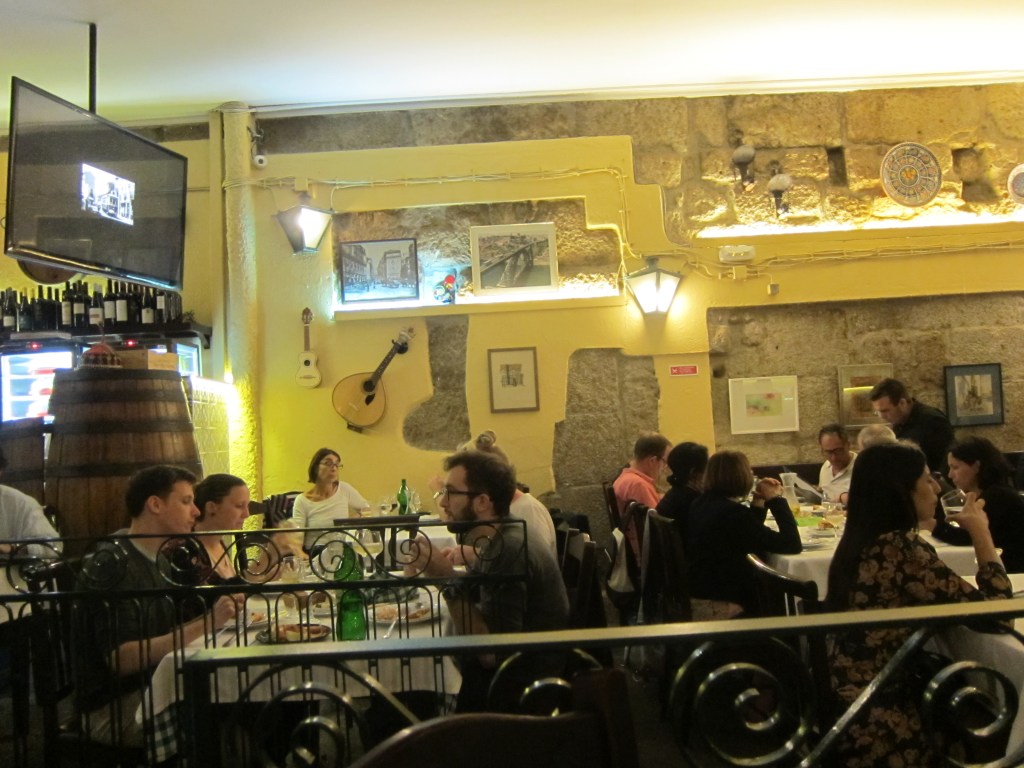
Dinner at Postigo: Photo Robert K. Stephen
The wine I have chosen is a Muralhas de Monção. Monção and Ponte de Lima are the two areas for some of the best Vinho Verde I have tried.
When in Opporto I always drop in and see my friend Alex at his restaurant in old Opporto immensely popular with locals and tourists. The restaurant is Postigo do Carvao which in my mind is one of the best seafood restaurants in Portugal. It is non pretentious, down home and my go to restaurant for sardines. No not the ones in the can but grilled fresh. Mention you like grilled sardines to a Portuguese and their face will light up.
If you do go to the restaurant reservations are definitely required but given COVID how quickly Opporto will recover is unknown as it increasingly seems to rely on cruise ships which we know are petri dishes for COVID and the Norwalk virus. Also go hungry as the appetizers are incredible and many! And the roast potatoes!
Well my go to wine for the sardines I eat and miss so sorely is the Muralhas de Monção which suits sardines and all the white fleshed ocean fish on his menu. Yes there are meat dishes on the menu but please this is Portugal right on the Atlantic.
The wine is a blend of Alvarinho and Trajadura. And you can see the tiny spritzy bubbles especially after you have poured it. On the nose this golden coloured wine has notes of lime, lemon, and melon with a slight hint of butterscotch. On the palate the acidity is not going to scrape the enamel of your teeth but it pairs well the oily sardines. Some bare bones apple and pear on the palate with a short finish with a hint of milk to it. Alright as a wine it is not going to get a rave review from me but with Postigo seafood it is a killer.
Yes I have The Sardine Blues and the only vaccine for that for me is a plate of sardines at Postigo.
(Muralhas de Monção 2019, Monção e Melgaço Vinho Verde DOC, Adega Coop. Regional de Monção, Monção, Portugal, $ 15.95, LCBO # 80374, 12.5%, 750 mL, Robert K. Stephen Set The Bar Rating, 87/100)
” If we’ve injured someone and are embroiled in guilt and self-recrimination, compassion for ourselves allows us to find a wise and healing way to make amends. If we are drowning in grief and sorrow, arousing compassion helps us remember the love and connection in our life. Rather than pushing them way, we free ourselves by holding our hurting places with the unconditional tenderness of compassion. Compassion means to be with, feel with, suffer with. Classical Buddhist texts describe compassion as the quivering of the heart, a visceral tenderness in the face of suffering. As we practice responding to our suffering with the kindness of compassion, our hearts can become, as Buddhist teacher Sharon Salzberg says, as wide as the world.”
Bill Gates is actively financing and promoting new untested vaccines supposed to keep us at least somewhat safe from a ‘ghastly” death from the novel coronavirus and supposedly allow us to resume somewhat “normal” lives. The Pharma giant Pfizer has now announced what they claim were spectacular results in initial human tests. They use an experimental technology known as gene editing, specifically mRNA gene-editing, something never before used in vaccines. Before we rush to get jabbed in hopes of some immunity, we should know more about the radical experimental technology and its lack of precision.
The financial world went ballistic on November 9 when the pharma giant Pfizer and its German partner, BioNTech, announced in a company press release that it had developed a vaccine for Covid19 that was “90%” effective.
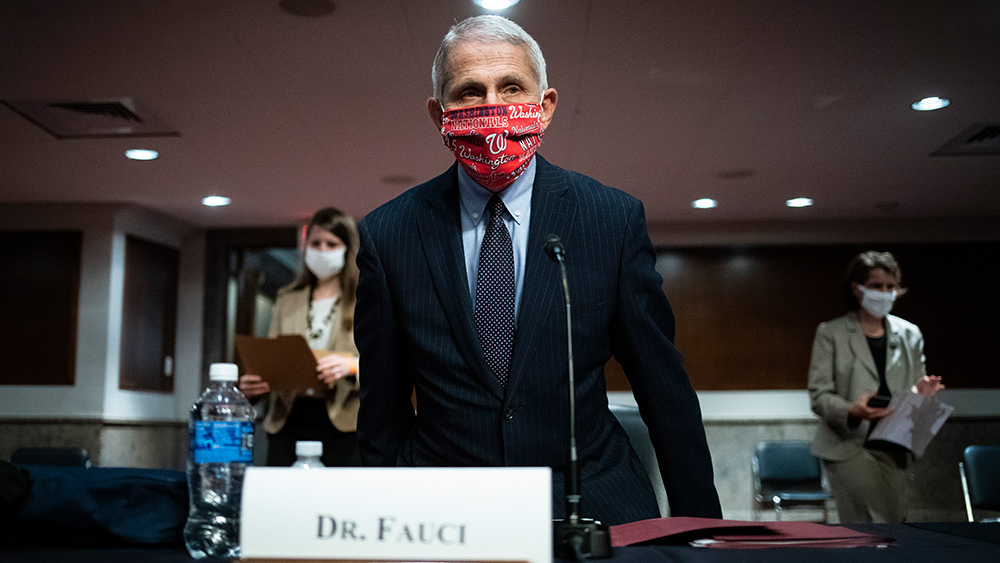
The controversial US head of NIAID, Tony Fauci (right) rushed to greet the news and the EU announced it had purchased 300 million doses of the costly new vaccine. If you believe financial markets, the pandemic is all but past history.
Suspicious events
However it seems Albert Bourla, the CEO of Pfizer, doesn’t share the confidence of his own claims. On the day his company issued its press release on the proposed vaccine trials, he sold 62% of his stock in Pfizer, making millions profit in the deal. He made the sell order in a special option in August so it would not appear as “insider selling”, however he also timed it just after the US elections and the mainstream media illegitimately declared Joe Biden President-elect. It seems from appearances that Bourla had a pretty clear conflict of interest in the timing of his press release on the same day.
Bourla lied and denied to the Press that his company had received any funds from the Trump Administration to develop the vaccine when it came out they contracted in summer to deliver 100 million doses to the US Government. Further adding to the suspect actions of Pfizer was the fact the company first informed the team of Joe biden rather than the relevant US government agencies.
But this is far from the only thing alarming about the much-hyped Pfizer announcement.
The German Partner
Pfizer, famous for its Viagra and other drugs, has partnered with a small Mainz, Germany company, BioNTech, which has developed the radical mRNA technique used to produce the new corona vaccine. BioNTech was only founded in 2008. BioNTech signed an agreement with the Bill & Melinda Gates Foundation in September, 2019, just before announcement in Wuhan China of the Novel Coronavirus and just before BioNTech made its stock market debut. The agreement involved cooperation on developing new mRNA techniques to treat cancer and HIV. Curiously that press release, “The Gates Foundation sees BioNTech potential to ‘dramatically reduce global HIV and tuberculosis’” 05. September 2019, has now been deleted.
BioNTech also has an agreement with one of the largest drug producers in China, Shanghai Fosun Pharmaceutical Co., Ltd (“Fosun Pharma”) to develop a version of its mRNA vaccine for novel coronavirus for the Chinese market. Ai-Min Hui, President of Global R&D of Fosun Pharma said in an August statement, “Dosing the first Chinese subject with BNT162b1 marks a milestone of the global co-development program in China. We are closely working with BioNTech and regulatory authorities to evaluate the safety and efficacy of BNT162b1 and other mRNA vaccine candidates…”
This means that the same German biotech company is behind the covid vaccines being rushed out in China as well as the USA and EU. The vaccine is being rushed through to eventual approval in an alarmingly short time.
Both US and EU authorities and presumably also Chinese, waived the standard animal tests using ferrets or mice and have gone straight to human “guinea pigs.” Human tests began in late July and early August. Three months is unheard of for testing a new vaccine. Several years is the norm. Because of the degree of global panic engendered by WHO over the coronavirus, caution is thrown to the wind. Vaccine makers all have legal indemnity, meaning they can’t be sued if people die or are maimed from the new vaccine. But the most alarming fact about the new Pfizer-BioNTech gene edited vaccine is that the gene edited mRNA for human vaccine application has never before been approved. Notably, two year peer reviewed tests with mice fed genetically modified corn sprayed with Monsanto glyphosate-rich Roundup first showed cancer tumors after nine months as well as liver and other organ damage. Earlier Monsanto company tests ended at three months and claimed no harm. A similar situation exists with the gene edited mRNA vaccines that are being rushed out after less than 90 days human tests.FDA Lets Pfizer Test Experimental COVID-19 Vaccine on U.S. Children
“Explicitly experimental”
Dr. Michael Yeadon replied in a recent public social media comment to a colleague in the UK; “All vaccines against the SARS-COV-2 virus are by definition novel. No candidate vaccine has been… in development for more than a few months.” Yeadon then went on to declare,
“If any such vaccine is approved for use under any circumstances that are not EXPLICITLY experimental, I believe that recipients are being misled to a criminal extent. This is because there are precisely zero human volunteers for…whom there could possibly be more than a few months past-dose safety information.”
Yeadon is well qualified to make the critique. As he notes in the comment, “I have a degree in Biochemistry & Toxicology & a research based PhD in pharmacology. I have spent 32 years working in pharmaceutical R&D, mostly in new medicines for disorders of lung & skin. I was a VP at Pfizer & CEO…. of a biotech I founded (Ziarco – acquired by Novartis). I’m knowledgeable about new medicine R&D.” He was formerly with Pfizer at a very senior level.
Human guinea pigs?
The Pfizer-BioNTech vaccine is experimental and far from guaranteed safe, despite the fact that Pfizer, the EU and the notorious Dr Tony Fauci seem ready to roll it out even before year end to hundreds of millions of humans.
The experimental technology is based on a rather new gene manipulation known as gene editing. In a major article in the 2018 New York Council on Foreign Relations magazine, Foreign Affairs, Bill Gates effusively promoted the novel gene editing CRISPR technology as being able to “transform global development.” He noted that his Gates Foundation had been financing gene editing developments for vaccines and other applications for a decade.
But is the technology for breaking and splicing of human genes so absolutely safe that it is worth risking on a novel experimental vaccine never before used on humans? Contrary to what Bill Gates claims, the scientific answer is no, it is not proven so safe.
In a peer reviewed article in the October, 2020 journal Trends in Genetics, the authors conclude that “the range of possible molecular events resulting from genome editing has been underestimated and the technology remains unpredictable on, and away from, the target locus.”
Dr. Romeo Quijano, retired professor of Pharmacology and Toxicology at the College of Medicine, University of the Philippines Manila, noted some of the dangers of the experimental gene editing when applied to human vaccines. Quijano warns of,
“the danger that the vaccine might actually “enhance” the pathogenicity of the virus, or make it more aggressive possibly due to antibody-dependent enhancement (ADE), as what happened with previous studies on test vaccines in animals. If that should happen in a major human trial the outcome could be disastrous. This serious adverse effect may not even be detected by a clinical trial especially in highly biased clinical trials laden with conflicts of interest involving vaccine companies. Even when a serious adverse event is detected, this is usually swept under the rug.”
He cites the case of another Gates mRNA vaccine candidate, Moderna, where “three of the 15 human experimental subjects in the high dose group suffered serious and medically significant symptoms. Moderna, however, concluded that the vaccine was “generally safe and well tolerated,” which the corporate-dominated media dutifully reported, covering-up the real danger…”
He notes,
“Exogenous mRNA is inherently immune-stimulatory, and this feature of mRNA could be beneficial or detrimental. It may provide adjuvant activity and it may inhibit antigen expression and negatively affect the immune response. The paradoxical effects of innate immune sensing on different formats of mRNA vaccines are incompletely understood.” Quijano adds, “A mRNA-based vaccine could also induce potent type I interferon responses, which have been associated not only with inflammation but also potentially with autoimmunity… and may promote blood coagulation and pathological thrombus formation.”
Quijano writes in the extensively documented article,
“among other dangers, the virus-vectored vaccines could undergo recombination with naturally occurring viruses and produce hybrid viruses that could have undesirable properties affecting transmission or virulence. The…possible outcomes of recombination are practically impossible to quantify accurately given existing tools and knowledge. The risks, however, are real, as exemplified by the emergence of mutant types of viruses, enhanced pathogenicity and unexpected serious adverse events (including death) following haphazard mass vaccination campaigns and previous failed attempts to develop chimeric vaccines using genetic engineering technology.”
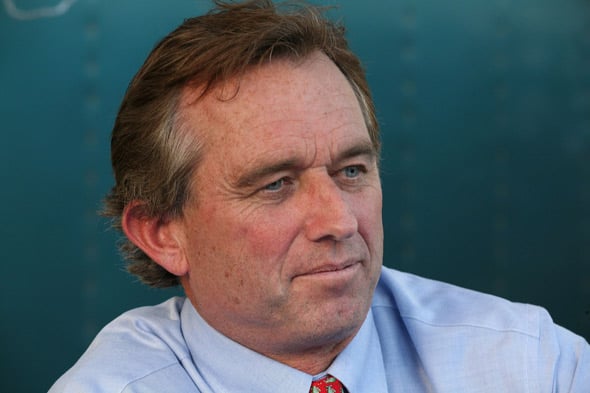
Bill Gates, the mRNA vaccine makers including Pfizer/BioNTech and Moderna, and their close allies such as Dr. Tony Fauci of the NIAID are clearly playing fast and loose with human lives in their rush to get these experimental vaccines into our bodies. Notably, the same Dr. Fauci and his NIAID owns the patent on a vaccine for dengue fever known as Dengvaxia, marketed by Sanofi-Pasteur and promoted as an “essential” vaccine by Tedros’ WHO since 2016. Robert F. Kennedy Jr. (right) noted that Fauci and NIAID “knew from the clinical trials that there was a problem with paradoxical immune response,” but they gave it to several hundred thousand Filipino kids anyway. It was estimated that as many as 600 vaccinated children died before the government stopped the vaccinations.
Clearly the well-established Precautionary Principle–if in serious doubt, don’t– is being ignored by Fauci, Pfizer/BioNTech and others in rushing to approve the new mRNA vaccine for coronavirus. Messenger RNA technology has yet to produce an approved medicine, let alone a vaccine.
*
Note to readers: please click the share buttons above or below. Forward this article to your email lists. Crosspost on your blog site, internet forums. etc.
F. William Engdahl is strategic risk consultant and lecturer, he holds a degree in politics from Princeton University and is a best-selling author on oil and geopolitics, exclusively for the online magazine “New Eastern Outlook” where this article was originally published. He is a Research Associate of the Centre for Research on Globalization.
Featured image is from NEO
Seeds of Destruction: Hidden Agenda of Genetic Manipulation
Author Name: F. William EngdahlISBN Number: 978-0-937147-2-2Year: 2007Pages: 341 pages with complete index
List Price: $25.95
Special Price: $18.00
This skilfully researched book focuses on how a small socio-political American elite seeks to establish control over the very basis of human survival: the provision of our daily bread. “Control the food and you control the people.”
This is no ordinary book about the perils of GMO. Engdahl takes the reader inside the corridors of power, into the backrooms of the science labs, behind closed doors in the corporate boardrooms.
The author cogently reveals a diabolical world of profit-driven political intrigue, government corruption and coercion, where genetic manipulation and the patenting of life forms are used to gain worldwide control over food production. If the book often reads as a crime story, that should come as no surprise. For that is what it is.
Do you think you can escape your anger and forgive?
Back again with anger! I have said you might be skilled enough to escape anger with self-compassion and I think we can all do this
But if some act has been done by THEM against you can you forgive?
The secular Buddhists and the mindfulness gurus seem to opine everything is forgivable as this is the way we open up and connect with humanity
However as one wise mindfulness sage once said to me you are only human if in some cases you can’t forgive so best to just not let them occupy your emotional real estate but cautioned your anger and hatred kept contained and bottled up gives THEM some added satisfaction over the havoc THEY inflicted upon you do you want to give THEM that satisfaction? could it be that forgiveness is your huge win against THEM ?
Someone has done you very wrong perhaps last week, a few months ago or perhaps a couple of decades ago you are angry, very angry with time that anger may fade but it remains like gum on the shoe well what can you do?
Firstly recognize that you have this anger and it is occupying your essence and being perhaps even causing unhealthy inflammation and stress you are creating a big mess for the liberation of your heart and soul
Perhaps it is time to show yourself some self compassion as human beings can be tender hatred can only dismember yes you do not deserve to be in hurt and in pain so acknowledge it and give yourself some understanding for what THEY did to you do you feel the pain slipping away perhaps not immediately but it may take months and weeks to rid yourself of the curse of your anger self compassion may require you open your heart to rid yourself of the pain assuming that they are pricks and bastards do you want them to smile and laugh with satisfaction that in addition to THEIR dastardly deed they have caused you such moral pain? for goodness sake deprive them of their ill gotten gain and jettison your hatred down the drain