We’ll jump right into the fray with a Mission Hill Family Estate Reserve 2017 Cabernet Sauvignon.
On the nose there is a degree of creaminess and lots of vanilla indicative of a judicious use of oak. There is a load of black cherry, coconut, blueberry pie and cranberry sauce. On the palate there are moderate and broad-based tannins. A deep cut of blueberry with noticeable minerality and a pleasantly long finish. Despite the 13.9% alcohol content it is well built into the fruit and oak. It is a wine you really can’t go wrong with and at its price I’ll take it, and most British Columbia reds over their Californian counterparts. I would think it might improve over the next three years. If there are still Prime Rib roast beef and Yorkshire pudding eaters out there for their Sunday family meal this wine is for you!
(Mission Hill Reserve Cabernet Sauvignon 2017 Reserve BC VQA Okanagan Valley, Mission Hill Family Estate, Okanagan Valley, British Columbia, $29.95, Liquor Control Board of Ontario # 553321, 750 mL, 13.9%, Robert K. Stephen A Little Birdie Tol Me Rating 92/100)
Here is the “second wine” from the iconic Osoyoos Larose. It is a Bordeaux style red with a blend of Merlot, Cabernet Sauvignon, Cabernet Franc, Malbec and Petit Verdot. The nose is full of red fruit like plum, cherry and blackberry. There are moderate tannins and controlled acidity. On the palate I would say this is classic Bordeaux with tightly structured fruit shy and discrete and it needs two or three years in the bottle to open up. Notes of raspberry and red cherry and other fruits lurking and waiting for some time to emerge. The wine is young a term I rarely use in today’s world of immediately approachable wine. You may like a wine to be completely ready to drink and if that is the case this wine is not for you but if you have a cool and dark place to store it I will repeat myself give it three more years in the bottle. While is would suit roast beef or lamb I would like to try with spicy tomato soup made with coconut milk. This is more French than French if you know what I mean.
(Osoyoos Larose Pétales 2016, BC VQA Okanagan Valley, Osoyoos Larose, Osoyoos, British Columbia, $29.95, Liquor Control Board of Ontario # 276741, 750 mL, 13.5%, Robert K. Stephen A Little Birdie Told Me Rating 90/100).
Background: Thousands of studies have been published based on animal and human studies evaluating garlic’s effects and safety.
Objective: We reviewed the available literature investigating the effects of garlic supplements on hypertension, hypercholesterolemia, C-reactive protein (CRP), pulse wave velocity (PWV), and coronary artery calcium (CAC), as well as available data on side effects.
Methods: We searched PubMed for all human studies using medical subject heading words through 30 May 2013 and assessed relevant review articles and original studies. Only double-blind, randomized, controlled trials and meta-analyses of double-blind, randomized, controlled trials were included. The review of articles and data extraction were performed by 2 independent authors, with any disagreements resolved by consensus.
Results: Garlic supplementation reduced blood pressure by 7-16 mm Hg (systolic) and 5-9 mm Hg (diastolic) (4 meta-analyses and 2 original studies). It reduced total cholesterol by 7.4-29.8 mg/dL (8 meta-analyses). The most consistent benefits were shown in studies that used aged garlic extract (AGE). A few small studies that used AGE also showed favorable effects on CAC, CRP, and PWV. Although garlic is generally safe, rare adverse reactions have been documented with limited causality established.
Conclusion: We conclude that garlic supplementation has the potential for cardiovascular protection based on risk factor reduction (hypertension and total cholesterol) and surrogate markers (CRP, PWV, and CAC) of atherosclerosis. Larger studies are warranted to evaluate these effects further.
gasping retching tumble rivers of foamy beer (not appreciated by those that were near) spilling to the pavement encircling islands of half digested noodles while its stumbling creator wends westward homeward to bed and ready to leap like a tiger upon its unprepared toilers tomorrow
Bill and Mona went to McDonalds for an all American meal disguised cereal hamburgers, fries and shakes It wasn’t but moments later until Bill was seized by the quakes and poor Mona began to groana apparently the deal on a great meal caused their poor stomachs to scream for appeal the pain became impossible to beat was it mainly because of the meat so shortly after the ambulance arrived taking them to a sickness treatment centre stomachs were emptied but a cruel looking steel machine and the spew that emerged looked ever so mean
to moral of the story even if you get back change from five dollars there could be loud hollers but if you insist on not heeding my word and being a total nerd make sure if you eat fast food regularly you may want to reserve a plot at the local cemetery so please ladies and gentle with what you eat be wary!
In the beginning of my story I told you Virus#26 was unlike most viruses as it attacked the heart causing the heart to go into a wild arrhythmia. The heart eventually collapsed and the victim died or blood cots developed and the infected and suffered a stroke. Anti arrhythmia drugs had a minimal effect on controlling the heartbeat. It was highly contagious and there were no comorbidities that increased the risk of death so in almost all cases you contracted it you died. So my practice of cardiology was becoming unbearable. About the only tool I had were painkillers such as morphine to make a passing as peaceful as possible. When asked to administer a fatal overdose I rarely refused. Can you imagine a physician used to fighting disease and controlling it or eliminating it I was now faced with an assembly line of death?
As for a vaccine the COVIDs had eaten up research funds so there was no magic bullet. And the trial COVID vaccines killed thousands so the public was suspicious of vaccines. There was no social distancing as very few governments had any money left for social support programmes so while mass events were banned the workplace remained open creating congregate super spreading.
Now what was bizarre that those who had suffered measles and chickenpox were immune from Virus#26. Research was limited on why this was the case but it was thought that the measles and chicken pox had actually activated certain features of the immune system that enabled immunity against Virus#26. Most baby boomers most in their 70’s by 2030 when Virus#26 emerged were immune because in the 1950’s and 60’s there was no vaccine available for measles or chicken pox whereas most children in the First World countries were subject to mandatory chickenpox and measles vaccinations so were easy Virus#26 victims. In the poorer Second and Third World countries where vaccination for measles and chickenpox was rare the Virus has minimal effects on those countries except for the upper classes who could afford measles and chicken pox vaccines. The anti-vaxxers were vindicated at last!
As 2030 marched on another strange discovery was made and that was those on cannabis, either recreationally or medically, were also immune provided their daily intake of THC and CBD was at a rather high level and had been for a least a year. Again the theory was that somehow the THC and CBD consumption activated the endocannabinoid receptors in the immune system. So millions of people throughout the world where cannabis consumption was legal and had been taking the unknown strength of cannabis were immune! Cannabis also included hashish which is derived from the cannabis plant. Synthetic cannabis concocted by Big Pharma was useless. So many of the world’s poorest countries where cannabis consumption was widespread or in more developed countries where cannabis was legal for both medical and recreational purposes the immunity factor was high (no pun intended).
So the dying off generation of baby boomers and the mostly younger generation of cannabis users received a free pass to Go.
As economies crumbled paper money was becoming worthless cannabis became about as valuable as gold coins. Legalized dispensaries were cleaned out mostly through looting and legal producer’s facilities were ringfenced with private security where cannabis was grown and sold for the ultra rich and well connected but in most cases their consumption was less than the required timeframe to build up a cannabis constructed immunity.
Many farmers who were suffering for years finally found a cash crop with real return but many panicked buyers failed to realize they had to have been consuming the right strength of cannabis for at least a year for it to be effective. Panicked buying of toilet paper during the COVIDs and panicked buying of cannabis during COVIDs were two different things.
Stoners and older baby boomers in the developed world and millions of unvaccinated from chickenpox and measles survived. If they had listened to the pleas and demands of the Melinda and Bill Gates Foundation for mandatory measles and chicken pox vaccinations in the developing world they would have been dead. What was the expression from those older Hollywood Westerns, “White man speak with forked tongue”?
Why am I and my daughter Alexis alive now? I am one of those older baby boomers where moms took their children (like me) to homes of their friends with children who had chickenpox and measles to get the damn thing over with. My daughter went through measles and chickenpox because dear me I had turned into an anti-vaxxer and managed to bypass the system through falsified documents provided by my pediatric colleague. My Westie Pill Boy was also safe as animals were not affected by Virus#26.
I apologize for my vulgar use of words but I am pissed off with COVID-19 and all its fucking mutations submerged in so many political gyrations ruining so many family events although I am thankful none of us are in emergency field hospital tents but please excuse this poor poet as he vents
My granddaughter was heaven sent yet in 4 months I have held her twice this fucking COVID is not nice
Christmas and New Year’s gone it is a time where families belong yet all I get from the politico-medico elite is a statistics numbers game we are all to be wretched and the same many times their decisions are clearly wrong what in the hell have they been smoking in their bong I am beginning to think of them as Harold and Kumar their minds seem from reality so far
Excuse me for being seemingly petty but for our traditional Super Bowl for years the family has been quite steady often because our dislike of Tom Brady
Like the Canadian Grey Cup there has been less than healthy food like cheesies, chips, salsa and dip but this year both Grey Cup and Super Bowl celebrations have gone to shit the politicos have mismanaged our vaccine hit yet again I am in a moody snit
BE PATIENT they say deep in my soul I am beginning to flay again excuse my language but COVID go fucking away how can we endure this every day?
Calling all talented and aggressive peoplethere’s a place for you in our organization
the effusive smile that greets with heavy impressive handshakes crushes more than the hand polished shoes gleaming of cold death capped fangs of the coiffed predators button down shirts and minds amidst the chattering of backstabbing baboons clustered on the tree climbing even higher ignoring the screams of the falling too terrorized by their own shameful tumble
Remember as they tell us we only get one chance at life so kill with a smile or you’ll end up on the cold bathroom tile subject to hushed headlines created by humility stricken obituary writers with a country week-end on their mind even before the flowers have wilted
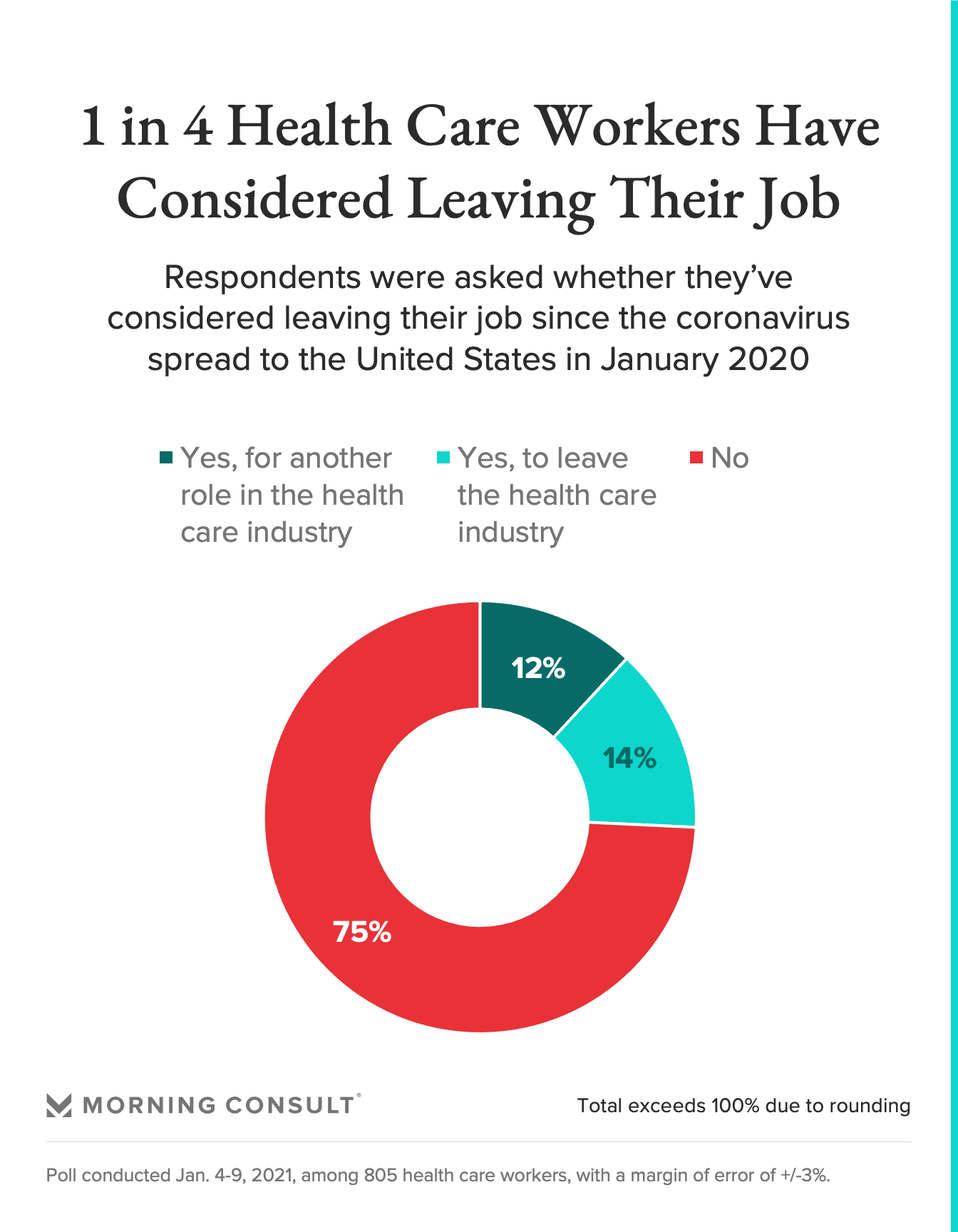
Another 12% of health care workers say they’ve mulled leaving their current role for another position in the industry.
Since February, 11% of health care workers have been laid off or lost their job, including 5% due to their employer’s financial constraints.
About 1 in 10 health care workers have resigned from a job since February.
A new special report from Morning Consult explores how health care workers have fared during the pandemic and how they view the broader COVID-19 response. The data is drawn from a poll of 1,000 health care workers.
Some of the most enduring images from last spring, as COVID-19 overwhelmed health systems around the world, came from the balconies and front stoops of New York, London, Paris and other major cities, when people emerged from their homes and applauded the efforts of health care workers battling the once-in-a-generation pandemic.
The message was clear: Health care workers were heroes, and the world was indebted to them for their sacrifices in seeing us through these dark and dangerous times.
But as the ovations waned and COVID-19 persisted, health care workers were left battling the virus with seemingly no end in sight, carrying an exhausting mental and physical burden that appears to have led to a significant share of them questioning their professional futures.
A new Morning Consult survey found that 26 percent of U.S. health care workers have considered leaving their job since the pandemic spread to the United States last January. Included in that share are 14 percent who say that COVID-19 has left them thinking that they might leave the health care profession altogether.
A notable share of the 1,000 health care workers surveyed have already exited their roles. The poll found that 11 percent have been laid off or lost their job since Feb. 15, 2020, including 5 percent because of financial constraints felt by their former employer. And another 11 percent said they resigned from their position during that time period.
The survey, which was conducted Jan. 4-9 and has a margin of error of 3 percentage points, underlines an especially stark fear among health policy experts and administrators: that looming medical staff shortages across the country, particularly in nursing, are an inexorable threat.
“It does not surprise me, but it does alarm me,” Dr. Janis Orlowski, chief health care officer at the Association of American Medical Colleges, said of the data. “After what everyone has been through so far and what we’re continuing to go through, I can see where people may just want to take a break. They say that they may want to leave the industry, and maybe what they want to do is just take a break from the intensity of the work, and hopefully they’ll come back.”
Though the share of health care workers who are thinking of leaving the industry is small, any defections would be especially damaging given widely accepted projections of staffing shortfalls.
Data from the Association of American Medical Colleges estimated that the United States could face a shortage of between 54,100 and 139,000 physicians by 2033, a projection that includes deficits in primary and specialty care.
The nursing industry, meanwhile, has a projected employment growth rate of 7 percent from 2019 to 2029, according to the U.S. Bureau of Labor Statistics, putting it ahead of the national average of 4 percent for all occupations.
But despite those positive BLS projections, the nursing shortfall is even more pronounced than the physician deficit: A 2018 study from the American Journal of Medical Quality projected a shortage of over half a million nurses by 2030, with the southern and western regions of the country most afflicted.
“It is pretty clear that the current nurse workforce and workforce in general is inadequate. And there are significant shortages in certain job descriptions that are related to delivering respiratory care and intensive care,” said Dr. Albert Wu, director of the Center for Health Services and Outcomes Research at Johns Hopkins Medicine. “We are not well-positioned to deal with this or even the next crisis.”
Wu said that due to a variety of factors, survey results may even underestimate health care workers’ desire to leave their current jobs. For example, he said, many nurses, who represent the largest share of providers, are leaving their full-time jobs during the pandemic to work as traveling nurses for a per diem salary that is three or four times what they make now. As more nurses leave for these assignments, that increases the interest of their colleagues in these jobs. RELATED: Amid COVID-19 Vaccine Rollout, a Quarter of Health Care Workers Say They Won’t Get a Shot
But if there is a silver lining to the hardships experienced by health care workers, it’s that help is apparently on the way, thanks to people who have a newfound appreciation of their work. Orlowski cited Association of American Medical Colleges data that found medical school applications are up more than 18 percent year over year. Though it will be another decade or so until these applicants are practicing physicians, the trend is promising.
“I think that people are saying, ‘You know, I want to be like those doctors, I want to be like those nurses, I want to be like those therapists,’ ” Orlowski said. “And so it’s been a very positive thing to see the increase in number of people applying to medical school.”
Health administrators, Wu said, should at the very least come away from navigating the pandemic with lessons learned to improve the professional lives of staffers going forward.
“I would hope that the current crisis makes health care leaders and health policy leaders think harder about workforce needs for the future,” he said, “and in particular in planning for what’s inevitably going to be the next pandemic.”




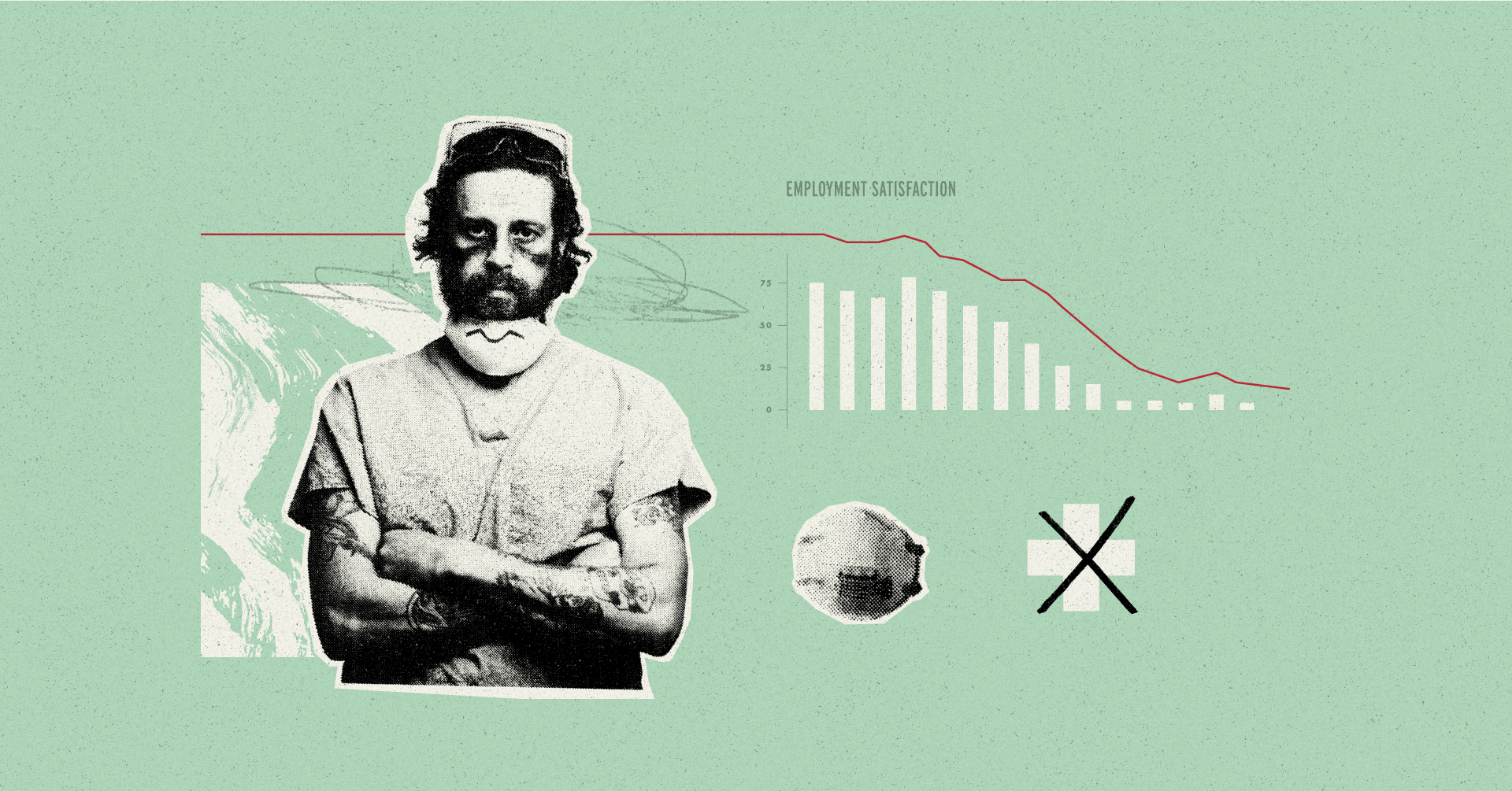 (Getty Images / Morning Consult Illustration by Kelly Rice)