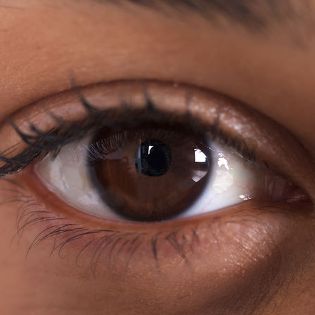
A Harvard Health Letter (12May20) Reminder on Blue Light!

Blue light has a dark side

What is blue light? The effect blue light has on your sleep and more.

blue light at night

Updated: July 7, 2020Published: May, 2012

Although it is environmentally friendly, blue light can affect your sleep and potentially cause disease. Until the advent of artificial lighting, the sun was the major source of lighting, and people spent their evenings in (relative) darkness. Now, in much of the world, evenings are illuminated, and we take our easy access to all those lumens pretty much for granted.

But we may be paying a price for basking in all that light. At night, light throws the body’s biological clock—the circadian rhythm—out of whack. Sleep suffers. Worse, research shows that it may contribute to the causation of cancer, diabetes, heart disease, and obesity.

What is blue light?

Not all colors of light have the same effect. Blue wavelengths—which are beneficial during daylight hours because they boost attention, reaction times, and mood—seem to be the most disruptive at night. And the proliferation of electronics with screens, as well as energy-efficient lighting, is increasing our exposure to blue wavelengths, especially after sundown.

Light and sleep

Everyone has slightly different circadian rhythms, but the average length is 24 and one-quarter hours. The circadian rhythm of people who stay up late is slightly longer, while the rhythms of earlier birds fall short of 24 hours. Dr. Charles Czeisler of Harvard Medical School showed, in 1981, that daylight keeps a person’s internal clock aligned with the environment.

Is nighttime light exposure bad?

Some studies suggest a link between exposure to light at night, such as working the night shift, to diabetes, heart disease, and obesity. That’s not proof that nighttime light exposure causes these conditions; nor is it clear why it could be bad for us.

A Harvard study shed a little bit of light on the possible connection to diabetes and possibly obesity. The researchers put 10 people on a schedule that gradually shifted the timing of their circadian rhythms. Their blood sugar levels increased, throwing them into a prediabetic state, and levels of leptin, a hormone that leaves people feeling full after a meal, went down.

Exposure to light suppresses the secretion of melatonin, a hormone that influences circadian rhythms. Even dim light can interfere with a person’s circadian rhythm and melatonin secretion. A mere eight lux—a level of brightness exceeded by most table lamps and about twice that of a night light—has an effect, notes Stephen Lockley, a Harvard sleep researcher. Light at night is part of the reason so many people don’t get enough sleep, says Lockley, and researchers have linked short sleep to increased risk for depression, as well as diabetes and cardiovascular problems.

Effects of blue light and sleep

While light of any kind can suppress the secretion of melatonin, blue light at night does so more powerfully. Harvard researchers and their colleagues conducted an experiment comparing the effects of 6.5 hours of exposure to blue light to exposure to green light of comparable brightness. The blue light suppressed melatonin for about twice as long as the green light and shifted circadian rhythms by twice as much (3 hours vs. 1.5 hours).

In another study of blue light, researchers at the University of Toronto compared the melatonin levels of people exposed to bright indoor light who were wearing blue-light–blocking goggles to people exposed to regular dim light without wearing goggles. The fact that the levels of the hormone were about the same in the two groups strengthens the hypothesis that blue light is a potent suppressor of melatonin. It also suggests that shift workers and night owls could perhaps protect themselves if they wore eyewear that blocks blue light. Inexpensive sunglasses with orange-tinted lenses block blue light, but they also block other colors, so they’re not suitable for use indoors at night. Glasses that block out only blue light can cost up to $80.

LED blue light exposure

If blue light does have adverse health effects, then environmental concerns, and the quest for energy-efficient lighting, could be at odds with personal health. Those curlicue compact fluorescent lightbulbs and LED lights are much more energy-efficient than the old-fashioned incandescent lightbulbs we grew up with. But they also tend to produce more blue light.

The physics of fluorescent lights can’t be changed, but coatings inside the bulbs can be so they produce a warmer, less blue light. LED lights are more efficient than fluorescent lights, but they also produce a fair amount of light in the blue spectrum. Richard Hansler, a light researcher at John Carroll University in Cleveland, notes that ordinary incandescent lights also produce some blue light, although less than most fluorescent lightbulbs.

Protect yourself from blue light at night

  • Use dim red lights for night lights. Red light is less likely to shift circadian rhythm and suppress melatonin.
  • Avoid looking at bright screens beginning two to three hours before bed.
  • If you work a night shift or use a lot of electronic devices at night, consider wearing blue-blocking glasses or installing an app that filters the blue/green wavelength at night.
  • Expose yourself to lots of bright light during the day, which will boost your ability to sleep at night, as well as your mood and alertness during daylight.

Microsoft Patent Application to Monitor your body and brain for “compliance”

Microsoft has applied for a patent that will enable it to monitor body and brain activity rewarding “compliant humans” with crypto currency. Does this give you comfort? For the good of mankind or data mining for profitability?

https://patentscope.wipo.int/search/en/detail.jsf?docId=WO2020060606

Keeping Track of vaccinations or keeping track of you? Bill Gates to be trusted? Read this in the “Scientific American” of December 19/19

Invisible Ink Could Reveal whether Kids Have Been Vaccinated

The technology embeds immunization records into a child’s skin

Invisible Ink Could Reveal whether Kids Have Been Vaccinated
M.I.T. engineers have developed a way to store medical information under the skin, using a quantum dot dye that is delivered, along with a vaccine, by a microneedle patch. The dye, which is invisible to the naked eye, can be read later using a specially adapted smartphone. Credit: Second Bay Studios

Keeping track of vaccinations remains a major challenge in the developing world, and even in many developed countries, paperwork gets lost, and parents forget whether their child is up to date. Now a group of Massachusetts Institute of Technology researchers has developed a novel way to address this problem: embedding the record directly into the skin.

Along with the vaccine, a child would be injected with a bit of dye that is invisible to the naked eye but easily seen with a special cell-phone filter, combined with an app that shines near-infrared light onto the skin. The dye would be expected to last up to five years, according to tests on pig and rat skin andhuman skin in a dish.

The system—which has not yet been tested in children—would provide quick and easy access to vaccination history, avoid the risk of clerical errors, and add little to the cost or risk of the procedure, according to the study, published Wednesday in Science Translational Medicine.https://b2af83b76ba0648a8a54d93c85c60015.safeframe.googlesyndication.com/safeframe/1-0-37/html/container.htmlADVERTISEMENT

“Especially in developing countries where medical records may not be as complete or as accessible, there can be value in having medical information directly associated with a person,” says Mark Prausnitz, a bioengineering professor at the Georgia Institute of Technology, who was not involved in the new study. Such a system of recording medical information must be extremely discreet and acceptable to the person whose health information is being recorded and his or her family, he says. “This, I think, is a pretty interesting way to accomplish those goals.”

The research, conducted by M.I.T. bioengineers Robert Langer and Ana Jaklenec and their colleagues, uses a patch of tiny needles called microneedles to provide an effective vaccination without a teeth-clenching jab. Microneedles are embedded in a Band-Aid-like device that is placed on the skin; a skilled nurse or technician is not required. Vaccines delivered with microneedles also may not need to be refrigerated, reducing both the cost and difficulty of delivery, Langer and Jaklenec say.

Delivering the dye required the researchers to find something that was safe and would last long enough to be useful. “That’s really the biggest challenge that we overcame in the project,” Jaklenec says, adding that the team tested a number of off-the-shelf dyes that could be used in the body but could not find any that endured when exposed to sunlight. The team ended up using a technology called quantum dots, tiny semiconducting crystals that reflect light and were originally developed to label cells during research. The dye has been shown to be safe in humans.

A close-up microscope image of the microneedle array, which could deliver quantum dots into skin. Credit: K.J. McHugh et al. Science Translational Medicine (2019)

The approach raises some privacy concerns, says Prausnitz, who helped invent microneedle technology and directs Georgia Tech’s Center for Drug Design, Development and Delivery. “There may be other concerns that patients have about being ‘tattooed,’ carrying around personal medical information on their bodies or other aspects of this unfamiliar approach to storing medical records,” he says. “Different people and different cultures will probably feel differently about having an invisible medical tattoo.”

When people were still getting vaccinated for smallpox, which has since been eradicated worldwide, they got a visible scar on their arm from the shot that made it easy to identify who had been vaccinated and who had not, Jaklenec says. “But obviously, we didn’t want to give people a scar,” she says, noting that her team was looking for an identifier that would be invisible to the naked eye. The researchers also wanted to avoid technologies that would raise even more privacy concerns, such as iris scans and databases with names and identifiable data, she says.https://b2af83b76ba0648a8a54d93c85c60015.safeframe.googlesyndication.com/safeframe/1-0-37/html/container.htmlADVERTISEMENT

The quantum dots after being administered in the skin of rodents. Credit: K.J. McHugh et al. Science Translational Medicine (2019)

The work was funded by the Bill & Melinda Gates Foundation and came about because of a direct request from Microsoft founder and philanthropist Bill Gates himself, who has been supporting efforts to wipe out diseases such as polio and measles across the world, Jaklenec says. “If we don’t have good data, it’s really difficult to eradicate disease,” she says.

The researchers hope to add more detailed information to the dots, such as the date of vaccination. Along with them, the team eventually wants to inject sensors that could also potentially be used to track aspects of health such as insulin levels in diabetics, Jaklenec says.

This approach is likely to be one of many trying to solve the problem of storing individuals’ medical information, says Ruchit Nagar, a fourth-year student at Harvard Medical School, who also was not involved in the new study. He runs a company, called Khushi Baby, that is also trying to create a system for tracking such information, including vaccination history, in the developing world.

newsletter promo

Working in the northern Indian state of Rajasthan, Nagar and his team have devised a necklace, resembling one worn locally, which compresses, encrypts and password protects medical information. The necklace uses the same technology as radio-frequency identification (RFID) chips—such as those employed in retail clothing or athletes’ race bibs—and provides health care workers access to a mother’s pregnancy history, her child’s growth chart and vaccination history, and suggestions on what vaccinations and other treatments may be needed, he says. But Nagar acknowledges the possible concerns all such technology poses. “Messaging and cultural appropriateness need to be considered,” he says.Rights & Permissions

ABOUT THE AUTHOR(S)

author-avatar

Karen Weintraub

Karen Weintraub is a freelance health and science journalist who writes regularly for the New York TimesSTAT and USA Today, among others.

Bill Gates Role Model or a Feared Leader of the “Inner Party”?

In George Orwell’s seminal “1984” there were the proles at the low end of the spectrum, the Outer Party in the Middle and the Inner Party at the top. It was a society based on surveillance.

I hear increasing reports from alternative media that perhaps Bill Gates should not be seen as a superstar of reason and trust.

Gates is a man, without any medical background, that is calling for digital passports proving vaccinations have occurred and even microchips to enable Orwellian Big Brother to keep tabs on you. In a June TED talk Gates called for global tracking of vaccine recipients by way of “digital immunity proof” but for some reason that was edited out.

This was pointed out in Robert F. Kennedy’s article in “The Defender” of 12/11/20,

“Here is the edited out portion of what he said Some chiseler altered Bill Gates’ June 2020 TED Talk to edit out his revealing prediction that we will all soon need digital vaccine passports (slide 1). But after considerable effort, we tracked down the original video (slide 2). “

Life at Up Up and Away Investment Management International; Chapter 17 Double trouble at Up Up and Away Investment Management International

Chapter 17

Double trouble at Up Up and Away Investment Management International

I recall at CRAP management decisions were generally implemented and executed quickly. There was only one set of Canadian management to deal with. However, at Up Up and Away there was a head office in the United States superimposed above Canadian management. The majority of key policy and operational decisions issues were taken in the New York. This is not to say there is no input from Canadian management but it’s quite evident the Yankees are making the key decisions. The Canadians are the loyal foot soldiers.

This has never caused me any political qualms. After all Canadian subsidiaries are the property of a US largecorp. If they respect Canadian law let’s not deceive ourselves by saying they then permit Canadian management to call the shots relating to Canadian business affairs.

So, Up Up and Away had its management team in Canada. They had a CEO and CFO and all the other management layers one might find in a largecorp. But at the end of the day Up Up and Away in Canadian management simply executed plans and goals set for them by Up Up and Away in New York. The bottom line is that Canadian management were well paid puppets. In today’s corporate world management sells themselves to the highest bidder. The chase for money and prestige trumps any nationalistic fervor.

Up Up and Away management in New York were by and large the meanest and most aggressive brutes I have yet to see. Bold, aggressive, domineering and demeaning. And there were no Vietcong or NVA in the Canadian corporate jungle to keep them in check, only provincial and federal regulators.

Initially when I joined up Up and Away in Canada the New York Senior Management Team was very much more relaxed than what it evolved into after 9/11, the Great Recession and collapse of Lehman Brothers in 2008.

Where once they played to some small degree to employee growth and development they fell sway to the analysts and the new buzzword was “shareholder value” which meant a squeeze for the biggest profit possible. You knew when Up Up and Away in New York talked about “controlling expenses” that would mean the hatchet would fall and thousands would lose their jobs. With a global workforce of 26,432 what was a few thousand employees “downsized”? Terminations were done en masse. Never on a Thursday or Friday and never near Christmas and God forbid never immediately prior to American Thanksgiving! Employee sensitivity by a largecorp. Touching.

Yet having witnessed so many terminations over the years I worked at Up Up and Away executive compensation, particularly through stock option and enriched retirement plan options, was rampant. The New York  Up Up and Away SMT was raking it in hand over foot! Up Up and Away Canadian SMT were poor cousins to the  New York Up Up and Away SMT but they weren’t doing too badly!

I saw many friends and colleagues getting the axe to the point that near the end of my tenure with Up Up and Away I would sit at my desk and just shake my head in disbelief and try figure out who was going to take up the responsibilities the terminating employees had formerly been undertaking. The butchery was so bad people were fleeing to other jobs if they could which was not easy in the 80’s and 90’s as there were few jobs to escape to. The stress of waiting to be next was too much for some. But after a never-ending succession of terminations numbness of employees as opposed to paranoia prevailed over Up Up and Away employees.

Strangely it was the Up Up and Away Canada employees who were being axed not Up Up and Away’s Canada’s SMT. Since most decisions were made in New York why bother with a Canadian management team at all! I never realized why the Canadian SMT were spared. What value they added other than window dressing for clients was never apparent to me.

There was duplication in much decision making. For example, if there was a severe or threatening legal issue in contractual negotiations or arising in daily operations I’d have to explain it to Canadian management and then inevitably New York management. Not only that, New York management almost always had existing relationships with the companies I was negotiating contracts with. They had a vested interest in pleasing those clients which wreaked havoc with my prioritization which in turn was based on what Canadian management expected me to focus on. Poor Tony Hornet was caught in the battle of Canadian vs. New York priorities. The hell if the New York client was half the size or far less profitable than the Canadian client I was dealing with. It was almost as if politics between Canadian and Up Up and Away New York management was commandeering my legal work. I was expending exorbitant amounts of time explaining the situation to different Up Up and Away management in the United States and Canada to the extent that the practice of law was being replaced by politics and incessant duplicative explanations.

The majority of Up Up and Away Americans were bullies however there were some exceptions and strangely enough they were often those senior client relationship managers with some of the hugest global clients. Perhaps they were comfortable with their power. They were the easiest Yankees to deal with. The nastiest were those servicing the less than global leaders of clients. Perhaps they were peons struggling for scraps of Up Up and Away SMT recognition and had to put on a big performance for recognition purposes.

I suppose the lesson might be in dealing with largecorp International as a client is that in Canada you have to be just as huge as they are to receive the servicing attention you deserve. As a puny Canadian largecorp you are second fiddle to Yankee clients of a largecorp International.

Life at Up Up and Away Investment Management International: Chapter 16 A lucky jump into Up Up and Away Investment Management International

Chapter 16

A lucky jump into Up Up and Away Investment Management International

It is so remarkably interesting just how much fate and luck play a part in landing a new job. Sure, you follow all the same old advice as to networking, resumé writing and how to conduct yourself at an interview. But you know, sometimes it is just a question of being at the right place at the right time.

My contract with the insurance regulator was winding down so I was delighted to receive a call from my old colleague at CRAP, Sally Self. She was now a lawyer at the Canadian subsidiary of Up Up and Away Investment Management International which was owned and headquartered in New York. She was handling both compliance and legal affairs for Up Up and Away in Canada while Tim Beavis and Anne Kolodny both lawyers for Up Up and Away in New York, were handling the negotiation of Canadian contracts.

I was no stranger to Up Up and Away. In fact, I had persuaded Sally to apply for the job she landed at Up Up and Away in Toronto. I thought now she might have wanted to return the favour. Not only did I know Beavis and Kolodny but I had negotiated contracts with them as well as Beatrice Tuff (to whom Beavis and Kolodny reported to), also in New York, who was a bit of a scattered and eccentric lawyer. Kolodny was a friend to me. She was older than me and exceedingly practical and knowledgeable with a cutting sense of humour. I really enjoyed dealing with her. Beavis was also a great person to negotiate with. Now Beatrice Tuff was another thing altogether! When I was with CRAP I had said no to one of her proposed business relationships in Canada which involved CRAP contracting with Up Up and Away’s Canadian clients and then completely delegating all of CRAP’s responsibilities back to Up Up and Away in Canada as CRAP’s agent. The reason was that Up Up and Away did not yet have the necessary license to carry on the business proposed but CRAP did. I had a bad gut feel about the legitimacy of such a transaction as you should not do something indirectly that you were prohibited from doing directly. We tried all sorts of work-arounds but none were acceptable to Tuff and myself and the deal died. Although I had made a decision that was supported by CRAP management, I had made an enemy of Tuff at Up Up and Away in New York.

Up Up and Away required a Toronto based lawyer to negotiate Canadian client contracts. Beavis had pissed off a powerful Canadian based largecorp most likely because he was swamped negotiating far bigger deals in New York and could not devote time to a Canadian “small potato” deals. Also, Canadian clients were voicing their dissatisfaction with how long contracts were taking to get negotiated. Furthermore, some were surprised how Up Up and Away was having contracts negotiated out of New York rather than Toronto. This Yankee imperialism was perceived as a bit anti-Canadian by the Canadian marketplace and whispered a lack of commitment to the Canadian marketplace.

Up Up and Away needed to act quickly so to placate Tuff I was offered a 3 month contract instead of a full-time position. A “try-out”. Years later I was to find out I had jumped from the frying pan into the fire however the fire was a rather a long way from being lit.

In many respects there was not much of a difference from working at Up Up and Away than working at CRAP. Both businesses were heavily regulated and both were in the financial services industry. Both had an annoying Human Resources Department and both had a greedy Senior Management Team.

I was so happy to be earning a decent paycheque I just hoped I could sweep all the annoying corporate bullshit out of the way. Boy, talk about being delusional.

So, my new job made me a contract employee in the Up Up and Away Toronto Legal Department

Up Up and Away was a monstrous largecorp  that dwarfed the size and market power of CRAP. One thing I didn’t miss was the plethora of small fry clients CRAP had. They were not very profitable. They were demanding as all clients have a right to be but they just ate up massive amounts of time. Up Up and Away had the biggest and best clients very much like the ones Felicity Poker had serviced when she had been with her law firm Ooze & Ooze.

Up Up and Away’s clients may have been powerful but I can’t say I had any problems in dealing with their lawyers and business teams. Law can be a bit of a compromise game. There are certain points you can give on some you couldn’t. Those lawyers could have been pushy, aggressive and obnoxious but when they heard I had been an American and attended the Ivy League equivalent McGill University it almost seemed as if I was one of them. York University and University of Toronto were unheard of in the United States. McGill was up there with Harvard and Yale. Did they know the phrase, “Pick up a fork and you can go to York?” Even the graduates from York University’s faculty of law never ever say they received a law degree from York University but rather from “Osgoode Hall” which was the building in York University where the law faculty was located. It was if they were ashamed of any association with York University. To make a long story short whilst I suffered prejudice in Toronto for not graduating from a local university American and European lawyers immediately doffed their hat in respect of my education.

As a last comment I will say Penton Academy and the McGill Faculty of Law were not the nicest places in the academic world but unlike other law faculties and secondary schools in Canada they certainly did not suffer from mark inflation.

Up Up and Away was almost burnt out of business decades ago in the United States due to poor compliance and regulatory mistakes it made that took it close to bankruptcy. It smartened up mighty quick and created a bureaucracy that was designed not to repeat that mistake.

Let me give you a couple of examples.

CRAP was willing to do business with just about anyone. Sort of like a smell test made them happy. Up Up and Away had a rigorous client review process that took weeks to analyze each client to ensure it was reputable, solvent and legitimate. They had a “New Business Review Committee” with representatives from client servicing, risk and compliance, legal and two senior executives with Up Up and Away in New York that had to “sign off” on each deal. It was cumbersome and slow but at least it prevented doing business with bad apples. Over time it choked itself to death.

Another significant difference was that Up Up and Away had a contractual policy which set down certain terms and conditions that could not be agreed to in any contract such as not receiving an indemnification from a client in a client contract. Now one could bypass all or part of this contractual policy by obtaining “senior management approval” which meant a Senior Management Approval Memo (SMAM) had to be written and approved justifying why Up Up and Away could bypass the relevant provision of the contractual policy. The required approval had to be received from a plethora of members of the SMT both in Toronto and New York.

Unfortunately, I had to write countless of these memos. My drafting style was short and sweet but Sally Self was a CYA specialist and rewrote and over-edited to the point of being ridiculous. It was not uncommon for me to rewrite the SMAM memo 15 times. Self had an ability to make one feel like an idiot. Great leadership qualities.

The contractual policy was somewhat of a joke because every SMAM I wrote was approved. Big clients have clout.

I should say I did manage to move into a full-time position with Up Up and Away as a Vice President of Legal Affairs. CRAP employees always used to joke about Up Up and Away as they said everyone was a Vice President there. That wasn’t far from the truth however I am sure it was said with some amount of jealousy because at CRAP being a Vice President meant a company car, club memberships, exotic management trips and an opportunity to get your hands in the cookie jar of executive compensation. Nowhere near the looting levels of the SMT but a far cry from the stock purchase plan offered to the regular office tower employees and the rather paltry pension plan they were given.

A Vice-President at Up UP and Away in Canada had free parking, a car allowance and a token incentive payment plan. At least it was a step up from being a contract employee.

The crowning glory was that my former Up Up and Away enemy Beatrice Tuff had come full circle and said I was the best legal hire Up Up and Away Legal had ever made!

COVID-19 Fatigue: What are the symptoms?

In addition to incessant mention about COVID-19 in the media it is as if “COVID Fatigue” itself is a disease so let us call it CF as that has a nice disease ring to it. If the medico-politicos had their way they would have you believe CF will automatically lead to COVID contamination.

You can be suffering from many or simply a few symptoms. Off the bat let us say “COVID Distress” is a far more serious condition and may require medical assistance of a mental health nature.

So what are some of the symptoms of CF?

Being Sick and Tired of Hearing the Name COVID-19

The CF victim has reached a tipping point of numbness when hearing the words “COVID”. If a television or radio is involved the CF victim may be heard yelling insults at the commentators and saying, “shut up”.

Being Sick and Tired of the Media Coverage

The CF victim exhibits frustration and tingling of the feet about the parroting of the medico-political elite leading the COVID charge by the media who have apparently lost the ability of critical thought. Extreme indigestion often results from a lack of critical analysis by the media.

Being Sick and Tired of the Never-Ending Parade of Statistics

Case counts, death counts, 7 day moving averages and the like cause dizziness. The lack of realistic per capita statistics is rarely mentioned.

 Being Sick and Tired of the Propaganda

CF victims of this exhibit deafness after months of propaganda (public health announcements) best understood by toddlers, Major episodes of frustration have been reported amongst CF victims upon hearing “social distancing”, “hand washing” and “mask wearing”.

Being Sick and Tired of the Abandonment of Political Responsibility

Many CF victims suffer chills from witnessing the politicos “deferring” to the “medical team”. The best therapy for this may be at the ballot box. Many politicos really do seem to be fighting the plague and caring about their populations but some jurisdictions have had to suffer morons for political leaders that ply their political agenda while the death count claims in their jurisdictions soar. In such jurisdictions CF may cause political violence and national divisions thereby increasing bouts of rage for CF sufferers.

Being Sick and Tired of Hero Stories

There is a high prevalence of gagging amongst CF victims all of whom appreciate the dedication of front line workers but are disgusted with the sappy framing of their dedication by the media anxious for a dramatic story.

Being Sick and Tired of Lock-Downs (continual imprisonment)

CF victims display extreme impatience with continual restrictions of regular everyday movement, employment losses and restrictions on political rights.

Being Sick and Tired of Well-Meaning Stoolies and the COVID Police

Some CF victims claim to experience hallucinogenic episodes of time travel some claiming to have travelled back to Nazi and Stalinist times where stoolies and spies turned in dissidents and by-law enforcement officers become Gestapo or NKVD agents.

Being Sick and Tired of the Massacre in Long Term Care Facilities

Years of long-term care facility neglect and the siphoning off dividends in for profit care facilities to shareholders reportedly has caused angry outbursts by CF sufferers and even worse amongst those who have lost loved ones in those facilities.

Being Saddened by the Less Affluent in Society are More Likely to be Sickened or Damaged by COVID

Even in the midst of a plague the poor suffer higher mortality and infection rates and job losses than the more affluent segments of society. Many CF victims experience bouts of sadness with symptoms.

Being suspicious of warp speed and fast-tracked vaccines

CF victims may experience fear and/or suspicion about COVID vaccines that have been rushed to production where in most cases Big Pharma producing these vaccines controls the test statistics.

CF can only be controlled by herd immunity but even then the symptoms may be life altering with possible bouts of paranoia setting in about the next upcoming virus.

The Great Transfer of Wealth

While COVID creates a greater pool of the poor the transfer of wealth to billionaires has been unprecedented during the plague. CF sufferers express a great degree of puzzlement why the billionaires are doing so well.

For those suffering from COVID Distress there are mental health hotlines, psychologists, psychiatrists and often employee assistance hotlines that can help those feeling in serious distress.

Life at Up Up and Away Investment Management International : Chapter 15 Is there anything good at all about largecorp?

Chapter 15

Is there anything good at all about largecorp?

I think you would agree that I have painted a bleak picture of largecorp. It is fuelled by greed through obscene executive compensation. This involves fleecing shareholders and exploiting employees to the point of burning and spitting them out. Through the business schools of management, it has created and holds in its pockets an ideology that promotes, legitimizes and excuses its abuses.

In fact, corporate funding chokes these “schools of management” from any true degree of academic impartiality to the extent that MBA professors and graduates are the pimps and hookers for largecorp. If Trump has created the terms “fake news” these schools of economics have created “fake economics”. In the crudest terms the MBA graduates are Stalinist “Young Pioneers” of largecorp. Just look at how these management institutes describe themselves! Always named after some largecorp philanthropist. The same applies to hospital wings. Steal from shareholders and employees yet the press burbles and burps over generosity of the biggest exploiters. And just where did they get all this money from? The Senior Management Team and Putin have many similarities.

So, can largecorp create any good in society? I rather doubt it. But let’s try to be innovative here.

First of all, let’s say that largecorp does employ many people which is positive sounding to many an economist. However, it unemploys many people particularly in the last twenty years with unceasing outsourcing. It also subjects many of its workers to mentally unsafe working conditions. Many largecorps exploit cheap labour abroad when they outsource to foreign jurisdictions. Employment quality ought to take precedence over simple employment. If a clothing factory creates a thousand jobs in Bangladesh under horrifically dangerous conditions at ultra low wages how valid is the creation of employment. In an attempt to create new terms I say that largecorp specializes in creating negative rather than positive employment whether it be domestically or internationally.  And let us not forget the ultimate goal of largecorp is to utilize artificial intelligence to eliminate as many jobs as possible.

I can say with some conviction largecorp offers to many of its employees’ decent employee benefits such as health and dental care and some sort of retirement income pension plan. We are now at the point that the majority of Canadian workers have no pension plan. Working for a largecorp just about guarantees a pension plan. How generous it is rather reliant on how the Senior Management Team calculates its own liability for not offering one or improperly administering the pension plan. Believe you me the SMT members responsible for administering the pension plan treat it as a landmine of personal liability.

In the early days of largecorp, employees were often in defined benefit plans which meant although both employee and largecorp would contribute to the pension plan the employee would receive a pension payment based on some formula whether it be on career average earnings or best year’s earnings. Assuming a solvent employer and accurate actuarial calculations the employee would receive a “guaranteed and calculable” amount as a pension. largecorp bore the risk of delivering the promised benefit. It bore the risk of poor investment returns and claims that it mismanaged the pension fund or plan.

Many largecorps have realized recently upon actuarial advice, that these defined benefit plans have left them with huge “pension deficits and unfunded liabilities”. In other words, the SMT has been sucking up so much in executive compensation, engaging in share buy-backs and increasing dividends to shareholders to the extent that it has ignored properly funding its defined benefit plans so that huge deficits have arisen forcing largecorp to lobby politicians and have legislation passed permitting them temporarily to maintain underfunded pension plans by posting letters of credit to the pension fund. This means in simple terms they are excused from funding what is necessary to fund promised pension benefits. Largecorp employees in peril while largecorp executive compensation rages out of control. Sound like familiar SOP for largecorp? Why did the politicians bend over backwards to placate largecorp’s begging for a temporary halt to pension fund contributions?

It is a bit of a useless pissing match to whine and complain what largecorp has done to protect its interests concerning defined benefit plans because it has been mercilessly converting its defined benefit plans to defined contribution benefit plans. It won’t be long before there are no defined contribution pension plans sponsored by largecorp. The land of milk and honey defined benefit plans will be in the purview of government bureaucracies.

In a defined contribution pension plan the employee and employer contribute to the pension plan fund but the pension benefit funding beyond mandatory employer contributions is no longer a concern of the employer but rather based solely on the performance of funds the employee has selected! This is a very attractive reason to convert defined benefit pension plans to defined contribution pension plans. Largecorp is still on the hook for the defined benefit promises for pension benefits it has promised prior to the conversion to a defined contribution pension plan but on a moving forward basis it is off the hook for pension benefits arising out of a defined contribution pension plan. It has a legal obligation to administer the pension plan in a proper fashion and making its contributions to it in a timely manner as required under pension benefits legislation but once it has done those things it is no longer responsible for payment of the pension benefit.

There are very few employees In Canada that benefit from defined benefit pension plans. The exceptions are government employees and some highly unionized largecorp workplaces but even in the latter the switch to defined contribution plans is in high gear.

At the end of the day the Millennials are facing a defined contribution landscape if they are fortunate enough to even have a pension plan but it is certainly better than having no pension plan. My Millennial daughter Lexia works for a largecorp in Toronto and to my great shock she has no pension plan!

Before patting largecorp on the back we should see how the SMT treats itself! It benefits from whatever the pension plan offers but it then offers the higher ranking SMT” Retirement Compensation Arrangements” (“RCA’s”). As a big earner there is only so much you can contribute from your “earned income” to your pension plan as permitted under Canadian tax legislation. However, you can set up an RCA for the SMT high earners which permits the SMT to exceed in percentage what salary as “earned income” can be contributed under tax legislation into their pension plan into RCA’s. RCA’s impose a punishing tax on largecorp contributions made to it which is borne by shareholders and ultimately employees. The SMT in effect ravishes its revenue to “legitimately” line their pockets by the creation of these tax punishing RCA’s. And of course, the employee benefit consulting firms retained by largecorp legitimize this corporate looting as being justified by market competitiveness and a part of key “retention of management” strategy. And wasn’t it Justin Trudeau who promised the Canadian electorate to protect the interests of the “middle class”? The existing tax legislation pertaining to RCA’s favours the 1%. Why hasn’t it been repealed?

Working for largecorp offers employees knowledge and experience on how to survive in their next largecorp after they are inevitably terminated from largecorp. As the folks who run largecorp like to say,” We are offering you skills for life not a job for life”. Working for largecorp is a life sustaining skill!

Please remember I am a bit of a discontent. There are countless largecorp employees who fall hook, line and sinker for the largecorp experience and like countless sheep throughout history bleat the largecorp ideology and persuade themselves they are content, happy and challenged. Some are promoted but most never reach the golden arches of the SMT. As they say there are plenty of suckers out there.

In conclusion for a thinking and discerning person largecorp throws out chum bait to its employees and admirers with a minority swallowing it while the majority try to grin and bear it to keep the funds rolling in.

Any benefits bestowed by largecorp to its employees are essentially token, diminutive and a pittance of how the SMT stuffs their own wallets. At best the employee is rewarded with a paycheque and a somewhat decent benefits package.

At the end of the day largecorp employees are expense centres to be calculated, sliced and diced and often thrown into the street in the name of efficiency and cost reduction. The SMT rises above this crudity unless a particularly greedy, sociopathic and quasi-criminal cadre engineers a hit of its own taking out fellow members of the SMT thereby increasing a bigger slice of the pie for remaining SMT members.

Although I would not exactly characterize this as “good” one should understand that largecorp often targets older workers in downsizings and in selective hits. This cull clears the way to hire younger and cheaper replacements therefore giving some mobility to the younger employees of largecorp. I am all for mandatory retirement at 65 which I see as mercy rather than ageism.

No Mad Rush in Canada for COVID Vaccine

More Canadians than ever willing to receive the COVID-19 vaccine: Angus Reid poll

Mark VillaniCTV News Calgary Video Journalist

@CTVMarkVillani ContactPublished Monday, December 14, 2020 12:04PM MSTLast Updated Monday, December 14, 2020 9:37PM MSThttps://imasdk.googleapis.com/js/core/bridge3.432.0_en.html#goog_1750030757Volume 90% COVID-19 vaccinations to start Wednesday NOW PLAYINGAlberta health care workers will be among the first to receive 3,900 doses of the COVID-19 vaccine on Wednesday. Mark Villani explains.

SHARE

CALGARY — A new poll suggests more Canadians than ever are willing to get the recently approved Pfizer-BioNTech vaccine as soon as possible.

According to a survey of 1,605 Canadians from Dec. 8 to 11 by the Angus Reid Institute, 48 per cent said they would be willing to get the shot immediately and another 31 per cent said they would get the shot after a wait.

That’s a big jump compared to the same survey conducted by the non-profit independent research group from Nov. 12 to 16, when 40 per cent said they would get the shot as soon as possible.

Related Stories

The numbers are up significantly in Alberta as well.

In November, only 32 per cent of Albertans said they would get the vaccine immediately, but that number has now jumped to 48 per cent since the latest rounds of COVID-19 restrictions have been imposed by the Kenney government.

That number may be increasing, but of Albertans who took part in the survey, 27 per cent said they would not get the vaccine, and seven per cent said they were not sure. 

And that 27 per cent saying ‘no’ is the highest in the country, according to the poll. Almost twice as high as the national average. 

Angus Reid Poll COVID-19

According to the poll, respondents aged 65 years and older are the most likely to get the vaccine (61 per cent), while the 35 to 44-year-old demographic scored the lowest (42 per cent).

In total, 70 per cent of those surveyed states they were concerned about longer-term side-effects and 14 per cent are against receiving a vaccine under any circumstance.

The overwhelming majority — 88 per cent — agreed that the vaccine should not be first come, first serve, but instead go first to those most at risk. 

As for who should be required to receive the vaccine, 71 per cent agreed that it should be mandatory for all healthcare workers, followed by extended care-home workers at 69 per cent. 

Half of respondents said the vaccine should be mandatory in schools, while workplaces (43 per cent) and public events (40 per cent) were deemed to be of lesser risk.RELATED IMAGES

  • The number of Canadians willing to get a COVID-19 vaccine has gone up in recent weeks, suggests a recent poll. (File photo)

COVID-19 and Suicides: Black Americans Suffer Jump in Suicide Rates

During early coronavirus lockdown, Black suicides spiked, Johns Hopkins study finds — and now experts worry about winter

By TATYANA TURNERBALTIMORE SUN |DEC 16, 2020 AT 5:00 AM

During the early months of the coronavirus pandemic last spring, experts and doctors worried about the mental health toll of so many losses, from isolation to layoffs and deaths. Some predicted there might be an increase in suicides. Now, in what is believed to be one of the first studies of its kind, Johns Hopkins researchers who examined deaths across Maryland have found evidence of a rise in suicides — and also of the inequities between Blacks and whites.

In the study, published Tuesdayin JAMA Psychiatry, the researchers determined that among Black residents, suicide deaths appeared to double the recent historical average in one key period — from March 5, the date Maryland declared a state of emergency and shut down, until May 7, when the first public spaces were reopened. During the same time, scientists found that the suicides among whites appeared to drop by half.

Dr. Paul Nestadt, co-director of the Johns Hopkins Anxiety Disorders Clinic, led the study, which involved researchers from the Johns Hopkins School of Medicine, Johns Hopkins Bloomberg School of Public Health and the state Office of the Chief Medical Examiner. They looked at 1,079 deaths by suicide recorded across Maryland from January 2017 until July 7.

“This year, closures, economic impact and the number of people in the African American community who have been on the front lines and have not had the resources for child care, or do not have a job that affords them to work remotely, can cause a lot of stress,” Nestadt said. “I think the bottom line is we are not in the same boat, and we do not have the same economic cushion. Some are feeling these stresses more than others.”

PAID POST

What Is This?

Ad Choices
Pair Of English Jasperware Lidded Black-ground Wedgwood Vases With Zodiac Panels

Pair Of English Jasperware Lidded Black-ground Wedgwood Vases With Zodiac Panels

1stdibs.comGO !

Sponsored Content by 1STDIBS CANADAhttps://datawrapper.dwcdn.net/ESC8s/6/

Suicide numbersamong Black residents returned to the normal range as restrictions began being lifted, according to the study. Researchers noted while the numbers are small and should be interpreted cautiously, they highlight the importance of identifying high-risk groups early.[Most read] Maryland weather: Road conditions deteriorate as winter storm brings snow, ice to Baltimore region »

The study offers more evidence of COVID-19′s disproportionate impact on the Black community. According to the COVID Tracking Project, Black people are dying of illness caused by the coronavirus at 1.8 times the rate of white people. Black people also are more likely than white people to have essential, front-line jobs and aren’t able to work remotely.

With the number of coronavirus cases continuing to spike, Nestadt said he fears another increase in suicides.On Tuesday, The Sun reported more than 2,400 new COVID cases and 61 more deaths, the most fatalities in one day since May.

“We are entering a bigger peak where COVID rates are four to five times higher,” Nestadt said. “We need to have more financial support in place, if something isn’t done we may see [the increase] again.”

The researchers noted that the decrease in suicides among whites was unexpected. They theorized it may have been because white residents may have had a greater ability to do remote work and because they received greater benefits from government relief programs.

Newly elected Baltimore City Council President Nick Mosby said that COVID has exacerbated the preexisting socioeconomic hardships that many in the Black community face.

Dr. Paul Nestadt, co-director of the Johns Hopkins Anxiety Disorders Clinic, led the study, which looked at 1,079 deaths by suicide recorded across Maryland from January 2017 until July 7.
Dr. Paul Nestadt, co-director of the Johns Hopkins Anxiety Disorders Clinic, led the study, which looked at 1,079 deaths by suicide recorded across Maryland from January 2017 until July 7. (Bloomberg School of Public Health)

“It’s one of the underbellies we don’t talk about,” said Mosby, noting that the loss of jobs, inability to work remotely from home and financial instability are all stressors on mental wellness.

He said even trying to get help during the pandemic has been tough.

“People would have [unemployment] applications in for months, they’d wait to speak with someone on the phone for hours, with no one on the other end to answer, and meanwhile bills continued to pile up,” said Mosby, adding that there is a stigma around mental health issues in the Black community, which has not helped.

He is worried about how difficult things will be this winter.

“This is a tough time. This is the holidays, and people are laid off,” Mosby said.[Most read] Eddie’s Market of Charles Village closing Dec. 30 after decades as a neighborhood staple »

Mosby said he and others plan to dig deeper into this dataand look at other factors including age and gender, so they can target solutions for the city’s most vulnerable residents.

The Rev. Dr. Alvin C. Hathaway, senior pastor of the historic Union Baptist Church in West Baltimore, said COVID is unveiling an unfortunate new normal for many people.

“How you treat one another during this time is important, you may encounter a victim of trauma and trigger feelings such as ‘No one cares about me,’” said Dr. Alvin C. Hathaway Sr., senior pastor at Union Baptist Church.
“How you treat one another during this time is important, you may encounter a victim of trauma and trigger feelings such as ‘No one cares about me,’” said Dr. Alvin C. Hathaway Sr., senior pastor at Union Baptist Church. (Amy Davis / Baltimore Sun)

“COVID is saying every day, there is a loss of life, someone is sick in the hospital, and you are potentially the victim to this unseen virus,” Hathaway said.

He added that in this confusing time, people have a lot of questions, but sometimes lack reliable resources — and that can cause despair. He believes the solution is in how people talk to one another.

“We have to be fragile with our language and interactions,” Hathaway said. “How you treat one another during this time is important, you may encounter a victim of trauma and trigger feelings such as ‘No one cares about me.’”[Most read] Only two states have coronavirus numbers low enough to be left off Maryland’s COVID-19 travel advisory »

Rates of mental illnesses in African Americans are similar to the general population, but African Americans often receive poorer quality of care and lack access to culturally competent care. According to the American Psychiatric Association, only one in three African Americans who needs mental health care receives it. There are also few Black mental health providers.

But studies have found there are effective ways to help people who have considered suicide — like getting treatment and support.

The Morning Sun Newsletter

Daily


Get your morning news in your e-mail inbox. Get all the top news and sports from the baltimoresun.com.

Edgar K. Wiggins, who founded and directs Baltimore Crisis Response, a citywide crisis and hotline program, said its workers are seeing the stress from their callers.

“COVID is a beast that is changing life as we know it,” Wiggins said. “You can’t turn on the TV without seeing people who are sick or losing their jobs and are all of a sudden in need of food assistance.”

He added: “To say I’m concerned is an understatement.”[Most read] Howard County parents file lawsuit challenging student school board member’s voting rights »

Although the vaccine offers a light at the end of the tunnel, people will need to continue to observe restrictions until the vaccine is widely distributed, Wiggins said. He emphasized that even though it’s trying to be in isolation, people don’t have to endure the stress alone: “There are people who are available and want to talk to you.”

Warning signs of suicide

  • Talking about wanting to die
  • Talking about being a burden, or feeling trapped
  • Acting anxious, agitated or recklessly
  • Sleeping too much or too little
  • Withdrawing or feeling isolated

What you can to do help

  • Do not leave the person alone
  • Remove any firearms, alcohol, drugs or sharp objects
  • Call the Here2Help free, confidential crisis hotline at 410-433-5175.
  • Text HELLO to 741741 for free, 24/7, confidential emotional crisis support.
  • Call the National Suicide Prevention Lifeline at 800-273-8255

Source: Recommendations from consensus statement of public health and international suicide prevention experts led by SAVE

Tatyana Turner is a 2020-21 corps member for Report for America, an initiative of the GroundTruth Project, a national service program that places emerging journalists in local newsrooms. She covers Black life and culture. Follow her @tatyanacturner.Ta